

Why Box Dimensions Matter in Packaging and Shipping
Box dimensions describe the size of a package using three measurements recorded in a consistent order. In packaging, the standard format is Length × Width × Height (or Depth), written as L×W×H or L×W×D. Using the standard order helps prevent quoting errors during manufacturing.
For custom packaging, internal dimensions matter most because they represent the usable space inside the box. Internal measurements determine whether a product fits securely. External measurements can be misleading because they include material thickness, especially with corrugated, so outside measurements may not match interior fit.
Box volume is the amount of space inside a box and is calculated by multiplying the three dimensions: L × W × H. Volume helps packaging teams estimate product fit, reduce wasted space, and plan shipping and warehousing. It’s a quick step that prevents expensive sizing mistakes.
- Measure inside the box for product fit and custom packaging specs.
- Record in the standard order: L×W×H (or L×W×D).
- Use the top opening to identify length vs width.
- Calculate volume: L × W × H for fit + planning.
- Shipping carriers often use outside dimensions for pricing.
- Corrugated thickness can skew outside measurements.
- Use allowances and inserts to stop movement during shipping.
Measuring a Box Is Simple | But Accuracy Saves Money
Measuring a box doesn’t require special skills, but in custom packaging, small measurement errors can lead to poor fit, product movement, transit damage, and higher overall costs. The right dimensions affect materials, production efficiency, and shipping/warehousing performance.
This matters even more with corrugated shipping boxes, where material thickness and handling conditions make accurate sizing non-negotiable.
- the correct way to measure box dimensions,
- how to label length, width, height/depth using the standard format,
- how to calculate volume, and
- how to avoid the #1 mistake: using the wrong measurement type (inside vs outside) for the job.
Tools You’ll Need
Basic tools (works for most projects):
- Tape measure or ruler
- Flat surface (table or floor)
- Notepad/phone notes to record results
Precision tools (helpful for tight tolerances):
- Caliper (for thicker materials and more exact readings)
- Square/straight edge (to avoid angled measuring)
Step-by-Step: How to Measure a Box Dimension

When you see dimensions written as L×W×H, those letters only help if you measure the same way every time.
Step 1: Decide what you’re measuring for
- Product fit + custom packaging specs: measure internal dimensions.
- Shipping label/carrier pricing: measure external dimensions.
(You’ll do both in many real-world workflows.)
Step 2: Measure internal dimensions (for custom packaging)
For packaging projects, start by measuring the inside of the box (usable space). Use a ruler/tape and record each measurement consistently. Many teams round consistently (often to the nearest whole inch) for quoting—just keep the same rounding rule throughout your spec sheet.
Step 3: Know the standard order (this prevents quoting errors)
Packaging measurements are typically written in this order:
- L × W × D (Length × Width × Depth)
or - L × W × H (Length × Width × Height)
- Depth and height are often used interchangeably, but the order stays the same.
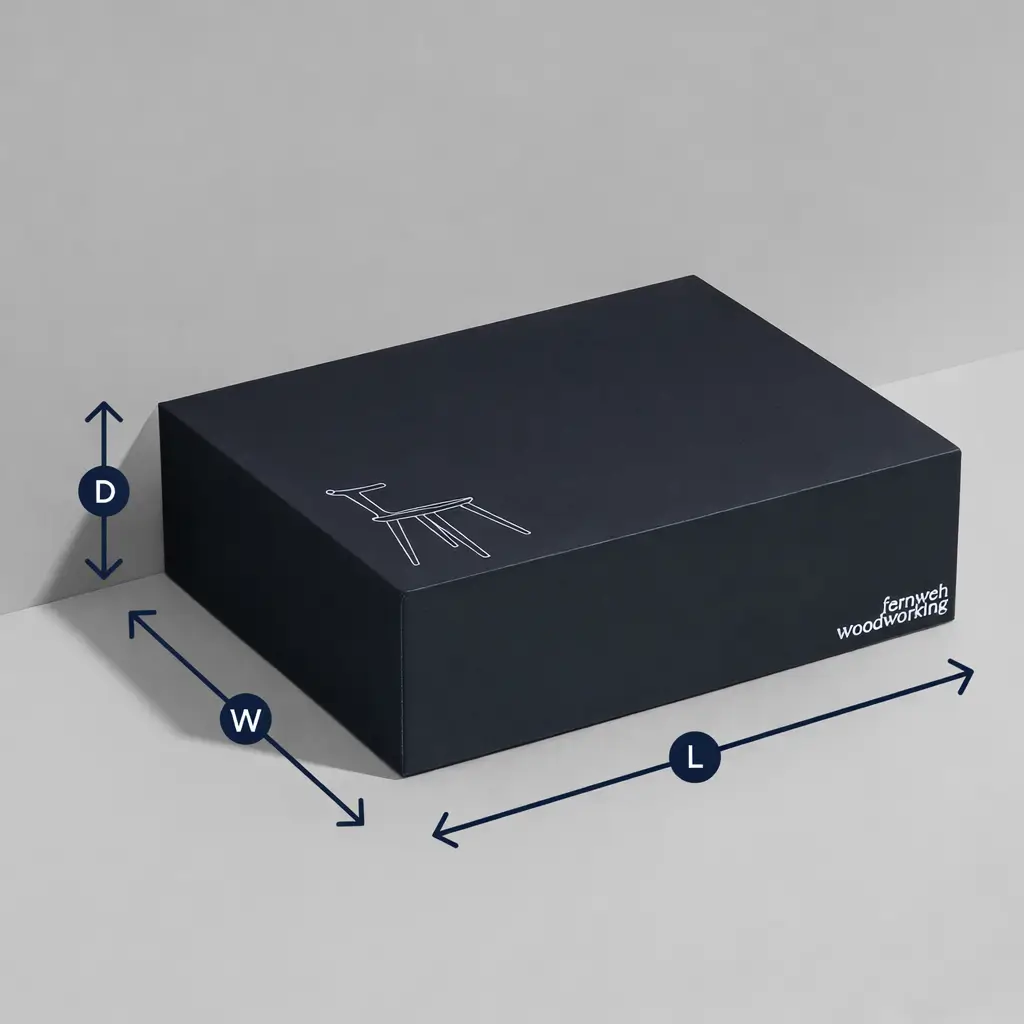
Step 4: Identify length, width, and height
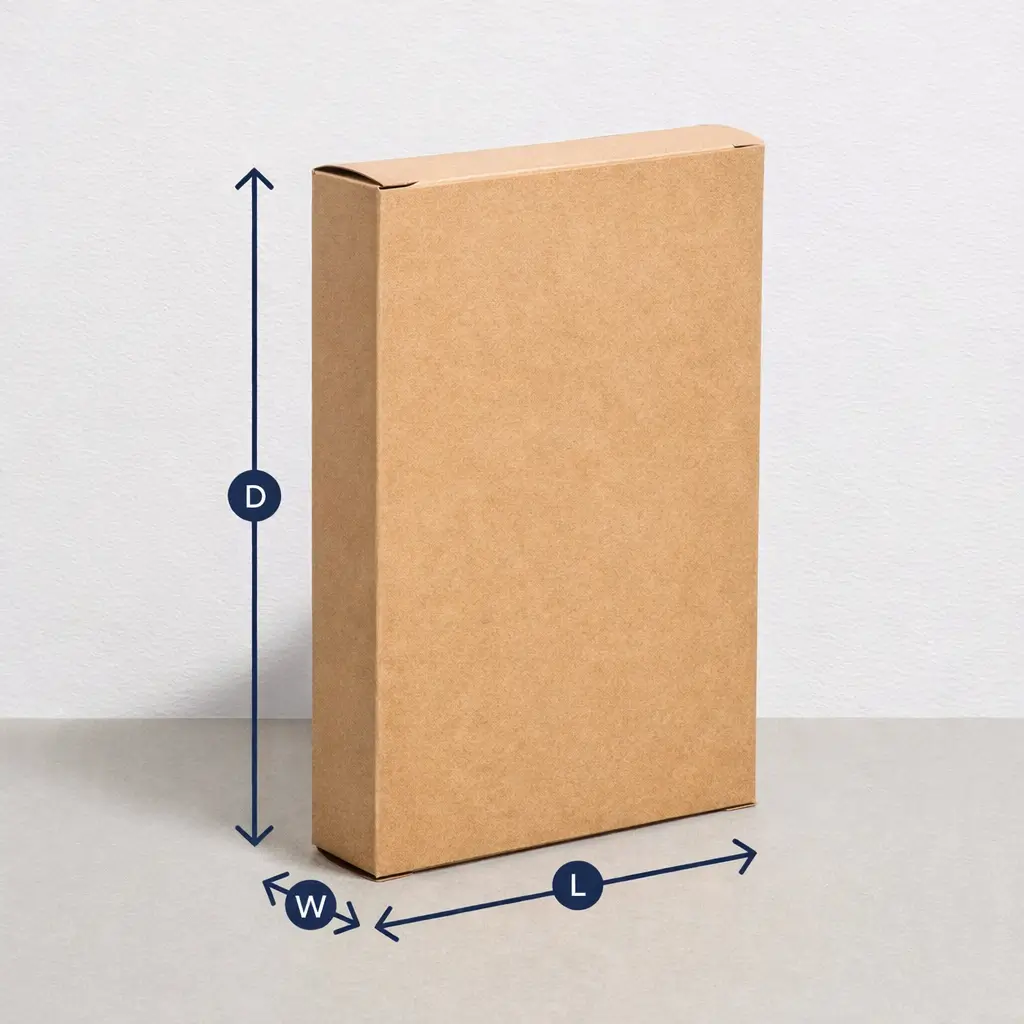
- Use the box opening as your reference point:
- Length: the longer side across the opening
- Width: the shorter side across the opening
- Height/Depth: the measurement running perpendicular to the opening (up/down)
Step 5: Handle common box shapes
| Box type | What stands out | How to assign dimensions |
|---|---|---|
| Tall/upright box | Height/depth | L & W are the opening; H is vertical |
| Long box | Length | L is long opening side; W & H are smaller |
Step 6: Record your final dimensions clearly
- Write them exactly like this:
L × W × H (example format, not numbers)
Step 7: Confirm before manufacturing
Before production, confirm final internal dimensions and how you’ll pack the product (orientation, wraps, inserts, and clearance). Once your specs are locked, it’s much easier to spec custom made boxes that match your product and packing method.
Step 8: If you’re shipping the box, measure the outside too
Even if your custom pack is sized perfectly inside, you still need outside dimensions for shipping and carrier pricing.
Calculating the Volume of a Box
Once you have length, width, and height/depth, calculate volume.
Why volume matters in packaging
Volume helps you:
- estimate product fit,
- plan carton packing and storage,
- understand shipping/warehousing implications,
- support material optimization and structural planning.
Box volume formula
Length × Width × Height (Depth) = Volume
Units tip:
- Inches → cubic inches
- Centimeters → cubic centimeters
Pick one system and stay consistent.
Quick tip: use a calculator tool
If you want to double-check your math quickly, use this calculator to compute box volume instantly.
For DTC fulfillment, accurate dimensions also help dial in mailer boxes so you avoid wasted space and dimensional-weight surprises.
Internal vs External Dimensions: Which One to Use
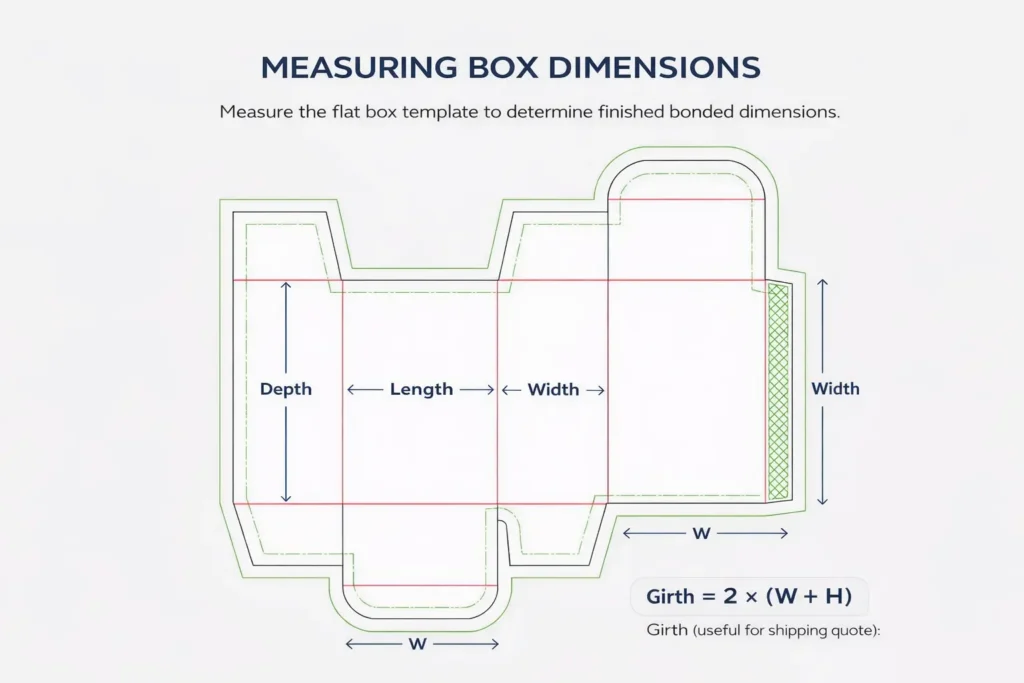
This is where a lot of people get tripped up.
Use internal dimensions when:
- you’re designing packaging for product fit,
- you’re adding inserts, padding, or compartments,
- you want minimal movement inside the box.
Use external dimensions when:
- you’re getting shipping rates,
- you’re labeling boxes, stacking, palletizing, or planning warehouse space,
- you’re checking whether a box hits carrier size thresholds.
Bottom line: internal = fit, external = logistics.
How to Measure a Box for Shipping
When measuring for shipping:
- Place the box on a flat surface.
- Measure the outside length (longest side).
- Measure the outside width (shorter side).
- Measure the outside height (top to bottom).
Girth (common shipping measurement)
For rectangular boxes, a common girth method is:
- Girth = 2 × (Width + Height)
Some carriers or workflows use length + girth to evaluate size categories. If you ship frequently, keep this in your workflow notes.
Dimensional weight
Carriers may price shipments based on size, not just weight. That’s why avoiding oversized boxes, and reducing wasted space, can reduce shipping costs.
The Thickness Trap: Corrugated Boxes + Outside Measurements
Corrugated packaging is thicker due to its layered structure, so outside measurements can overstate usable interior space.
If you’re quoting specs for custom corrugated boxes , always confirm the internal L×W×H for fit and protection, then measure external L×W×H for shipping and storage.
Allowances, Tolerances, and Cushioning Space
Even perfectly measured boxes can fail if you forget clearance.
Add allowance when:
- your product has edges/corners that need protection
- you’re adding bubble wrap, foam, tissue, or sleeves
- you need space for inserts or branded presentation
- the product varies slightly in size (manufacturing variance)
Quick allowance checklist
- Product dimensions confirmed (true size)
- Added clearance for wrap/padding (if used)
- Insert space accounted for
- Closure/flap clearance considered
- You can still remove the product without tearing the box
If your product still shifts even after sizing correctly, the fix isn’t always a bigger box. Often it’s better protection to keep the interior snug and add packaging inserts
to prevent sliding and impact damage.
Common Mistakes
- Measuring outside when you needed inside (or vice versa)
- Recording in the wrong order (mixing up L and W)
- Mixing units (inches + centimeters)
- Measuring on an uneven surface or not fully extending the tape
- Forgetting allowances for inserts/padding
- Ignoring corrugated thickness and assuming outside = inside
One Click Away: Apply This to Any Packaging Project
- identify length, width, and height/depth correctly,
- write dimensions in the standard format (L×W×H or L×W×D),
- measure internal dimensions for better fit,
- calculate volume for planning and optimization,
- measure external dimensions for shipping and storage.
FAQs — Box Dimension Measurement
What is the correct order for box dimensions?
Most packaging specs use Length × Width × Height/Depth, written as L×W×H or L×W×D.
Should I measure a box from the inside or outside?
Use inside for product fit and custom packaging; use outside for shipping and carrier pricing.
How do I find the length of a box?
Length is typically the longer side across the opening (or the longest outside side for shipping).
What’s the difference between height and depth?
They’re often used interchangeably; both refer to the dimension perpendicular to length and width.
How do I calculate box volume?
Multiply the three dimensions: L × W × H.
Why does volume matter for packaging?
It helps estimate fit, reduce wasted space, and improve shipping/warehousing planning.
What is girth for a box?
A common rectangular-box method is 2 × (Width + Height).
Why are external measurements risky for custom fit?
They include material thickness, so they may not reflect usable interior space.
Why is this especially important for corrugated boxes?
Corrugated is thicker, so outside measurements can differ from inside fit.
What if my product shifts inside the box?
Reduce free space and add inserts or protective packing to keep it stable.