
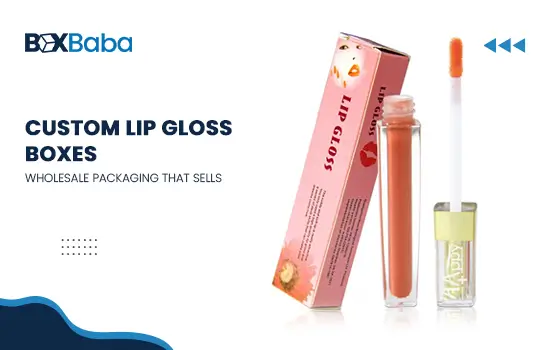
If you are comparing custom lip gloss boxes for a wholesale order, the best option is usually the one that fits the tube well, matches your sales channel, and stays practical to reorder.
For most brands, that starts with a folding carton. From there, the right upgrade depends on what the packaging needs to do.
A window box helps when shade visibility matters. A rigid box fits premium kits, gifting, or influencer mailers. An insert, mailer box, or both matters more when shipping risk is high.
That is the real buying decision.
Not every lip gloss product needs premium embellishments. Not every retail carton is strong enough for ecommerce. And not every low-MOQ offer is the same as a true wholesale packaging setup.
This guide will help you compare options, shortlist suppliers, and request quotes with better clarity.
What Are Custom Lip Gloss Boxes?
Custom lip gloss boxes are printed cartons or premium presentation boxes made to fit lip gloss tubes or sets.
They help with three things:
- product protection
- brand presentation
- retail, ecommerce, or wholesale distribution
In simple terms, they are not just boxes. They are part of how the product is sold, shipped, and perceived.
What Packaging Works Best for Most Brands?
For most brands, the best starting point is a paperboard or cardboard folding carton.
It works well because it balances:
- print quality
- branding space
- cost control
- repeat-order practicality
From there, adjust based on need:
- Choose a window carton if product visibility helps sales.
- Choose a rigid box if presentation is part of a premium launch or gift set.
- Choose an insert or outer mailer if the product needs more stability during shipping.
Who Custom Lip Gloss Boxes Are Best For
Custom lip gloss boxes are a strong fit for:
- indie beauty brands
- ecommerce cosmetic brands
- private-label product lines
- retail and boutique sellers
- brands launching new shades or collections
They are especially useful when you need a product box that looks branded, organized, and ready for sale.
They also work well when you want a cleaner presentation than a plain stock carton can offer.
Who They Are Not Ideal For
Custom lip gloss boxes may be a weaker fit when:
- you only need plain protective packaging
- your tube dimensions are still changing
- your artwork is far from final
- you need strong transit protection but only want a thin retail carton
you want a premium result but only want the cheapest structure
In those cases, a test run, a simpler branded carton, or a setup that combines the product box with a shipping layer may be a better short-term choice.
Which Box Style Is Right for Your Lip Gloss Product?
The right style depends on where the product will be sold, how it will be shipped, and how much presentation matters.
Tuck-End Lip Gloss Boxes
Examples include:
- straight tuck end
- reverse tuck end
- auto bottom
This is usually the best starting point for custom printed lip gloss boxes.
Choose this when:
- you need a standard single-unit carton
- you want a balance of branding and cost control
- you want a structure that is easier to scale
Avoid this as a standalone solution when:
- the order will face rough ecommerce shipping
- the tube fit is loose and needs internal control
- the brand needs a more premium gifting look
Best fit:
- retail shelves
- standard beauty packaging
- repeat wholesale runs
Window Lip Gloss Boxes
Examples include:
- front window
- side window
- partial product reveal
These are useful when the shade, applicator, or tube appearance helps the product sell.
Choose this when:
- visibility matters at shelf level
- color is part of the buying decision
- display value matters more than maximum print area
Avoid this when:
- shipping conditions are rough
- structure matters more than product visibility
- your design already needs a lot of graphic space
Best fit:
- beauty retail
- boutiques
- shade-led product lines
Rigid Lip Gloss Boxes
Examples include:
- lift-off lid boxes
- magnetic closure boxes
- tray-and-sleeve boxes
Rigid boxes are built for presentation first.
Choose this when:
- the product is part of a premium launch
- the unboxing experience supports the sale
- you are creating a PR kit or gift set
Avoid this when:
- the product is a basic repeat-purchase SKU
- shipping and storage efficiency matter more than presentation
- budget control is the top priority
Best fit:
- premium collections
- influencer mailers
- holiday or launch packaging
If you also offer related premium cosmetic packaging, this is a good place to link to your Custom Rigid Boxes.
Multi-Unit or Insert-Based Boxes
Examples include:
- duo packs
- trio packs
- insert-supported kits
These work well when the product needs more control inside the package.
Choose this when:
- you are packing multiple tubes together
- the product moves too much in a standard carton
- the presentation order matters
Avoid this when:
- the product is a simple one-unit retail item
- you are still testing the format and want less packaging complexity
Best fit:
- bundles
- curated shade sets
- ecommerce kits
- launch packs
Where internal stability matters, this is a natural place to link to Cardboard Inserts or boxes with inserts.
Which Material Makes the Most Sense?
Material affects print quality, structure, appearance, and quote logic.
Paperboard or Cardboard Cartons
Examples include:
- SBS-style board
- coated paperboard
- printable folding carton stock
For many brands, this is the default material family for lip gloss packaging boxes.
Choose this when:
- you need strong print quality
- you want a standard branded retail carton
- you want an option that scales well
Tradeoffs:
- may not be enough on its own for rough shipping
- may need an insert or outer packaging depending on packout
Corrugated Support Packaging
Examples include:
- corrugated mailers
- outer shippers
- insert-supported shipping boxes
Corrugated is often more useful as support packaging than as the main retail carton.
Choose this when:
- you are shipping ecommerce orders
- you need stronger transit protection
- the product carton alone is not enough
Tradeoffs:
- less refined as the main retail-facing package
- works best as part of a packaging system
Rigid Board
Examples include:
- greyboard-based rigid setup boxes
premium presentation boxes - Rigid board is about stronger presentation and a higher-end feel.
Choose this when:
- gifting or presentation matters
- the product margin supports a more premium box
- packaging is part of the product story
Tradeoffs:
- usually costs more than folding cartons
- takes more space in storage and shipping
- may be unnecessary for standard replenishment
Retail vs Ecommerce vs Premium Kits vs Wholesale Reorders
This is where many generic pages stay too vague. The right custom lip gloss boxes with logo depend on where the package has to perform.
For Retail Shelves
Retail packaging usually needs:
- clean front-panel branding
- easy shade recognition
- visual consistency across SKUs
Usually best:
- tuck-end cartons
- window cartons
- small display-ready cartons
If shelf visibility matters, design clarity matters more than heavy-duty transit performance.
For Ecommerce Orders
Ecommerce packaging usually needs:
- tighter fit
- less internal movement
- better resistance to edge crush and scuffing
Usually best:
- folding cartons with tighter dimensions
- insert-supported cartons
- product cartons plus corrugated mailers
A retail carton is not always a shipping solution.
For many ecommerce orders, the better answer is not a heavier product box alone. It is a better packaging system.
For PR Kits or Premium Launches
Presentation packaging usually needs:
- stronger unboxing value
- cleaner organization
- more premium visual control
Usually best:
- rigid boxes
- tray-and-sleeve styles
- insert-supported premium packs
Choose this route when the packaging experience directly supports how the product is positioned.
For Repeat Wholesale Runs
Wholesale packaging usually needs:
- consistency
- repeatable specifications
- easier storage and handling
- practical reordering
Usually best:
- efficient folding cartons
- controlled print specs
- structures that scale without unnecessary complexity
If the product is a repeat SKU, reliability often matters more than decorative upgrades.
Which Printing Options Actually Matter?
Instead of asking for premium printing, ask which print choices improve shelf impact, brand recognition, or perceived value enough to justify the added cost.
Core Print Options
Examples include:
- CMYK printing
- PMS color matching
- logo printing
These matter when you need:
- consistent branding
- clearer color control
- better repeat-order consistency
If color accuracy matters, ask how the supplier handles proofs and color approval.
Finish Options
Examples include:
- matte finish
- gloss finish
- soft-touch coating
These affect:
- how the box feels
- how the colors look
- how fingerprints or scuffing may show
Choose the finish based on product position, not trend appeal alone.
Premium Embellishments
Examples include:
- foil stamping
- embossing
- spot UV
These can improve perceived value, but they are not always the right move.
Good fit when:
- the product already sits in a premium segment
- the design is simple enough for the embellishment to stand out
- the finish supports a clear branding goal
Bad fit when:
- the budget is tight
- the product is still being tested
- the added cost does not improve the sale or the presentation enough
Low MOQ, Custom-Branded Runs, and Wholesale Are Not the Same Thing
This distinction matters.
A low-MOQ option can be helpful, but it does not automatically mean the packaging is set up for efficient long-term wholesale buying.
Custom-Branded Sample or Testing Run
Best for:
- new launches
- artwork still in development
- early market validation
What to expect:
- more flexibility
- lower commitment
- weaker unit economics than larger runs
- Small Production Run
Best for:
- early brands with stable dimensions
- limited first launches
- controlled risk before scaling
What to check:
- whether the quote includes full printing specs
- whether proofs and samples are separate
- whether the packaging can be repeated later with the same setup
- Repeat Wholesale Run
Best for:
- stable SKUs
- established channels
- brands ready for scale
What to check:
- whether the supplier is quoting a repeatable production setup
- whether materials and color can stay consistent
- whether the packaging is practical for reorder efficiency
Exact MOQ is supplier-specific. It stays Unclear until the supplier reviews your dimensions, style, material, printing, and production setup.
How to Compare Lip Gloss Packaging Suppliers
A strong lip gloss box supplier should make the project clearer before production, not more confusing.
Ask About Fit and Structure
You want to know:
- how they confirm tube dimensions
- whether they recommend inserts when needed
- whether they review structure based on channel use
Ask About Proofs and Samples
You want clarity on:
- digital proof
- physical sample
- revision process
- what must be approved before production starts
- Ask About Print Quality
You want to confirm:
- color matching approach
- artwork setup requirements
- finish limitations
- what happens if the approved proof and final output differ
- Ask About Production Reality
You want to know:
- whether the MOQ is for samples, first runs, or repeat wholesale runs
- what affects lead time
- what causes delays
- whether the same setup can be reordered consistently
Ask About Shipping Use Cases
You want to know:
- whether the box is retail-focused, ecommerce-focused, or both
- when they recommend inserts
- when they recommend an outer mailer or shipping carton
Packaging Supplier Red Flags
Be cautious if the supplier:
- gives vague MOQ language
- does not ask for tube dimensions
- skips discussion of proofs or sampling
- treats every project as the same structure
- makes broad sustainability claims without specifics
- talks only about visuals and ignores shipping or packout
A better supplier explains tradeoffs instead of pushing every buyer toward the same setup.
Common Mistakes Buyers Make
Choosing Style Before Channel
A good retail box is not always the right ecommerce box.
Paying for Premium Finishes Too Early
Foil, embossing, and soft-touch can help, but not every SKU needs them.
Under-Planning Shipping Protection
A product carton is not always enough for transit.
Comparing Quotes With Different Specs
This is one of the most common reasons buyers misread price differences.
Assuming Low MOQ Means Wholesale Readiness
A small test run and a repeat wholesale program are not the same thing.
Frequently Asked Questions
What is the best box style for custom lip gloss boxes?
For many brands, a tuck-end folding carton is the best starting point because it balances cost, branding, and reorder practicality. Window boxes help when shade visibility matters. Rigid boxes make more sense for premium kits, gifting, or PR presentation.
What material is best for lip gloss packaging boxes?
Paperboard or cardboard is usually the most flexible starting point. Kraft can suit a natural brand aesthetic. Rigid board fits premium presentation. Corrugated is often better as shipping support than as the main retail box.
Are lip gloss boxes with logo enough for ecommerce shipping?
Not always. Many branded lip gloss cartons are built first for presentation, not transit protection. For ecommerce, you may also need tighter fit, inserts, a mailer box, or all three.
Do I need inserts for lip gloss boxes?
Not always. Inserts are most useful when you are packing multiple units, reducing internal movement, or building a more controlled presentation set.
What affects the price of wholesale lip gloss boxes?
The main cost drivers are size, material, structure, print coverage, finishes, inserts, proofing needs, and order volume. Exact pricing is supplier-specific and Unclear until the final specifications are quoted.
What MOQ should I expect for custom printed lip gloss boxes?
MOQ varies by supplier and production setup. Exact minimums remain Unclear until the size, style, material, print requirements, and order scope are reviewed.
What is the difference between a sample run and a wholesale run?
A sample or testing run is usually meant for validation and flexibility. A wholesale run is meant for repeatable production, better long-term ordering efficiency, and more stable specs across reorders.
What should a lip gloss box supplier confirm before quoting?
A supplier should confirm dimensions, box style, material, print scope, insert needs, proofing approach, shipping use case, and whether the quote is for a test run or repeat wholesale production.
Are kraft lip gloss boxes always the most sustainable option?
Not automatically. Sustainability depends on the full packaging setup, material details, coatings, inserts, and what claims can actually be supported. If the evidence is incomplete, the right answer is Unclear.
What should I send before asking for a quote?
Send the tube dimensions, quantity, style preference, artwork status, finish needs, shipping use case, and target timeline. That makes quote comparisons more accurate.