
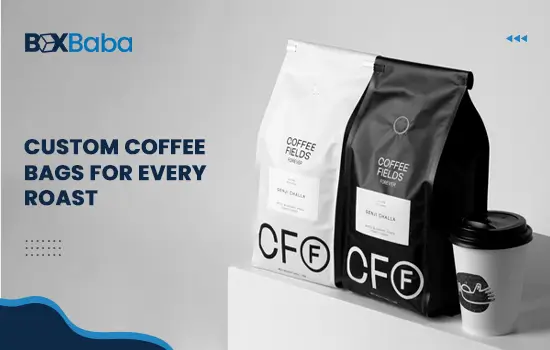
The right custom coffee bag starts with the roast.
A light roast sold on a retail shelf, a dark roast shipped through ecommerce, and a 5 lb wholesale coffee bag need different pouch structures, valves, finishes, and barrier layers. The best packaging protects the roast, supports your sales channel, and gives your artwork enough space to look professional.
Custom coffee bags protect roasted coffee from oxygen, moisture, light, aroma loss, weak seals, and rough handling. They also carry buyer-facing information: roast profile, origin, tasting notes, logo, QR code, roast date area, barcode, net weight, and retail artwork.
BoxBaba helps roasters turn a coffee packaging idea into a quote-ready specification. Before requesting custom coffee bags, prepare your roast profile, fill weight, pouch style, material preference, valve need, closure type, finish, artwork status, quantity, and delivery requirements.
What Are Custom Coffee Bags?
Custom coffee bags are printed flexible pouches designed to protect roasted coffee, display brand artwork, and fit a specific fill weight.
They can include high-barrier films, resealable zippers, tear notches, one-way degassing valves, transparent windows, matte lamination, gloss lamination, foil stamping, and spot UV. Many coffee pouches sit within the broader custom Mylar bags because they use laminated flexible films for freshness protection and shelf presentation.
A good custom coffee bag does three jobs at the same time: it protects the roast, presents the brand, and gives the buyer a practical package to open, reseal, store, scan, and reorder.
Best Coffee Bag Choices by Use Case
Fresh whole bean coffee often needs a high-barrier pouch with a one-way degassing valve, especially when packed soon after roasting.
For many small-to-medium roasters, a stand-up pouch with a valve and resealable zipper is the safest starting point. It works for retail shelves, subscriptions, ecommerce shipments, and everyday DTC coffee sales.
For premium retail coffee, a flat-bottom pouch usually creates stronger shelf presence. It stands upright, gives more printable panels, and feels more structured in the customer’s hand.
For larger wholesale fills, side-gusset bags or quad seal pouches often make more sense. They support larger volumes, stacking, and bulk handling better than small-format retail pouches.
For sample packs, flat pouches or 3-side seal pouches keep small fills efficient without forcing a full retail pouch structure.
The Roast-to-Route Fit Framework
Choose coffee packaging by matching the roast to the route it takes to the buyer.
That means your roast profile, product form, sales channel, shelf-life target, and brand position should guide the pouch style before artwork begins.
Use this simple framework:
Light roast + retail shelf
Start with an opaque high-barrier stand-up pouch or flat-bottom pouch. Add a valve if the coffee is packed fresh. Use a zipper for customer storage and leave enough front-panel space for origin and tasting notes.
Medium roast + DTC or café sales
A stand-up pouch or flat-bottom pouch with metallized or foil barrier works well for many roasters. Add a resealable zipper, tear notch, and finish that can handle customer handling.
Dark roast + oily beans
Use an opaque high-barrier pouch with strong seals. Dark roast oils can contact the inner sealant more heavily, so ask BoxBaba to review material suitability, seal strength, and valve needs before production.
Ground coffee + retail or ecommerce
Prioritize oxygen management. Ground coffee exposes more surface area, so the barrier structure, seal quality, closure, and packing method matter more than pouch appearance alone.
Subscription coffee + mailer shipping
Choose a lightweight, durable pouch that fits the outer mailer or shipping box. Matte finishes can look premium, but ask about scuff resistance if the pouch will ship directly to customers.
Wholesale coffee + large fill weight
Start with a side-gusset or quad seal pouch. Larger bags need stronger structure, efficient filling, better stacking, and case-pack planning.
The rule is simple: choose the structure first, then design the bag around it. Artwork should fit the pouch, not force the pouch into the wrong shape.
Who Custom Coffee Bags Are For
Custom coffee bags are best for roasters that need repeatable, branded, retail-ready packaging.
They fit specialty coffee roasters, café-roasteries, DTC coffee brands, subscription programs, coffee startups, seasonal blend sellers, wholesale coffee suppliers, and premium retail coffee brands.
Custom printed coffee bags make sense when you already know your product size, sales channel, and core SKU strategy. They are especially useful when plain stock pouches and labels no longer give your brand enough shelf impact or consistency.
They also help when your coffee bags need more than a logo. A custom pouch can reserve space for origin details, roast notes, barcode, roast date, QR code, net weight, valve placement, zipper placement, and side-gusset artwork.
When Stock Coffee Bags Make More Sense
Stock coffee bags can be smarter for early testing, very small batches, farmers market trials, pre-launch sampling, or one-time micro lots.
Use stock bags with labels when you are still testing demand. Move to custom printed coffee bags when SKU demand, retail placement, subscription volume, or brand consistency justifies the setup.
Stock bags reduce early decisions, but they limit print control, size optimization, finish choice, valve placement, and brand presentation. Custom bags give you more control, but they require clearer quote inputs.
Choose the Right Coffee Bag Style
Bag style controls shelf stability, fill efficiency, print area, and customer handling.
A stand-up pouch works well for many 8 oz, 12 oz, and 1 lb coffee products. It balances shelf presence, zipper compatibility, material efficiency, and ecommerce handling. This is often the best starting point for roasters that sell through both retail and DTC channels.
A flat-bottom pouch creates a more structured retail look. It stands upright, offers multiple branding panels, and feels premium without using a rigid box. Choose this format when shelf blocking and brand presentation matter.
A side-gusset bag fits larger fills and traditional coffee packaging styles. It expands at the sides and can work well for 1 lb, 2 lb, and 5 lb coffee programs, especially for wholesale and café supply.
A quad seal pouch adds more structure through four vertical seals. It can support heavier fills, better panel control, and stronger shelf presentation for larger coffee bags.
Flat pouches and flat Mylar bags work better for samples, single-serve portions, trial packs, and mailer inserts. They are not usually the best choice for upright retail display, but they keep small fills efficient.
Match Material Structure to Freshness Needs
Coffee bag materials help manage oxygen, moisture, light, aroma loss, oil contact, seal strength, and print durability.
PET, metallized film, aluminum foil, kraft paper laminate, and PE sealant layers can all appear in coffee packaging structures. The right combination depends on the roast, shelf-life target, sales channel, sustainability goal, and packing method.
A basic PET / PE laminate may work for simple short-cycle packaging, but it may not provide enough barrier for every coffee product. A metallized structure such as PET / VMPET / PE can improve oxygen and light protection. A foil laminate can provide stronger barrier performance, but it may increase cost and complicate recyclability claims.
Kraft-look coffee bags create a natural, craft appearance. However, kraft appearance does not automatically mean the pouch is recyclable, compostable, or suitable for direct food contact. Many kraft coffee pouches use inner barrier layers. Roasters that want this look should review kraft Mylar bags and confirm the exact material structure before printing claims.
For coffee packaging that contacts food, ask BoxBaba to confirm material suitability for the exact coffee product, packing method, and distribution channel. The FDA maintains food-contact packaging resources for industry, including information on packaging and food contact substances.
OTR and MVTR
OTR means Oxygen Transmission Rate. It describes how much oxygen can pass through packaging material.
MVTR means Moisture Vapor Transmission Rate. It describes how much moisture vapor can pass through packaging material.
Lower OTR and MVTR usually indicate stronger barrier protection. Final performance still depends on the laminate, seal quality, closure, storage conditions, valve performance, and packing method.
Do not choose a coffee pouch only because it looks good. Choose it because the material structure fits your roast, fill weight, shelf-life target, and route to the buyer.
Do Your Coffee Bags Need a Degassing Valve?
Fresh whole bean coffee often needs a one-way degassing valve when packed soon after roasting.
A degassing valve lets carbon dioxide escape from the bag while helping reduce oxygen entry. This matters because roasted coffee can release gas after packing. Without the right valve strategy, a sealed coffee bag can swell, strain the seals, or look unstable on the shelf.
A degassing valve is usually helpful for freshly roasted whole bean coffee, sealed retail bags, ecommerce coffee shipments, premium coffee pouches, and larger fill weights where gas buildup is more visible.
A valve may not be needed for coffee that has fully degassed before packing, some ground coffee applications, short-cycle sample packs, or products that use a different freshness-control process.
Valve performance depends on valve quality, placement, seal integrity, bag material, fill weight, case packing, and product handling. A valve cannot fix weak material selection, poor sealing, excess headspace, or incorrect pouch dimensions.
Choose the Right Closure
Closures affect how the customer opens, reseals, stores, and reuses the coffee bag.
A resealable zipper is a strong choice for 8 oz, 12 oz, and 1 lb retail coffee bags. It improves customer convenience and helps the opened bag stay neater at home. Roasters planning zipper pouches can also review BoxBaba resealable Mylar bags for related closure ideas.
A tin tie can work for kraft-style café bags or local retail programs. It gives a familiar coffee-shop feel, but it may not provide the same closure experience as a zipper.
A tear notch makes the bag easier to open cleanly. It is useful for retail and ecommerce pouches because buyers do not need scissors to access the product.
A transparent window can show the beans or grounds, but it can reduce light protection depending on the window material, size, and placement. Use windows carefully for light-sensitive coffee.
Whole Bean vs Ground Coffee Packaging
Whole bean and ground coffee need different oxygen-management decisions.
Whole bean coffee often drives valve decisions because roasted beans release CO₂ after roasting. A high-barrier pouch with a valve, zipper, and strong seals works well for many fresh whole bean programs.
Ground coffee exposes more surface area to oxygen. That means the pouch needs strong oxygen-management planning, careful closure selection, and reliable seal integrity. The bag should protect aroma and reduce air exposure from filling through customer use.
Espresso blends, oily dark roasts, flavored coffees, and bulk fills may need extra review. Do not assume one material or valve setup fits every coffee SKU.
Retail vs Ecommerce Coffee Packaging
Retail coffee packaging needs shelf blocking and front-panel impact. Ecommerce coffee packaging needs scuff resistance, compression tolerance, and shipping efficiency.
For grocery or specialty retail, choose a pouch that stands cleanly, presents the front panel well, and leaves space for barcode, net weight, roast name, flavor notes, and required label details.
For café shelves, kraft-look barrier pouches or stand-up pouches can create a strong craft presentation while keeping the bag easy to replenish and handle.
For ecommerce, think beyond the pouch. The coffee bag may rub against mailers, inserts, shipping boxes, or other products. Matte lamination can look premium, but some matte surfaces may show scuffs depending on coating and transit conditions. Ask for finish guidance if bags will ship directly to customers.
For gift sets, choose the coffee bag first. Then match the outer mailer, gift box, or insert to the finished pouch dimensions. The outer packaging should support the pouch, not replace the pouch’s freshness requirements.
Printing and Finishes for Custom Printed Coffee Bags
Printing and finishing control brand color, shelf contrast, scuff behavior, and perceived value.
Digital printing can support shorter runs, seasonal artwork, and multi-SKU testing. Rotogravure printing can support larger repeat orders and consistent high-volume graphics. The right method depends on quantity, artwork complexity, reorder plans, and budget.
CMYK printing works for full-color designs. PMS or Pantone color matching helps brands that need tighter color control. Matte lamination creates a soft, modern look. Gloss lamination adds shine and color impact. Spot UV can highlight the logo, roast name, or design accents. Foil stamping can add metallic detail for premium blends, holiday releases, or limited editions.
Finishes can improve shelf appeal, but they also affect cost, production complexity, scuff behavior, and sustainability claims. Ask for a finish recommendation based on where the bag will sell and how it will ship.
Plan Artwork Around the Dieline
A coffee bag dieline prevents artwork from landing in the wrong place.
Before designing, confirm the pouch width, height, gusset depth, seal areas, zipper position, valve location, tear notch position, and bottom panel layout if using a flat-bottom pouch.
Reserve space for the front logo, roast name, origin, tasting notes, barcode, QR code, net weight, roast date, lot code, best-by area, company information, and any required label details.
Keep critical text away from seal zones, folds, zipper areas, valve placement, and gussets. A beautiful design can still fail in production if the dieline is wrong.
Size, Fill Weight, and Headspace
Coffee bag size should start with fill weight, not visual preference.
A 4 oz sample pouch, 12 oz retail pouch, 1 lb DTC pouch, and 5 lb wholesale bag need different dimensions, gusset depths, valve positions, closure locations, and case-pack planning.
Small fills work better in flat pouches, small stand-up pouches, or 3-side seal pouches. Common 8 oz and 12 oz retail bags often fit stand-up or flat-bottom formats. Larger 2 lb and 5 lb bags usually need side-gusset, quad seal, or reinforced structures.
Oversized bags create too much headspace, weak shelf posture, higher material cost, and poor case efficiency. Undersized bags can cause filling problems, seal stress, and inconsistent finished appearance.
Prepare your target fill weight, product density, desired headspace, and case-pack needs before requesting a quote.
MOQ, Cost Drivers, and Reorder Planning
Coffee bag cost changes when the pouch style, size, barrier film, valve, zipper, finish, print method, SKU count, quantity, proofing, or shipping destination changes.
Do not request pricing with only the phrase custom coffee bags. Send the pouch style, dimensions, material direction, valve need, closure, finish, quantity, artwork status, and destination.
Ask BoxBaba to confirm the current MOQ for your exact coffee bag structure. MOQ may vary by pouch style, material structure, valve, zipper, printing method, finish, SKU count, and reorder quantity.
For market testing, keep quantities and SKU count controlled. For a first retail launch, choose a focused SKU set and one or two bag sizes. For repeat DTC programs, standardize pouch structure across blends when possible. For wholesale expansion, plan case packs, storage, and reorder timing before you run out of packaging.
Exact pricing, lead time, sample policy, and shipping terms should be confirmed before production.
Samples, Proofs, and Approval Workflow
A clear approval process reduces packaging mistakes before production.
A practical workflow usually looks like this: choose pouch style, confirm dimensions, request a dieline, prepare artwork, review the digital proof, approve a sample if needed, confirm quantity and shipping, then approve production.
Ask whether your project needs a blank sample, printed sample, material sample, digital proof, or 3D mockup. Sampling decisions can affect timing and cost, but they can prevent bigger problems when launching a new SKU or retail program.
Do not approve production until the bag style, material, valve, closure, artwork, color expectations, label space, and shipping details are clear.
Sustainable Coffee Packaging: What to Confirm
Choose sustainable coffee packaging only after confirming barrier performance, seal strength, valve compatibility, disposal pathway, and claim documentation.
Recyclable, compostable, reduced-plastic, kraft-look, and mono-material coffee bags can all support different brand goals. None of those terms should be treated as automatic proof that the final pouch fits your product or market.
A recyclable claim depends on whether the exact package can be collected, separated, or recovered through an established recycling program. The FTC Green Guides apply to environmental claims about products and packages, including business-to-business transactions, and advise marketers to avoid deceptive environmental claims.
Broad claims such as eco-friendly, green, biodegradable, compostable, or recyclable should not be printed unless the brand can support the claim for the exact package structure and market. The Green Guides warn that unqualified general environmental benefit claims are difficult to interpret and can be deceptive.
A sustainable coffee bag that fails freshness needs can create product waste. Balance material footprint, barrier performance, shelf life, seal strength, valve performance, and end-of-life claims before choosing the structure.
USA Food Packaging and Labeling Cautions
Coffee packaging is food packaging, so material suitability and label space should be confirmed before production.
Ask BoxBaba to confirm material suitability for the coffee product, packing method, and intended distribution channel. Food-contact suitability can depend on the inner layer, ink system, adhesive, coating, storage conditions, and whether the package contacts whole bean or ground coffee.
FDA’s food labeling guide summarizes required statements for food labels under federal food labeling laws, and packaged foods generally need label space for required information. The eCFR states that packaged food must bear a net quantity declaration on the principal display panel, expressed in appropriate terms such as weight, measure, numerical count, or a combination.
Reserve design space for statement of identity, net quantity, barcode, roast date, lot code, QR code, business details, and any product-specific claim review.
This section is not legal advice. Confirm food-contact, labeling, net quantity, environmental claims, state-specific requirements, retailer requirements, and distribution-channel requirements before printing final coffee bags.
Common Coffee Bag Mistakes to Avoid
Many packaging problems start before production.
Do not design artwork before confirming pouch dimensions. Do not place critical text in seal zones. Do not add a clear window without reviewing light protection. Do not print recyclability or compostability claims without documentation. Do not order too many SKUs before testing demand. Do not skip valve review for freshly packed whole bean coffee.
Also avoid choosing packaging only by appearance. A matte black flat-bottom pouch may look premium, but it still needs the right barrier, valve, seal strength, scuff resistance, label space, and fill dimensions.
Why Choose BoxBaba for Custom Coffee Bags?
BoxBaba helps roasters define quote-ready coffee bag specifications: pouch style, fill weight, material direction, valve, zipper, finish, artwork status, quantity, and delivery requirements.
That matters because coffee packaging is not only a printed bag. It is a freshness system, retail surface, shipping unit, and quote specification. The wrong pouch can create swelling, weak shelf posture, scuffed finishes, unclear label space, poor case efficiency, or unsupported sustainability claims.
BoxBaba is a strong fit when you need custom printed coffee bags, not only blank stock pouches. It also fits buyers comparing stand-up pouches, flat-bottom pouches, side-gusset bags, quad seal pouches, flat pouches, food Mylar bags, kraft-look pouches, resealable closures, and sample pack formats.
Before ordering, confirm exact MOQ, pricing, lead time, sample policy, material suitability, sustainability documentation, artwork requirements, and shipping terms for your project.
Final Takeaway
Custom coffee bags should be chosen by roast behavior and sales route, not by artwork alone.
A light roast retail bag, dark roast ecommerce bag, ground coffee pouch, sample pack, and 5 lb wholesale bag each need a different balance of barrier material, valve, closure, finish, size, and handling strength.
Before requesting a quote, run your product through the Roast-to-Route framework:
Roast profile → product form → sales channel → shelf-life target → pouch style → material structure → valve and closure → print and finish → quantity and quote details.
When those inputs are clear, BoxBaba can help you compare coffee pouch formats, high-barrier material options, resealable closures, printing methods, finishes, and related Mylar packaging before you order custom coffee bags.
FAQs About Custom Coffee Bags
What are custom coffee bags?
Custom coffee bags are printed flexible pouches designed for roasted coffee. They can include high-barrier films, degassing valves, resealable zippers, tear notches, custom artwork, matte or gloss lamination, foil details, and retail-ready label space.
What is the best bag for coffee beans?
A high-barrier stand-up pouch or flat-bottom pouch with a one-way degassing valve and resealable zipper works well for many whole bean coffee products. The best choice depends on roast timing, fill weight, shelf-life target, and sales channel.
Do coffee bags need a degassing valve?
Freshly roasted whole bean coffee often needs a degassing valve when packed soon after roasting. The valve helps release CO₂ while reducing oxygen entry. Ground coffee, sample packs, and fully degassed coffee may need a different approach.
Are flat-bottom coffee bags better than stand-up pouches?
Flat-bottom coffee bags are better for premium shelf presence and larger printable panels. Stand-up pouches are often better for balanced cost, ecommerce shipping, and everyday retail. The better choice depends on fill weight, brand position, and route to the buyer.
What material is best for coffee packaging?
High-barrier laminated films are commonly used for coffee packaging because they can help reduce oxygen, moisture, light, and aroma exposure. PET, metallized film, foil, kraft laminate, and PE sealant layers may be considered depending on the project.
Are kraft coffee bags recyclable?
A kraft appearance does not automatically make a coffee bag recyclable. Many kraft coffee bags use inner barrier layers. Ask for documentation for the exact material structure and confirm whether the final package fits the relevant recycling stream.
Are compostable coffee bags always better?
Compostable coffee bags are not always better. The structure must still protect freshness, seal properly, support the intended shelf life, and have a realistic composting pathway. Claim wording should be documented before printing.
What affects custom coffee bag cost?
Coffee bag cost depends on pouch style, size, material structure, barrier performance, valve, zipper, tear notch, window, print method, color matching, finish, quantity, SKU count, samples, timeline, and shipping destination.
What should I prepare before requesting a coffee bag quote?
Prepare product type, roast profile, fill weight, bag style, dimensions, quantity, material preference, valve need, closure type, printing method, finish, artwork status, delivery deadline, shipping destination, and compliance sensitivity.
Can I use one bag style for every roast?
You can standardize one bag style across multiple roasts, but material, valve, artwork, and size decisions should still match product behavior. Dark roasts, ground coffee, sample packs, and bulk coffee may need different specifications.
Should ecommerce coffee bags use matte or gloss finish?
Matte finish creates a premium specialty-coffee look, but it may show scuffs depending on handling and coating. Gloss finish can improve shine and color impact. Ask for finish guidance if the bags will ship directly to customers.
When do coffee bags need outer boxes or inserts?
Coffee bags may need outer boxes, inserts, or dividers when sold as gift sets, subscription kits, or multi-pack shipments. The pouch remains the primary coffee package, so freshness, valve, barrier, and seal decisions still come first.