
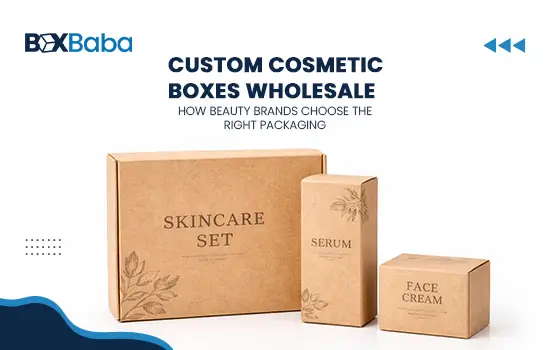
If you are sourcing custom cosmetic boxes wholesale, the right choice is not just about looks.
The right box has to fit your product, your sales channel, your branding goals, and your order stage. A box that looks great on a mockup can still create problems in printing, shipping, storage, or reorders.
For most beauty brands, the smartest way to choose packaging is to answer four questions first:
- What product are you packaging?
- Where will it be sold?
- Does it need presentation only, or real shipping protection too?
- Are you testing the market, launching, or reordering at scale?
Once those answers are clear, it becomes much easier to choose the right box style, material, finish, and supplier.
Brands exploring different structures can also review BoxBaba full range of custom cosmetic boxes before requesting a quote.
What Are Custom Cosmetic Boxes Wholesale?
Custom cosmetic boxes wholesale are branded boxes produced in bulk for beauty products such as skincare, makeup, and fragrance.
In most cases, they are secondary packaging. That means the product sits inside a bottle, jar, tube, or compact, and the box goes around it for presentation, protection, and product information.
These boxes are commonly used for:
- retail shelf display
- ecommerce orders
- Amazon fulfillment
- subscription
- packaging
- gift sets and
- promotional kits
Common formats include:
- folding cartons
- rigid boxes
- corrugated mailer boxes
Who This Packaging Is Best For
Custom cosmetic boxes wholesale are a strong fit for beauty brands that:
- sell in repeatable volumes
- want consistent branded packaging
- need packaging for retail, DTC, Amazon, or mixed channels
- want flexibility in size, print, finish, and structure
- are preparing for launch, growth, or reorders
Good-fit buyers include:
- skincare brands selling serums, creams, and kits
- makeup brands selling lipstick, mascara, and palettes
- fragrance brands packaging perfume bottles, samples, and gift sets
Who It Is Not Ideal For
This type of packaging is usually not the best fit when:
- product dimensions are still changing
- the primary container has not been finalized
- artwork is not ready
- the buyer needs exact pricing before the spec is clear
- the brand wants one box style to solve every retail and shipping need
In those cases, it is usually better to slow down and start with a sample, a prototype, or a simpler pilot run.
Low MOQ vs Launch Quantity vs True Wholesale
This is one of the biggest points of confusion in cosmetic packaging.
A low MOQ can help you test a product or launch with less risk. But low MOQ does not always mean lower cost per unit, better print efficiency, or the best long-term packaging plan.
It helps to think in three stages:
1. Test or Prototype Stage
Best when you are still validating size, design, fit, or market response.
2. Launch Stage
Best when you are selling, but still managing inventory and cash flow carefully.
3. Wholesale Reorder Stage
Best when the product is established and you want better purchasing efficiency and more stable repeat production.
The best order quantity depends on your sales plan, storage capacity, budget, and confidence in the final spec. Exact minimums are supplier-specific and should be confirmed before ordering.
How to Choose the Right Cosmetic Box
The fastest way to choose the right packaging is to work in this order:
Start With the Product
Your product format affects the box structure first.
Examples:
- Lipsticks, mascaras, eyeliners: compact folding cartons
- Serums, oils, perfumes: boxes with stronger support, often with inserts
- Cream jars, skincare sets, gift kits: larger cartons, tray-style boxes, or rigid boxes
Then Choose by Sales Channel
The channel changes what the packaging needs to do.
- Retail shelf: visual impact, readable information, efficient display
- DTC shipping: better durability, scuff resistance, safer handling
- Amazon or fulfillment-heavy channels: stronger focus on packaging safety and shipping fit
A retail-ready box is not always enough for ecommerce. In many cases, brands need both a product carton and an outer protective shipping solution.
Then Decide How Premium the Experience Needs to Feel
Not every cosmetic product needs rigid packaging.
A premium look can also come from:
- clean design
- better color control
- one well-used finish
- a neat insert fit
- stronger print execution
Rigid boxes make sense for some fragrance, gifting, PR, or luxury launches. They are often unnecessary for everyday replenishment products.
Then Confirm the Order Stage
The right packaging for a test launch may not be the right packaging for a high-volume reorder. Structure, finish, and order quantity should match the stage of the brand.
Paperboard vs Corrugated vs Rigid
This is one of the most important packaging decisions for beauty brands.
Paperboard or Cardboard
Paperboard is the most common choice for custom printed cosmetic boxes.
Best for:
- lipstick boxes
- serum cartons
- cream boxes
- standard retail packaging
Why brands choose it:
- good print surface
- flexible structure options
- efficient for many everyday cosmetic cartons
- easier to scale across a product line
Tradeoffs:
- less protective than corrugated
- may need inserts or stronger structure for heavier glass items
Corrugated Board
Corrugated is better when shipping protection matters.
Best for:
- DTC mailers
- subscription beauty boxes
- bundled skincare orders
- outer protection for fragile items
Why brands choose it:
- better transit strength
- useful for direct shipment
- works well when the shipping box is part of the brand experience
Tradeoffs:
- bulkier than paperboard
- not always ideal as the main retail presentation box
- may require more work to achieve a luxury look
Rigid Board
Rigid boxes are designed for premium presentation.
Best for:
- perfume boxes
- gift sets
- luxury skincare kits
- PR and influencer boxes
Why brands choose it:
- stronger perceived value
- sturdy structure
- more premium unboxing experience
Tradeoffs:
- usually higher cost
- takes more storage space
- often too much for routine, low-complexity products
Common Box Styles for Beauty Brands
Different products need different structures. Buyers should choose the style based on product weight, fragility, display needs, and fulfillment method.
Tuck-End Folding Cartons
Examples include:
- straight tuck end
- reverse tuck end
- tuck top with dust flaps
Best for:
- lightweight cosmetics
- standard shelf presentation
- products that need efficient packing and strong print coverage
Not ideal for:
- heavier glass items without support
- premium gifting on their own
Auto-Lock or Crash-Lock Bottom Boxes
Best for:
- cream jars
bottle-based skincare
slightly heavier products
Why brands choose them:
- better bottom support
- stronger structure for heavier units
Sleeves and Tray-Style Boxes
Examples include:
- tray and sleeve
- drawer-style boxes
- slipcase-style packaging
Best for:
- gift bundles
- premium skincare sets
- launch kits
Not ideal for:
- basic low-cost replenishment products
Rigid Setup Boxes
Examples include:
- magnetic closure boxes
- shoulder-neck boxes
- two-piece rigid boxes
Best for:
- luxury fragrance
- holiday gifting
- PR kits
- premium presentation lines
Not ideal for:
- everyday units where storage and cost control matter more than presentation
Corrugated Mailer Boxes
Best for:
- DTC beauty shipments
- subscription boxes
- sample kits
- multi-item ecommerce orders
Why brands choose them:
- stronger protection in transit
- easier to brand the outer package
- useful when shipping and unboxing are part of the same experience
Printing and Customization Options
Most wholesale cosmetic packaging projects use print and finishing to support brand recognition and shelf appeal.
Common print options include:
- full-color printing
- spot colors
- inside and outside printing
Common finish options include:
- matte lamination
- gloss lamination
- foil stamping
- embossing
- debossing
- spot UV
- soft-touch coatings
What Buyers Should Actually Focus On
Do not choose finishes by trend alone. Choose them by function.
For example:
- Foil can add impact, but also adds cost and production steps
- Soft-touch can feel premium, but may not be ideal for heavy shipping use
- Spot UV works best when the design already has a clear focal area
The most important print questions are usually:
- Can small text stay readable?
- Can brand colors stay consistent?
- Will barcodes print clearly?
- Will the finish scuff during shipping or handling?
- Can the supplier provide a proof that is useful for approval?
Those questions matter more than generic claims about “premium quality.”
What Drives the Cost of Custom Cosmetic Boxes Wholesale
If you are comparing quotes, focus on the real cost drivers.
1. Box Structure
Simple folding cartons usually cost less than rigid boxes or insert-heavy packaging.
2. Material Grade and Thickness
Heavier or more specialized materials usually increase cost.
3. Print Coverage
Inside printing, full-coverage designs, and more demanding color requirements can affect cost.
4. Finishes
Foil, embossing, debossing, spot UV, and specialty coatings usually add cost and production complexity.
5. Inserts
Custom inserts improve stability and protection, but they also increase material use and assembly complexity.
6. Order Volume
Higher quantities may improve the unit price, but only if the inventory makes sense for your business.
7. Samples and Revisions
Physical samples, structural changes, and multiple proof rounds can affect the total project cost.
8. Shipping and Freight
Packaging size, shipment method, and destination affect landed cost.
Turnaround Considerations
Turnaround depends on the box spec, artwork readiness, approvals, sampling needs, and supplier workflow. Exact production times should be confirmed directly with the supplier.
Projects usually slow down because of:
- incomplete dimensions
- unclear artwork files
- late dieline changes
- unresolved text or information layout
- added finishes after proof approval
- insert revisions
- physical sample changes
How to Reduce Delays
- finalize product dimensions early
- confirm the sales channel before approving the structure
- submit clean artwork files
- decide finishes before final approval
- ask the supplier to explain the proofing and approval sequence
The real issue is not just production speed. It is how many steps the job must go through before production can begin.
Shipping and Durability: Where Buyers Often Make Mistakes
This is where many cosmetic packaging projects fail.
A carton can look excellent on shelf and still be a poor choice for ecommerce. A rigid box can feel premium and still need added protection if the item inside is fragile. A corrugated mailer can solve transit problems but may not be the right standalone option for retail display.
A Simple Rule of Thumb
- use folding cartons for presentation and product information
- use inserts for internal support and fit
- use corrugated outer protection when shipping risk is real
- use rigid packaging when premium presentation clearly supports the business case
If you sell through ecommerce or Amazon, shipping performance matters just as much as shelf appearance.
Sustainability Considerations
Many beauty brands want packaging that feels more responsible, simpler, and easier to recycle. That is a valid priority. But sustainability claims should stay specific and realistic.
A practical approach is to focus on:
- material choice
- reduced unnecessary packaging
- supportable recyclability claims
- simpler structures where possible
- avoiding extra components that do not improve function
Common Sustainability Tradeoffs
- rigid boxes often use more material
- inserts improve protection but add components
- corrugated adds shipping protection but also adds bulk
- kraft can support a natural look, but may not suit every print goal
The best sustainability decision is usually not the most minimal-looking one. It is the one that balances protection, presentation, and realistic material choices.
How to Compare Cosmetic Packaging Suppliers
Many supplier pages list materials, finishes, and custom options. That is not enough for shortlisting.
A better supplier comparison should focus on these points:
1. Structural Fit
Can the supplier recommend the right style for your product and channel?
2. Proofing Process
Do they offer dielines, artwork proofs, mockups, or physical samples?
3. Print Confidence
Can they explain how they handle text clarity, color expectations, and finish quality?
4. Material Range
Do they offer the right mix of paperboard, corrugated, rigid, and insert options?
5. MOQ Fit
Can they support your actual order stage, not just advertise a low minimum?
6. Turnaround Clarity
Can they explain what happens before production and what affects timelines?
7. Shipping Awareness
Do they understand the difference between retail presentation and ecommerce durability?
8. Reorder Reliability
Can they keep the spec consistent when you reorder?
9. Communication Quality
Do they ask good questions before quoting, or do they just send a price?
Final Thoughts
The best custom cosmetic boxes wholesale option is not the one with the most finishes or the lowest advertised minimum.
It is the one that fits your product, your channel, your protection needs, and your reorder plan.
For most beauty brands, the smartest process is:
- define the product and sales channel first
- choose structure and material second
- confirm proofing and sample needs third
- compare suppliers on fit, consistency, and communication, not just price
That is how you reduce packaging risk before you buy.
Frequently Asked Questions
What are custom cosmetic boxes wholesale?
They are bulk-produced branded boxes used for beauty products such as skincare, makeup, and fragrance. In most cases, they are secondary packaging around the main product container.
What material is best for cosmetic packaging boxes?
It depends on the product and channel. Paperboard is common for retail cartons, corrugated is better for shipping protection, and rigid is best when premium presentation is the priority.
Are custom printed cosmetic boxes good for ecommerce?
Yes, but only when the structure matches shipping risk. A retail carton alone may not be enough for DTC or Amazon fulfillment.
Do beauty brands always need rigid boxes?
No. Rigid boxes are useful for gift sets, fragrance, and premium presentation, but they are often unnecessary for routine products.
What affects the price of custom cosmetic boxes wholesale?
The biggest cost drivers are structure, material, print coverage, finishes, inserts, order quantity, samples, and freight.
What should I ask a cosmetic box supplier before ordering?
Ask about structure recommendations, material options, proofing, sample availability, MOQ, print quality, timeline logic, and reorder consistency.
Can one packaging format work for both retail and ecommerce?
Sometimes, but not always. Many brands need a retail-ready product carton and a separate protective shipping solution.
What should I prepare before requesting a quote?
Prepare product size, container type, target quantity, box style preference, sales channel, print direction, finish requirements, and any information that must appear on the packaging.