
Rigid box size is one of the most important decisions in packaging design.
A box that is too small can damage the product or create a tight, awkward fit. A box that is too large can increase shipping cost, waste material, and weaken presentation.
In premium packaging, size affects more than protection. It shapes the unboxing experience, product balance, shelf presence, and perceived value.
That is why brands planning custom rigid boxes usually start with dimensions before choosing style, materials, or finishes.
This guide explains how rigid box sizes work, how dimensions are measured, what standard size ranges look like, and how size affects fit, freight, and cost.
What Are Rigid Box Sizes?
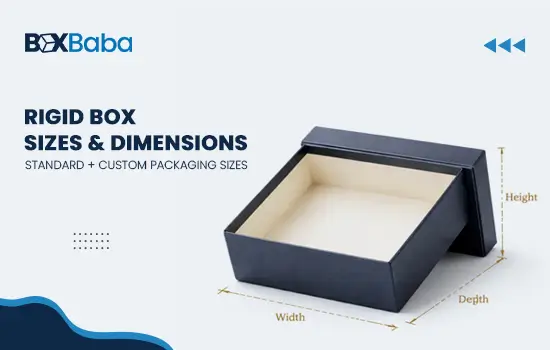
Rigid box sizes refer to the dimensions of a rigid package, usually written as length × width × depth.
Length is the longer side of the box opening. Width is the shorter side of the opening. Depth, sometimes called height, is the distance from the top edge to the bottom of the box.
In rigid packaging, accurate sizing matters because the structure is fixed. Unlike folding cartons, rigid boxes do not collapse and cannot flex around the product. The dimensions must be planned carefully from the start.
A well-sized rigid box creates enough room for the product, the insert, and a smooth opening experience without leaving the contents loose inside the box.
Rigid Box Sizes Are Planned from the Inside Out
The best way to size a rigid box is to start with the product, not the outside of the package.
In custom packaging, the internal dimensions are planned first because they determine whether the product and insert will fit correctly. After that, the external dimensions are calculated based on board thickness, wrap build, and the structure of the box.
This is one of the most important sizing principles in rigid packaging.
If you only focus on the outside of the box, you can overlook the space taken up by greyboard, wrap paper, insert walls, and construction allowances.
If you want to understand how board thickness affects outside dimensions, see our guide on rigid box materials.
Internal vs External Dimensions
Internal dimensions describe the usable space inside the box.
External dimensions describe the full finished size of the package after the structure, board, and wrap are complete.
This difference matters because two boxes can have the same internal size but different outer sizes if one uses thicker board or a more complex style.
A simple way to think about it is this:
- Internal size is for product fit.
- External size is for shipping, storage, and shelf presence.
When brands ignore this difference, they often end up with packaging that looks correct on paper but does not perform well in production or freight.
Standard Rigid Box Size Ranges
There is no single universal standard for rigid box sizes because most rigid packaging is customized around the product. Still, there are common planning ranges used across industries.
These ranges help buyers estimate what type of packaging they may need before requesting a custom quote.
| Size Range | Typical Dimensions | Metric Approximation | Common Uses |
|---|---|---|---|
| Small | 4 × 4 × 1.5 in to 8 × 6 × 2 in | 102 × 102 × 38 mm to 203 × 152 × 51 mm | Jewelry, cards, cosmetics, small accessories |
| Medium | 9 × 6 × 2 in to 12 × 10 × 4 in | 229 × 152 × 51 mm to 305 × 254 × 102 mm | Candles, skincare kits, gift sets, apparel accessories |
| Large | 14 × 10 × 4 in and above | 356 × 254 × 102 mm and above | PR kits, electronics, premium gifts, collector products |
These are not fixed manufacturing standards. They are practical planning ranges.
How to Measure a Product for a Rigid Box
The product should be measured at its longest, widest, and deepest points.
If the item has a cap, lid, handle, raised surface, or irregular edge, that must be included in the measurement. If the product will sit inside foam or another insert, the insert layout should be planned at the same time.
A rigid box should not grip the product so tightly that removal feels difficult. At the same time, it should not leave so much empty space that the product looks unstable or under-presented.
For most packaging projects, the final internal size is based on three elements working together: product dimensions, insert allowance, and safe clearance.
Fit Tolerances in Rigid Box Sizing
In rigid packaging, the product size is not the same as the final box size.
A rigid box usually needs a small amount of clearance so the product can be inserted smoothly, removed comfortably, and held securely by the insert. This extra room also helps account for manufacturing variation and assembly consistency.
The exact tolerance depends on the product, the insert material, and the packaging style. Foam inserts may need more planned space than a simple cardboard divider. Fragile products often need more controlled clearance than compact jewelry or printed cards.
This is why rigid box sizing should never be based on the product measurement alone. Fit tolerance is part of real packaging engineering.
Why Product Fit Matters More Than Box Size Alone
Many packaging mistakes happen because brands focus on outer dimensions instead of fit.
A rigid box is not successful just because the product technically fits inside. It must support the product physically and present it visually.
A perfume bottle may need a foam insert that holds the base firmly and keeps the bottle upright. A jewelry set may need separate cavities so each item stays organized. A skincare kit may need layered positioning so the packaging looks balanced when opened.
That is why product dimensions and insert planning should always be developed together.
How Box Style Changes Dimensions
Rigid box dimensions are influenced by structure as well as product size.
A two-piece box, a drawer box, and a magnetic closure box may all hold the same item, but each style needs a different dimensional allowance.
A drawer box needs room for both the tray and the outer sleeve. A magnetic closure design may need extra space for the fold-over lid and insert position. A shoulder neck box needs structural depth for the neck section and lid seating.
This means the final package dimensions can change even when the product stays the same.
If you want to compare box structures before finalizing dimensions, review our guide to types of rigid boxes.
How Sizing Works in Real Packaging
A rigid box for a ring or pendant usually stays compact because the goal is a tight, centered, premium presentation.
A rigid box for a skincare set often needs more width and depth because multiple items may sit side by side. In that case, the insert design becomes just as important as the outer shell.
A rigid box for electronics may need extra internal room for foam, accessories, manuals, or cables. The product itself may not be large, but the insert layout increases the final internal dimensions.
A PR box or gift box often uses more breathing room because visual impact matters. The packaging is designed not only to protect the contents, but also to create a strong reveal when opened.
That is why custom rigid box dimensions should always be based on the actual product arrangement, not on a generic size guess.
Shipping Considerations for Rigid Box Sizes
Shipping is one of the biggest reasons dimension planning matters.
Rigid boxes do not ship flat like folding cartons, so larger outer dimensions directly increase storage space, freight volume, and transport cost.
Even a small increase in box size can make a noticeable difference when packaging is shipped in quantity. A box that looks only slightly larger may cost much more to store and deliver.
This is especially important for brands shipping PR kits, premium gift sets, electronics, or multi-piece retail presentations.
Good packaging design balances premium appearance with freight efficiency.
How Size Affects Rigid Box Pricing
Rigid box size has a direct effect on cost.
Larger boxes require more greyboard, more wrap material, more adhesive, and often more labor during assembly. They also increase warehousing and shipping expense.
Even if the structure stays the same, changing the dimensions can change the final quote.
That is why size planning should happen early. If a brand can reduce unnecessary space while maintaining premium presentation, the packaging usually becomes more efficient and more cost-effective.
For a deeper breakdown of how size, materials, finishing, and volume affect price, see our rigid box pricing guide.
Samples, Mockups, and Pre-Production Checks
Before full production, it is smart to confirm size through a sample, white mockup, or technical drawing.
This step helps verify product fit, insert position, lid depth, opening comfort, and shipping carton compatibility before final manufacturing begins.
For premium packaging, even a small sizing mistake can affect the unboxing experience, visual proportion, or freight cost.
Pre-production checks reduce that risk and help brands move into full production with more confidence.
Common Mistakes When Choosing Rigid Box Dimensions
One common mistake is measuring only the product and forgetting the insert.
Another is choosing a large box to create a luxury look without considering shipping cost or product stability.
Some brands also ignore the opening experience. A box may fit the product, but if the item is hard to remove or looks lost inside the insert, the packaging will not feel premium.
A better approach is to plan fit, insert layout, structure, and logistics together.
Why Size Planning Improves the Unboxing Experience
A well-sized rigid box feels intentional.
The product sits where it should. The insert supports it neatly. The opening feels balanced. Nothing rattles. Nothing looks oversized or underfilled.
This creates a smoother customer experience and a stronger impression of quality.
In premium packaging, customers notice proportion. When the packaging fits the product correctly, the presentation feels more refined.
Final Thoughts
Rigid box size is not just a technical detail. It is a packaging decision that affects fit, presentation, shipping, and cost.
The best rigid box dimensions are the ones that protect the product, support the insert, create a premium unboxing experience, and stay efficient in production and freight.
For brands planning custom packaging, size should be one of the first decisions made, not one of the last.
When dimensions are planned correctly, rigid packaging becomes more effective, more attractive, and more cost-efficient.
Frequently Asked Questions
What is the standard size of a rigid box?
There is no single standard size for all rigid boxes. Most rigid packaging is customized around the product, although small, medium, and large planning ranges are commonly used as starting points.
How are rigid box dimensions measured?
Rigid box dimensions are usually measured as length × width × depth. Internal dimensions are most important for product fit, while external dimensions matter more for shipping, storage, and shelf presence.
Are internal and external dimensions the same?
No. Internal dimensions describe the usable space inside the box. External dimensions are larger because they include board thickness, wrap materials, and structural build.
Can rigid boxes be made in custom sizes?
Yes. Most rigid boxes are produced in custom dimensions based on the product, insert design, box style, and shipping requirements.