
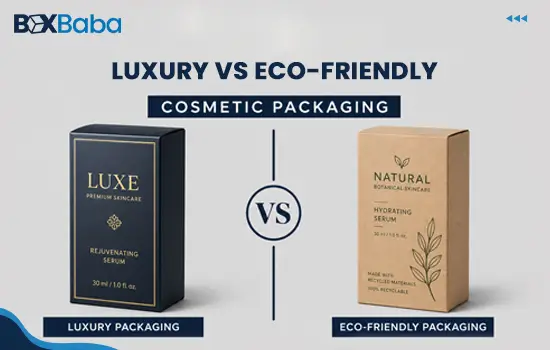
Luxury vs eco-friendly cosmetic packaging is a brand decision about material, structure, finish, customer expectation, sales channel and budget. Beauty brands often choose between a premium look, a responsible material story or a hybrid packaging direction that balances both.
BoxBaba helps beauty brands plan custom cosmetic boxes that match product type, brand tier and packaging goals. A luxury skincare line may need rigid structure, foil stamping and soft-touch finish. A clean beauty brand may prefer kraft paperboard, simplified printing and recyclable material options. A growing ecommerce brand may need a hybrid setup with a premium outer look and protective shipping structure.
This guide explains how to compare luxury cosmetic packaging, eco-friendly cosmetic packaging and hybrid cosmetic packaging before requesting a custom quote. It also covers materials, finishes, cost drivers, retail use, ecommerce use, proofing, sustainability claim caution and natural internal packaging paths for BoxBaba buyers.
Luxury, Eco-Friendly or Hybrid Packaging?
Choose luxury cosmetic packaging when your brand needs premium shelf appeal, gift-ready presentation and high-end product positioning. Choose eco-friendly cosmetic packaging when sustainability, natural materials and responsible sourcing are central to your brand. Choose hybrid packaging when you need premium presentation with documented eco-conscious material choices.
- Luxury packaging works best for premium skincare, fragrance, beauty gift sets and high-value cosmetic products.
- Eco-friendly packaging works best for clean beauty, organic-style skincare, handmade products and sustainability-focused brands.
- Hybrid packaging combines premium design with responsible material choices when the brand needs both luxury appeal and eco-conscious positioning.
- Rigid boxes, magnetic boxes and foil finishes support luxury presentation, but they usually add cost and production complexity.
- Kraft boxes, recycled paperboard and simplified structures support natural branding, but sustainability claims must be backed by material documentation.
- Retail cosmetic packaging needs shelf visibility, barcode space, product clarity and strong front-panel branding.
- Ecommerce cosmetic packaging needs stronger protection, inserts, mailer boxes and shipping-safe structure.
- Before ordering, prepare box size, product dimensions, material preference, finish choice, quantity, sales channel, artwork and sample or proof requirements.
What Is Luxury Cosmetic Packaging?
Luxury cosmetic packaging uses premium materials, refined structures and high-end finishes to create a stronger product presentation. It is common for prestige skincare, perfume, beauty gift sets, influencer kits and high-value retail products.
Common luxury choices include custom rigid boxes, magnetic closure boxes, drawer boxes, two-piece boxes, soft-touch finishes, foil stamping, embossing, debossing and spot UV. These elements can make the product feel more premium when the packaging cost matches the product value and target customer.
Luxury packaging is not always the best choice for low-margin products. It works best when the product price, brand promise, customer expectation and sales channel support a higher packaging investment.
What Is Eco-Friendly Cosmetic Packaging?
Eco-friendly cosmetic packaging uses material and design choices that support sustainability goals when documentation supports the claim. It is common for clean beauty, organic-style skincare, handmade cosmetics, refill-focused brands and natural product lines.
Common eco-focused choices include kraft boxes, recycled paperboard, reduced-plastic structures, simplified print coverage, lightweight cartons and paper-based mailers. These choices can create a natural brand look while helping brands control material use and packaging complexity.
Use terms such as recyclable, recycled, biodegradable, compostable, FSC-certified, soy-based ink or eco-friendly only when the selected material, coating, ink and supplier documentation support those claims.
Luxury vs Eco-Friendly Cosmetic Packaging Quick Comparison
This table shows the practical difference between luxury, eco-friendly and hybrid cosmetic packaging.
Factor | Luxury Cosmetic Packaging | Eco-Friendly Cosmetic Packaging | Hybrid Packaging |
Brand position | Premium, prestige, gift-ready | Natural, clean, responsible | Premium look with eco-conscious material story |
Common materials | Rigid board, specialty paper, thick paperboard | Kraft board, recycled paperboard, lightweight paperboard | Recycled board, kraft structure, premium paper finish |
Common finishes | Foil, embossing, debossing, soft-touch, spot UV | Minimal print, matte coating, kraft texture | Matte, selective foil, embossing or spot UV used carefully |
Best products | Luxury skincare, perfume, gift sets, PR kits | Clean beauty, handmade cosmetics, organic-style skincare | Premium clean beauty, ecommerce launches, retail gift sets |
Cost direction | Usually higher due to structure and finishes | Usually controlled when structure is simple | Moderate to high depending on material and finish choices |
Main risk | Overbuilding packaging for low-margin products | Making packaging look unfinished or under-branded | Claiming sustainability without documentation |
Best next step | Confirm rigid style, finish and presentation goal | Confirm material, certification and claim support | Confirm which premium effects and eco claims are justified |
Which Packaging Direction Fits Your Brand?
The best packaging direction depends on your product price point, customer expectation, sales channel and brand promise. A luxury-first brand should not choose eco packaging only because it is trendy. An eco-first brand should not overuse luxury finishes if the design weakens its responsible brand message.
Brand Type | Best Packaging Direction | Why It Works | Watch Out For |
Luxury skincare brand | Rigid box with premium finishes | Supports premium shelf presence and gift-ready experience | High packaging cost if product margin is low |
Clean beauty startup | Kraft or recycled paperboard carton | Creates a natural, transparent and cost-controlled look | Weak branding if the box is too plain |
DTC cosmetic brand | Hybrid mailer or carton with simple premium finish | Balances ecommerce protection and brand presentation | Underestimating shipping protection |
Retail beauty brand | Printed carton or rigid box based on price tier | Supports barcode space, shelf visibility and product clarity | Poor finish choice under strong retail lighting |
Gift or PR kit | Rigid box with inserts and selective premium finishes | Creates stronger unboxing and product organization | Overuse of foil, spot UV and embossing together |
Best Materials for Luxury and Eco-Friendly Cosmetic Packaging
Material selection controls structure, print quality, protection, cost and brand perception. Brands comparing luxury and eco-friendly packaging should choose material before choosing finish.
Material | Best Fit | Brand Direction | Main Limitation |
Rigid board | Luxury skincare, perfume, PR kits, gift sets | Luxury | Higher cost and less suitable for very low-margin SKUs |
SBS paperboard | Retail cosmetic cartons, makeup boxes, skincare boxes | Luxury or standard retail | Less premium than rigid board for high-end gift boxes |
Kraft paperboard | Clean beauty, handmade products, natural skincare | Eco-friendly | Natural look may not suit high-gloss luxury branding |
Recycled paperboard | Sustainability-focused cosmetic cartons | Eco-friendly or hybrid | Certification and claim wording should be verified |
Corrugated board | Ecommerce cosmetic kits, DTC shipping and wholesale packs | Functional or hybrid | May feel less refined for small retail cartons |
Specialty textured paper | Boutique skincare and premium cosmetic packaging | Luxury or hybrid | Cost and availability can vary by project |
BoxBaba also offers custom cardboard boxes and corrugated packaging options for brands that need a balance of print quality, protection and budget control.
Best Fit and Bad Fit Packaging Guide
A packaging style should solve a brand or product problem, not create a cost, claim or protection issue.
Packaging Direction | Best Fit | Bad Fit | Buyer Note |
Luxury rigid boxes | Premium skincare, perfume, gift sets and PR kits | Budget SKUs or high-volume low-margin products | Use when product price and brand tier justify the structure. |
Kraft boxes | Clean beauty, handmade cosmetics and natural product lines | Brands needing bright white color output or heavy gloss impact | Use when natural texture supports the brand message. |
Recycled paperboard | Eco-conscious cartons and simplified retail packaging | Claims that require certification without documentation | Confirm recycled content and claim language before print. |
Premium finishes | Logos, product names, borders and limited accents | Crowded designs with too many highlighted elements | Use one or two effects with a clear purpose. |
Mailer boxes | Ecommerce cosmetic orders and subscription kits | Small retail-only products where shelf footprint matters more | Pair with inserts when product movement is a risk. |
Hybrid packaging | Premium clean beauty or DTC brands | Brands that cannot support eco claims or premium finish costs | Balance documentation, material and design carefully. |
Retail vs Ecommerce Cosmetic Packaging Decisions
Retail packaging and ecommerce packaging solve different problems. Retail packaging needs shelf clarity, while ecommerce packaging needs shipping protection and a controlled unboxing experience.
Sales Channel | Best Packaging Focus | Good Options | Main Risk |
Retail shelves | Shelf visibility, barcode space, product clarity | Printed cartons, rigid boxes, display-ready boxes | Luxury finishes may glare under bright retail lighting |
Ecommerce shipping | Protection, inserts, mailer strength, unboxing | Custom mailers, corrugated boxes, insert-supported kits | A retail carton alone may not protect during shipping |
Subscription boxes | Product organization and repeatable unboxing | Mailer boxes, corrugated inserts, inside print | Loose products can shift inside the box |
Wholesale distribution | Bulk handling, storage and consistent branding | Cartons, shipping boxes, wholesale cosmetic boxes | Lowest unit price can increase storage or handling issues |
Gift packaging | Presentation, tactile feel and premium reveal | Rigid boxes, magnetic boxes, inserts, foil accents | Over-decoration can make the design feel cluttered |
For ecommerce and subscription packaging, BoxBaba buyers can explore custom mailer boxes and printed boxes with inserts when product protection and unboxing structure matter.
Hybrid Packaging: Luxury Look with Eco-Conscious Materials
Hybrid cosmetic packaging combines premium presentation with material decisions that support an eco-conscious brand direction. This approach works well when the brand wants a high-value look without ignoring sustainability expectations.
Hybrid Choice | Best Use Case | Why It Works | Claim Caution |
Kraft box with black ink and clean typography | Natural skincare and handmade cosmetics | Keeps the design simple and brand-focused | Do not call it sustainable unless material documentation supports it. |
Recycled paperboard with matte finish | Clean beauty cartons and retail packaging | Balances a refined look with responsible material direction | Confirm recycled content before printing claim language. |
Rigid box with paper-based insert | Premium gift sets and PR kits | Adds luxury structure while limiting loose plastic parts | Confirm insert material before making eco claims. |
Minimal print with selective foil | Premium organic-style products | Adds controlled luxury without heavy decoration | Foil may affect recyclability depending on material and process. |
Mailer box with custom insert | Ecommerce beauty kits | Combines shipping protection with branded unboxing | Confirm box strength and insert fit with sample/proof. |
For more design execution details, the BoxBaba article on cosmetic packaging design tips explains how structure, material, finish and insert decisions work together before production.
Printing and Finish Choices for Luxury, Eco and Hybrid Packaging
Printing and finishes should support the packaging direction. Luxury designs usually benefit from controlled premium accents, while eco-focused designs often work better with simpler print coverage and fewer surface effects.
Finish or Print Option | Best Fit | Packaging Direction | Limitation |
Matte finish | Skincare, clean beauty and premium cartons | Luxury, eco or hybrid | Dark matte surfaces may show fingerprints or scuffs. |
Gloss finish | Bold makeup and colorful retail products | Standard or retail-focused | Can create glare under strong lighting. |
Foil stamping | Logos, borders and premium details | Luxury or hybrid | Adds cost and should be used selectively. |
Embossing or debossing | Logos and tactile brand details | Luxury or hybrid | Small text and busy layouts may not work well. |
Spot UV | Logo highlights and pattern details | Luxury or hybrid | Overuse can make packaging look crowded. |
Minimal ink coverage | Kraft and natural paperboard boxes | Eco-friendly | Design may look too plain without strong typography. |
Packaging Cost Drivers: Luxury vs Eco-Friendly
Cosmetic packaging cost depends on material, box style, printing, finish, inserts, quantity, proofing and shipping needs.
Cost Driver | Why It Affects Cost | Luxury Impact | Eco-Friendly Impact |
Material | Rigid board, specialty paper and recycled options carry different costs. | Often higher | Varies by paper type and certification |
Box structure | Magnetic, drawer and rigid boxes require more material and setup. | Higher | Usually lower with simple cartons |
Printing | Full print, inside print and color matching add production detail. | Medium to high | Low to medium if print is simple |
Finishes | Foil, embossing, debossing and spot UV add production steps. | Higher | Lower if finishes are minimal |
Inserts | Custom inserts add material, dieline work and fit testing. | Medium to high | Medium when paper-based inserts are used |
Quantity | Bulk ordering can reduce per-unit cost when storage is planned. | Improves unit economics | Improves unit economics |
Proofing or sample | Proofs help verify structure, artwork, color and claims. | Adds review step | Adds review step |
Shipping and storage | Bulky boxes can increase freight and warehouse needs. | Can be higher with rigid boxes | Can be lower with flat cartons |
Exact pricing, MOQ and production timeline should be confirmed with BoxBaba because each project depends on size, material, quantity, print coverage, finish, insert and artwork readiness.
Dieline, Artwork, Sample and Proofing Checklist
A cosmetic box dieline maps panels, folds, cuts, glue areas, window areas and artwork placement. A packaging proof helps the brand review structure, finish, color and claim placement before production.
- Product type and product dimensions
- Box style: carton, rigid, mailer, sleeve, window, drawer or magnetic box
- Material preference: rigid board, SBS paperboard, kraft, recycled paperboard, corrugated board or specialty paper
- Brand direction: luxury, eco-friendly or hybrid
- Artwork file, logo file and brand color details
- Printing side: outside only, inside only or both sides
- Finish choice: matte, gloss, soft-touch, foil, embossing, debossing or spot UV
- Insert requirement for jars, bottles, palettes, kits or fragile products
- Claim text: recyclable, recycled, biodegradable, FSC-certified, soy-based ink or eco-friendly if documentation supports it
- Quantity, deadline, shipping destination and sample or proof request
Brands can also review BoxBaba’s guide on types of cosmetic boxes to understand how box style, inserts, windows, coatings and printed branding support different cosmetic products.
Sustainability Claims and Material Documentation Caution
Eco-friendly packaging language should be accurate, specific and supported by the chosen material. A natural kraft look is not the same as a certified sustainability claim.
Use claims such as recyclable, recycled, biodegradable, compostable, FSC-certified, soy-based ink, water-based ink or plastic-free only when the material, coating, ink and supplier documentation support the claim. If documentation is unclear, use safer wording such as kraft paperboard, natural paper-based look, reduced-plastic direction or material option available on request.
This protects buyer trust and reduces the risk of printing unsupported environmental claims on cosmetic boxes, labels, inserts or retail packaging.
Common Mistakes When Choosing Cosmetic Packaging Strategy
Packaging mistakes usually happen when brands choose appearance before confirming product fit, budget, material documentation and sales channel.
Choosing Packaging Only by Appearance
Visual appeal matters, but a box must also fit the product, protect the container, support the sales channel and match the customer expectation.
Overbuilding Luxury Packaging for Low-Margin Products
Rigid boxes, foil, embossing and soft-touch finishes can improve presentation, but they may not fit every product price point. Use premium features where the product value supports them.
Using Eco Packaging Without Strong Branding
Eco-friendly packaging can look unfinished if the typography, logo placement, color system and structure are weak. Simple packaging still needs clear brand design.
Making Unsupported Sustainability Claims
Eco claims should match material documentation. Do not print certification or material claims unless they are verified for the selected packaging project.
Ignoring Ecommerce Protection
A beautiful retail carton may still need a mailer box, insert or shipping carton for ecommerce delivery. Product movement, drop risk and storage conditions should be considered before production.
BoxBaba Cosmetic Packaging Decision Framework
BoxBaba recommends choosing cosmetic packaging through a structured decision process instead of choosing luxury or eco-friendly packaging by trend alone.
Step | Decision | What to Confirm |
1 | Brand position | Luxury, eco-friendly, hybrid, retail, ecommerce, startup or premium line |
2 | Product type | Skincare jar, serum bottle, lipstick, perfume, palette, kit or subscription set |
3 | Sales channel | Retail shelf, ecommerce shipping, subscription, wholesale, gifting or PR launch |
4 | Material direction | Rigid board, paperboard, kraft, recycled board, corrugated or specialty paper |
5 | Finish direction | Matte, gloss, soft-touch, foil, embossing, debossing or spot UV |
6 | Protection need | Insert, divider, mailer, corrugated support or rigid structure |
7 | Claim readiness | Material documentation, certification availability and approved wording |
8 | Quote readiness | Dimensions, quantity, artwork, timeline and sample or proof request |
Need Help Choosing Luxury, Eco-Friendly or Hybrid Cosmetic Packaging?
BoxBaba can help beauty brands compare luxury cosmetic boxes, eco-friendly kraft packaging and hybrid packaging options based on product size, material, artwork, finish, insert need, quantity and sales channel.
Button Text: Plan My Cosmetic Packaging Direction
Why Choose BoxBaba for Cosmetic Packaging Strategy?
BoxBaba supports beauty brands with custom box structures, material planning, printing, finishes, inserts, dielines, artwork layout and quote preparation. Brands can start with custom cosmetic boxes when they need a full beauty packaging direction.
Luxury brands can review custom rigid boxes for premium skincare, fragrance, gift sets and PR kits. Eco-conscious brands can review kraft boxes when they want a natural paper-based look. Ecommerce brands can review custom mailer boxes or printed boxes with inserts when shipping protection and unboxing structure are important.
BoxBaba can review your product dimensions, material preference, finish direction, artwork, quantity, sales channel and packaging claim requirements before recommending a structure. Sustainability claims, certification claims, ingredient text, warning text and legal labeling requirements should be verified by the brand before printing.
Final Takeaway
Luxury vs eco-friendly cosmetic packaging is not a question of which option is always better. The right choice depends on brand position, product value, material, finish, protection need, sales channel, budget and documentation.
Choose luxury packaging when premium presentation, rigid structure, tactile finishes and gift-ready unboxing support the product tier. Choose eco-friendly packaging when natural materials, simplified structure and documented sustainability direction are central to the brand. Choose hybrid packaging when the brand needs premium visual appeal with responsible material choices.
BoxBaba recommends confirming product dimensions, material, finish, insert, artwork and claim wording before production. This helps cosmetic brands choose packaging that looks intentional, protects the product and supports the right buyer expectation.
Ready to Plan Your Cosmetic Packaging Direction?
BoxBaba can help you compare luxury, eco-friendly and hybrid cosmetic packaging for skincare, makeup, fragrance, gift sets, ecommerce kits and wholesale cosmetic boxes.
Button Text: Request a Custom Cosmetic Packaging Quote
Quote Page / Contact Link: Contact BoxBaba
FAQs About Luxury vs Eco-Friendly Cosmetic Packaging
Which is better: luxury or eco-friendly cosmetic packaging?
The better option depends on your brand position. Luxury packaging fits premium products, gifting and high-end retail. Eco-friendly packaging fits clean beauty, natural skincare and sustainability-focused brands. Hybrid packaging works when you need both premium presentation and responsible material direction.
Can cosmetic packaging be both luxury and eco-friendly?
Yes. Cosmetic packaging can be both luxury and eco-conscious when premium design is paired with documented material choices. Examples include recycled paperboard with matte finish, kraft boxes with clean typography or rigid boxes with paper-based inserts.
What materials are used for luxury cosmetic packaging?
Luxury cosmetic packaging often uses rigid board, specialty paper, SBS paperboard, textured paper and premium inserts. These materials can be paired with foil stamping, embossing, debossing, spot UV or soft-touch finish.
What materials are used for eco-friendly cosmetic packaging?
Eco-friendly cosmetic packaging may use kraft paperboard, recycled paperboard, lightweight cartons or reduced-plastic structures. Claims such as recyclable, recycled or biodegradable should only be used when documentation supports the selected material.
Is eco-friendly cosmetic packaging cheaper than luxury packaging?
Eco-friendly packaging can be more cost-controlled when it uses simple paperboard, kraft or reduced print coverage. Cost still depends on material, quantity, box style, printing, finish, inserts, sample needs and shipping requirements.
When should a brand choose rigid cosmetic boxes?
A brand should choose rigid cosmetic boxes when the product needs premium presentation, stronger structure or gift-ready unboxing. Rigid boxes work well for luxury skincare, fragrance, PR kits and high-value cosmetic sets.
When should a brand choose kraft cosmetic boxes?
A brand should choose kraft cosmetic boxes when it wants a natural paper-based look for clean beauty, handmade products, organic-style skincare or eco-inspired packaging. Sustainability claims still require material documentation.
What is hybrid cosmetic packaging?
Hybrid cosmetic packaging combines premium presentation with eco-conscious material choices. It may use recycled paperboard, kraft texture, paper-based inserts, matte coating, selective foil or minimal print to balance luxury appeal and sustainability goals.
What should I prepare before requesting a cosmetic packaging quote?
Prepare product dimensions, box style, material choice, quantity, artwork, logo file, finish preference, insert needs, sales channel, claim wording and sample or proof request before asking for a quote.
Can BoxBaba help choose the right packaging direction?
Yes. BoxBaba can help compare luxury, eco-friendly and hybrid packaging options based on product size, material, finish, insert needs, artwork, quantity and sales channel before production.
A cosmetic box dieline maps panels, folds, cuts, glue areas, window areas and artwork placement. A packaging proof helps the brand review structure, finish, color and claim placement before production.
- Product type and product dimensions
- Box style: carton, rigid, mailer, sleeve, window, drawer or magnetic box
- Material preference: rigid board, SBS paperboard, kraft, recycled paperboard, corrugated board or specialty paper
- Brand direction: luxury, eco-friendly or hybrid
- Artwork file, logo file and brand color details
- Printing side: outside only, inside only or both sides
- Finish choice: matte, gloss, soft-touch, foil, embossing, debossing or spot UV
- Insert requirement for jars, bottles, palettes, kits or fragile products
- Claim text: recyclable, recycled, biodegradable, FSC-certified, soy-based ink or eco-friendly if documentation supports it
- Quantity, deadline, shipping destination and sample or proof request
Brands can also review BoxBaba’s guide on types of cosmetic boxes to understand how box style, inserts, windows, coatings and printed branding support different cosmetic products.