
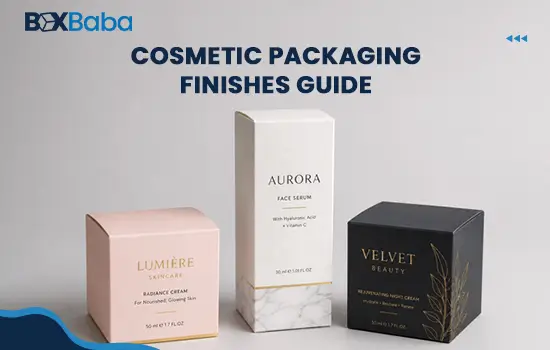
Cosmetic packaging finishes change how custom cosmetic boxes look, feel, and communicate product value. A finish can make a skincare box look soft and premium, a makeup box look bright and bold, or a perfume box look more luxurious with metallic foil and raised texture.
For beauty brands, the finish should match the product type, brand position, artwork style, sales channel, material, and budget. A matte finish may fit clinical skincare. Gloss may fit colorful makeup. Foil stamping may fit luxury perfume packaging. Embossing may fit logo-focused cosmetic boxes. Spot UV may fit designs that need selective shine.
BoxBaba provides custom cosmetic boxes for beauty brands that need custom printed cosmetic boxes with finishes such as matte, gloss, soft-touch, foil stamping, embossing, debossing, and spot UV. These finishes can be used across skincare boxes, lipstick boxes, mascara boxes, perfume boxes, cosmetic display boxes, rigid boxes, and ecommerce packaging.
This guide explains how cosmetic packaging finishes work, when to use each finish, what risks to consider, and how to choose the right finish combination before ordering custom cosmetic boxes.
What Are Cosmetic Packaging Finishes?
Cosmetic packaging finishes are post-print surface treatments applied to cosmetic boxes to improve appearance, texture, protection, and perceived value. Common finishes include matte, gloss, foil stamping, embossing, debossing, spot UV, and soft-touch lamination.
Cosmetic Packaging Finishes Quick Guide
- Matte finish creates a smooth, low-shine look for skincare, wellness, and premium cosmetic boxes.
- Gloss finish makes colors brighter and works well for makeup, promotional packaging, and bold retail designs.
- Foil stamping adds metallic detail to logos, borders, icons, and luxury cosmetic packaging.
- Embossing raises a logo or design element to create tactile brand impact.
- Debossing presses a logo or detail inward for a subtle luxury effect.
- Spot UV adds selective shine to logos, patterns, and product names.
- Soft-touch finish creates a velvet-like feel for premium skincare, gift boxes, and luxury beauty packaging.
- The best finish depends on brand position, product type, artwork, material, budget, and sales channel.
What Are Cosmetic Packaging Finishes?
Cosmetic packaging finishes are decorative or protective treatments applied after printing to change the surface of the box.
Printing adds color, logo, product names, and artwork. Finishing changes the final surface effect. It controls shine, texture, contrast, touch, and premium appearance.
Common cosmetic packaging finishes include matte lamination, gloss lamination, soft-touch lamination, foil stamping, embossing, debossing, spot UV, aqueous coating, and UV coating. These finishes are used on custom cosmetic boxes to create specific brand effects.
A skincare brand may use matte lamination for a clean clinical feel. A makeup brand may use gloss coating for bright color impact. A perfume brand may use foil stamping and embossing to create a more premium package.
Why Cosmetic Packaging Finishes Matter
Cosmetic packaging finishes help beauty brands control shelf appeal, touch experience, product positioning, and perceived value.
A customer often sees the packaging before using the product. The finish can help the customer understand whether the product feels natural, clinical, playful, premium, minimal, luxury, or gift-ready.
- Improve visual appeal
- Highlight logos and product names
- Support retail shelf visibility
- Create tactile unboxing experiences
- Match packaging to brand tier
- Protect printed surfaces during handling
- Differentiate similar cosmetic products
- Support luxury, natural, clinical, or colorful brand positioning
A finish should not be selected only because it looks attractive. It should support the product category, customer expectation, printing style, and packaging material. Overusing finishes can make cosmetic boxes look crowded and may increase production complexity.
Cosmetic Packaging Finishes Comparison Table
The best cosmetic packaging finish depends on the visual effect, texture, product type, and brand goal.
Finish | Appearance | Texture | Best For | Main Caution |
Matte finish | Smooth and low-shine | Soft, flat surface | Skincare, clean beauty, clinical brands | Dark colors may show scuffs or fingerprints |
Gloss finish | Shiny and reflective | Slick surface | Makeup, bold colors, promotional boxes | Can create glare under strong lighting |
Foil stamping | Metallic highlight | Smooth metallic detail | Perfume, luxury cosmetics, gift sets | Adds cost and setup complexity |
Embossing | Raised design | Tactile raised texture | Logos, product names, premium branding | Works best on selected design areas |
Debossing | Pressed-in design | Recessed texture | Minimal luxury packaging | May be too subtle on busy artwork |
Spot UV | Selective shine | Mixed matte/gloss contrast | Logos, patterns, premium accents | Should be used selectively |
Soft-touch finish | Velvet-like surface | Smooth and soft feel | Luxury skincare, PR boxes, gift packaging | May increase cost and handling sensitivity |
Use this table as a first filter. Then match the finish to your product category, artwork, sales channel, and customer expectation.
Matte Cosmetic Boxes
Matte cosmetic boxes use a low-reflective surface that creates a clean, smooth, and premium appearance.Matte finishes work well for skincare, wellness, clean beauty, minimalist packaging, clinical products, and organic-style cosmetic brands. They reduce glare and make packaging feel calm, polished, and refined.
- Skincare boxes
- Serum boxes
- Cream boxes
- Lotion boxes
- Wellness packaging
- Clean beauty packaging
- Minimalist cosmetic boxes
- Premium gift boxes
A matte finish can make custom serum boxes feel more clinical and premium. It can also support custom cream boxes when the brand wants a smooth, soft, and skincare-focused appearance.
The main limitation is color impact. Matte finishes can make colors look softer than gloss, and dark matte surfaces may show fingerprints or scuffs more easily during handling.
Gloss Cosmetic Packaging
Gloss cosmetic packaging uses a shiny surface that makes printed colors look brighter and more energetic.Gloss finishes work well for makeup brands, colorful cosmetics, promotional launches, youth-focused products, and retail packaging that needs strong visibility. A gloss surface reflects light and can make graphics appear sharper.
- Lipstick boxes
- Mascara boxes
- Eyeshadow boxes
- Foundation boxes
- Nail product packaging
- Promotional beauty packaging
- Color cosmetic collections
A makeup brand may use gloss on lipstick boxes to strengthen color impact. A mascara brand may use gloss on mascara boxes when the design uses bold color blocks, product photography, or high-contrast branding.
The main limitation is glare. Gloss packaging can reflect strong retail lighting and may show scratches more visibly during shipping or shelf handling.
Foil Stamping for Cosmetic Packaging
Foil stamping adds metallic detail to selected parts of cosmetic packaging using heat, pressure, and foil film.
Foil stamping is used when a brand wants a premium metallic effect without covering the full box surface. It works best for logos, borders, icons, product names, monograms, badges, and limited-edition marks.
Foil Type | Visual Effect | Best Use |
Gold foil | Luxury and prestige | Perfume boxes, luxury skincare, gift sets |
Silver foil | Clean and modern | Clinical skincare, premium beauty packaging |
Rose gold foil | Soft luxury beauty appeal | Skincare, cosmetics, feminine packaging |
Holographic foil | Trend-driven shine | Makeup, influencer kits, limited editions |
Foil stamping is a strong choice for custom perfume boxes because fragrance packaging often needs a luxury cue. It can also improve cosmetic gift boxes, rigid boxes, and premium retail packaging when used with purpose.
The main limitation is cost and complexity. Foil stamping adds production steps, so it should highlight important brand elements instead of covering every design area.
Embossing and Debossing for Cosmetic Boxes
Embossing raises a design above the box surface, while debossing presses a design into the surface.
Both finishes create a tactile effect that customers can see and feel. They are useful for brands that want the logo, product name, or pattern to feel more premium.
Embossing
Embossing creates raised texture. It is often used for logos, product names, icons, seals, and luxury details.
- Luxury skincare boxes
- Premium cosmetic boxes
- Perfume packaging
- Gift packaging
- Rigid boxes
- Logo-focused designs
Debossing
Debossing creates an inward, pressed effect. It is often used for subtle branding and minimalist luxury packaging.
- Minimal skincare boxes
- Premium wellness products
- Luxury gift boxes
- Soft-touch packaging
- Clean logo layouts
Embossing and debossing are often used on custom rigid boxes because rigid packaging gives premium brands more surface structure for tactile effects. BoxBaba also provides custom embossed boxes for brands that want raised logo details, debossed effects, and premium surface texture.
The main limitation is design control. Embossing and debossing work best when used on selected elements, not on crowded artwork.
Spot UV Cosmetic Boxes
Spot UV adds glossy coating only to selected parts of a design, such as logos, patterns, icons, or product names.
Spot UV is useful when a brand wants contrast between a matte background and glossy detail. This finish creates visual depth without making the full box surface shiny.
- Matte cosmetic boxes
- Skincare packaging
- Luxury beauty packaging
- Logos and icons
- Product names
- Decorative patterns
- Premium display packaging
A common combination is matte lamination with spot UV. The matte surface creates a soft base, while spot UV highlights selected design areas.
The main limitation is overuse. Spot UV works best when the highlighted area is intentional. If too many elements receive spot UV, the design can look busy.
Soft-Touch Cosmetic Packaging
Soft-touch cosmetic packaging creates a smooth, velvet-like feel on the surface of the box.
Soft-touch finish is often used for luxury skincare, premium cosmetic boxes, influencer kits, PR packaging, gift sets, and high-end product launches. It creates a sensory experience when customers hold the box.
- Premium skincare boxes
- Luxury cosmetic gift boxes
- PR boxes
- Subscription beauty boxes
- Rigid boxes
- Limited-edition packaging
Soft-touch can be combined with foil stamping, debossing, embossing, or spot UV for a more premium effect. Use this combination carefully because too many finishes can increase cost and make production more complex.
Best Cosmetic Packaging Finish by Product Type
Different cosmetic products need different finish choices because customer expectations change by category.
Product Type | Recommended Finish | Why It Works |
Luxury skincare | Matte + foil stamping | Creates a premium but clean appearance |
Clinical skincare | Matte + spot UV | Keeps a professional look with controlled highlight |
Organic beauty | Matte or kraft-friendly finish | Supports a natural and soft brand image |
Lipstick boxes | Gloss or foil accent | Supports color impact and retail visibility |
Mascara boxes | Gloss or spot UV | Highlights tall front-panel branding |
Perfume boxes | Foil stamping + embossing | Adds luxury and gift-ready presentation |
Cosmetic gift sets | Soft-touch + spot UV | Creates a premium unboxing experience |
Ecommerce beauty kits | Matte, gloss, or soft-touch with inserts | Balances presentation and protection |
A finish should match the product’s price point and buyer expectation. Low-cost cosmetic SKUs may not need foil, embossing, and soft-touch together. Premium launches may justify a more complex finish combination.
Best Fit and Bad Fit Finish Guide
A finish should solve a packaging problem, not create a new one.
Finish | Best Fit | Bad Fit |
Matte | Minimal skincare, clinical brands, clean beauty | Very bright makeup designs that need maximum color pop |
Gloss | Color cosmetics, bold retail packaging, promotional products | Luxury minimal designs that need a soft low-shine look |
Foil stamping | Logos, premium accents, perfume boxes, gift sets | Full-surface decoration with no clear focal point |
Embossing | Logos, product names, luxury details | Thin lines, tiny text, or crowded layouts |
Debossing | Minimal branding, soft-touch boxes, subtle premium designs | Busy artwork where recessed details disappear |
Spot UV | Logo highlights, patterns, matte contrast | Designs where every element is highlighted |
Soft-touch | Luxury skincare, PR boxes, premium gift packaging | Low-cost SKUs where cost control is the main goal |
This table prevents over-decoration. The best finish is not always the most expensive finish. The best finish is the one that supports the product, brand, and sales channel.
Finish Combinations That Work Well
Finish combinations can improve cosmetic packaging when each effect has a clear job.
Combination | Best For | Why It Works |
Matte + Spot UV | Skincare and premium beauty | Matte creates softness, spot UV highlights key details |
Matte + Gold Foil | Luxury skincare and perfume | Matte gives depth, foil adds premium contrast |
Soft-Touch + Debossing | Minimal luxury packaging | Soft feel and recessed logo create subtle premium branding |
Gloss + Foil | Color cosmetics and launch boxes | Gloss boosts color, foil adds a premium accent |
Rigid Box + Embossing | Gift sets and luxury packaging | Strong structure supports tactile logo effects |
Mailer Box + Inside Print | Ecommerce beauty kits | Creates a branded unboxing experience |
Combining multiple finishes can improve presentation, but it can also increase cost, extend production steps, and make the design look crowded if every element is highlighted.
If your beauty brand sells ecommerce kits, printed boxes with inserts can combine finish choices with product protection. Inserts hold bottles, jars, tubes, and kits in place while the printed box creates the branded presentation.
Finish Cost Drivers for Cosmetic Packaging
Cosmetic packaging finish cost depends on production steps, material, coverage area, quantity, and design complexity.
After choosing a finish combination, the next decision is whether the finish fits the brand’s production budget and proofing needs.
Cost Driver | Why It Affects Cost |
Finish type | Foil, embossing, debossing, spot UV, and soft-touch add extra steps |
Coverage area | Larger finish areas use more material and setup time |
Number of finishes | Combining multiple effects increases production complexity |
Box material | Some finishes work better on certain boards and coatings |
Artwork complexity | Small details may require more careful setup |
Quantity | Bulk orders usually reduce per-unit packaging cost |
Proofing | Physical samples or proofs help verify finish appearance |
Rush timing | Faster timelines may be affected by finish complexity |
Exact pricing should be confirmed through a quote because finish cost changes with artwork, box size, material, quantity, coverage area, and production needs.
Dieline, Artwork and Proofing Checklist for Finishes
A finish-ready artwork file should show exactly where matte, gloss, foil, embossing, debossing, spot UV, or soft-touch effects will appear.
- Box style
- Box dimensions
- Material choice
- Print design
- Logo file
- Brand colors
- Finish preference
- Foil color, if needed
- Embossing or debossing area
- Spot UV area
- Matte or gloss coverage
- Soft-touch requirement
- Product name placement
- Barcode and label panel space
- Cosmetic packaging sample or proof request
A physical sample or proof is useful because finishes can look different in real light than they do on a screen. Retail lighting, dark colors, foil reflection, and tactile effects should be reviewed before bulk production when possible.
Are Cosmetic Packaging Finishes Sustainable?
Some finishes may affect recyclability, material separation, or environmental claims.
Brands that want sustainability-focused cosmetic packaging should review the material, coating, lamination, foil, ink, and finish together. A box may be paper-based, but some laminations or specialty finishes can change how the packaging should be described.
Use sustainability claims carefully. Terms such as recyclable, recycled, biodegradable, compostable, FSC-certified, soy-based ink, or eco-friendly should only be used when the selected material and supplier documentation support those claims.
For brands that want a natural packaging look, kraft paperboard and simple finishes may be easier to align with eco-inspired packaging goals than heavy foil, plastic-like lamination, or multiple specialty effects.
Common Mistakes When Choosing Cosmetic Packaging Finishes
Finish mistakes usually happen when brands choose effects before confirming brand position, artwork, product type, material, and budget.
Choosing a Finish Only Because It Is Trendy
A finish should match the product category and brand identity. Matte may work for skincare, while gloss may work better for colorful makeup.
Combining Too Many Effects
Using foil, embossing, spot UV, gloss, and heavy color together can make packaging look crowded. One or two finish effects often look cleaner.
Ignoring Readability
A finish should not make product names, shade details, ingredients, barcode areas, or usage directions harder to read.
Forgetting Retail Lighting
Gloss, foil, and spot UV can reflect light. Test the design if the product will sit under strong store lighting.
Skipping a Sample or Proof
Digital mockups cannot fully show texture, reflection, foil shine, or soft-touch feel. A proof helps reduce finish-related surprises.
Choosing Luxury Finishes for Low-Budget SKUs
Premium finishes can improve presentation, but they can also increase cost. Use them where product value and brand positioning support the investment.
Need Help Choosing Cosmetic Packaging Finishes?
BoxBaba can help beauty brands choose cosmetic packaging finishes based on product type, brand position, material, artwork, sales channel, and budget.
Whether you need matte cosmetic boxes, gloss makeup packaging, foil stamped perfume boxes, embossed logos, debossed luxury boxes, spot UV highlights, or soft-touch skincare packaging, BoxBaba can help you plan the right finish before production.
Why Choose BoxBaba for Cosmetic Packaging Finishes?
BoxBaba supports beauty brands with custom cosmetic boxes, printing, finishes, inserts, materials, dielines, and artwork planning.
BoxBaba can help with matte lamination, gloss lamination, soft-touch finish, foil stamping, embossing, debossing, spot UV, rigid boxes, mailer boxes, printed boxes with inserts, lipstick boxes, mascara boxes, serum boxes, cream boxes, perfume boxes, and cosmetic display boxes.
For complete beauty packaging planning, start with custom cosmetic boxes. If your product needs premium structure, review custom rigid boxes. If your packaging needs product protection and unboxing structure, explore printed boxes with inserts.
BoxBaba can review your artwork, material, finish placement, product dimensions, and quantity before recommending a finish combination.
Final Takeaway
Cosmetic packaging finishes help beauty brands control how custom cosmetic boxes look, feel, and communicate value. Matte creates a clean low-shine appearance. Gloss makes colors brighter. Foil stamping adds metallic luxury. Embossing and debossing create tactile branding. Spot UV adds selective shine. Soft-touch creates a premium hand feel.
The best finish depends on product type, brand position, artwork, material, budget, and sales channel. A skincare brand may choose matte and spot UV. A makeup brand may choose gloss. A perfume brand may choose foil stamping and embossing. An ecommerce beauty kit may need printed boxes with inserts before premium finishes.
BoxBaba recommends choosing cosmetic packaging finishes after confirming the product format, box material, artwork, sales channel, and customer expectation. This approach helps brands avoid over-decoration and create packaging that looks intentional, readable, and ready for retail or ecommerce.
Ready to Plan Cosmetic Packaging Finishes?
BoxBaba can help you choose the right finish for your custom cosmetic boxes, skincare packaging, makeup packaging, perfume boxes, rigid boxes, mailer boxes, and cosmetic packaging inserts.
FAQs About Cosmetic Packaging Finishes
What are cosmetic packaging finishes?
Cosmetic packaging finishes are post-print surface treatments that improve the look, texture, protection and perceived value of cosmetic boxes. Common finishes include matte, gloss, foil stamping, embossing, debossing, spot UV and soft-touch lamination.
Which finish is best for skincare packaging?
Matte finish is often best for skincare packaging because it creates a clean, smooth and premium appearance. Premium skincare brands may combine matte with spot UV, foil stamping or soft-touch finish.
Which finish is best for makeup packaging?
Gloss finish is often useful for makeup packaging because it makes colors look brighter and more energetic. Lipstick boxes, mascara boxes and color cosmetic packaging often use gloss or spot UV for retail impact.
What is foil stamping in cosmetic packaging?
Foil stamping is a finish that applies metallic foil to selected areas of a box using heat and pressure. It is commonly used for logos, icons, borders and luxury details.
What is the difference between embossing and debossing?
Embossing raises a design above the surface, while debossing presses a design into the surface. Both create tactile effects for logos, product names and premium packaging details.
Can spot UV be combined with matte lamination?
Yes. Spot UV can be combined with matte lamination to create contrast between a soft background and glossy highlighted areas. This combination is common for premium skincare and luxury cosmetic boxes.
Does soft-touch finish make packaging feel premium?
Yes. Soft-touch finish creates a smooth, velvet-like feel that can make cosmetic packaging feel more premium. It is commonly used for luxury skincare, gift boxes and PR packaging.
Do cosmetic packaging finishes increase cost?
Yes. Premium finishes such as foil stamping, embossing, debossing, spot UV and soft-touch can increase cost because they add production steps. Cost depends on coverage area, quantity, material and complexity.
Are cosmetic packaging finishes sustainable?
Some finishes may affect recyclability or sustainability claims. Brands should review material, coating, lamination, foil, ink and supplier documentation before using eco-friendly, recyclable, biodegradable or certified claims.
Should I request a sample before choosing finishes?
Yes. A sample or proof helps you review texture, shine, color, foil reflection and finish placement before bulk production. This is especially useful for foil, embossing, debossing, spot UV and soft-touch finishes.