
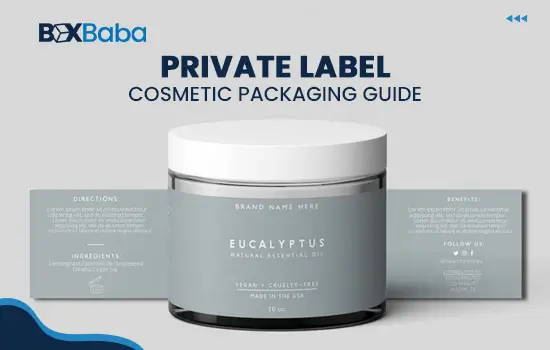
Private label cosmetic packaging helps skincare and makeup brands sell third-party manufactured products under their own brand name using custom boxes, labels, inserts, materials, printing, and finishes. The formula may come from a manufacturer, but the packaging creates the brand identity customers see first.
For beauty startups, Amazon sellers, Shopify brands, salons, influencers, ecommerce sellers, and private-label product owners, packaging protects the product, explains the offer, supports shelf appeal, improves unboxing, and makes the brand look ready for retail or ecommerce.
BoxBaba provides custom cosmetic boxes for private-label skincare and makeup brands that need packaging for serums, creams, lotions, lipsticks, mascaras, perfumes, display sets, ecommerce kits, and retail beauty products. The right packaging should match the product format, container size, sales channel, brand position, artwork needs, material choice, finish, insert requirement, and order quantity before production.
This guide focuses on private label cosmetic packaging from a packaging buyer’s view. It explains custom boxes, labels, inserts, materials, printing, finishes, cost drivers, artwork preparation, compliance cautions, and quote planning.
What Is Private Label Cosmetic Packaging?
Private label cosmetic packaging is branded packaging used to sell skincare or makeup products made by a third-party manufacturer under your own brand name. It includes custom cosmetic boxes, labels, inserts, materials, finishes, and retail or ecommerce packaging structures.
Private Label Cosmetic Packaging Quick Guide
- Private label cosmetic packaging helps brands launch skincare and makeup products under their own name.
- Custom private label cosmetic boxes create the branded outer packaging for bottles, jars, tubes, palettes, lip products, and fragrance items.
- Labels, artwork panels, dielines, inserts, and product information areas should be planned before printing.
- Cardstock, kraft, corrugated, and rigid materials support different budget, protection, and branding needs.
- Retail packaging needs shelf appeal, barcode space, product details, and clean presentation.
- Ecommerce packaging needs stronger structure, mailer boxes, inserts, and shipping protection.
- Final labeling, ingredient text, compliance wording, certification claims, and product claims should be verified before print.
- BoxBaba can help private-label beauty brands plan packaging size, material, printing, finish, inserts, and quote details.
What Is Private Label Cosmetic Packaging?
Private label cosmetic packaging is the customer-facing packaging system used when a beauty product is produced by a third-party manufacturer and sold under another brand’s name.
In this model, the brand usually selects or approves the product, then builds its identity through packaging design, box style, label layout, material choice, color direction, logo placement, and retail presentation. The packaging helps customers understand what the product is, who it is for, how it should be used, and why the brand feels trustworthy.
Private label cosmetic packaging can include custom boxes, cosmetic labels, inserts, dielines, product panels, printed sleeves, mailer boxes, display boxes, and finish options. For example, a private-label skincare brand may use custom serum boxes for dropper bottles, custom cream boxes for jars, and cosmetic labels for bottle or jar branding.
The product may come from a manufacturer, but the outer packaging controls the first impression. That is why private-label brands should plan packaging before approving a launch quantity.
Why Packaging Matters for Private Label Beauty Brands
Private-label beauty brands often compete with similar products, so packaging must make the product feel clear, credible, and brand-ready.
A serum, cream, lipstick, mascara, or perfume may come from a private-label supplier catalogue, but the packaging can make the final product feel premium, clinical, natural, minimalist, colorful, luxury, or retail-ready. This is where custom packaging creates real brand separation.
Private label cosmetic packaging helps brands present products under a clear brand identity. It also protects bottles, jars, tubes, palettes, and cosmetic containers during retail handling, storage, ecommerce delivery, and customer unboxing.
Good packaging also organizes ingredient space, usage details, barcode area, warning text, shade names, and product claims. These details matter because private-label products need to look complete before they reach retail shelves, Amazon listings, Shopify customers, or wholesale buyers.
Packaging cannot replace product quality, formulation, or market demand. However, the right cosmetic packaging can help a private-label product look more trustworthy, organized, and ready for sale.
BoxBaba Private Label Packaging Fit Framework
Private-label cosmetic packaging should be planned by product format, brand position, sales channel, labeling needs, material, finish, protection level, and order readiness.
Decision Layer | What It Defines | Packaging Output |
Product format | Serum, cream, lipstick, mascara, palette, perfume, lotion | Box size, structure, insert, label area |
Brand position | Natural, clinical, luxury, budget, retail, ecommerce | Material, color palette, finish, artwork style |
Sales channel | Retail, ecommerce, Amazon, wholesale, subscription | Carton, mailer, display box, insert, barcode space |
Labeling needs | Ingredients, directions, warnings, barcode, batch information | Panel layout and print area |
Material choice | Cardstock, kraft, corrugated, rigid | Protection, cost, presentation, shipping durability |
Finishing choice | Matte, gloss, foil, embossing, debossing, spot UV | Shelf appeal and brand feel |
Product protection | Bottle weight, jar size, tube shape, fragility | Insert, divider, rigid box, corrugated support |
Order planning | Quantity, sample, proof, dieline, artwork | Quote and production readiness |
This framework keeps the buying process focused on packaging decisions, not cosmetic manufacturing. A private-label brand may not control the formula, but it can control the packaging experience through box size, print quality, label layout, material choice, finish, and insert planning.
OEM vs ODM vs Private Label: Packaging Control Comparison
OEM, ODM, and private label are manufacturing models. Each model affects how much control a brand has over product formulation and packaging customization.
Model | Formula Control | Packaging Control | Speed to Market | Best For |
OEM | High | High | Slower | Brands creating custom formulas and custom packaging systems |
ODM | Medium | Medium | Faster | Brands selecting existing formulas with some customization |
Private Label | Low to medium | Medium to high | Fastest | Brands using ready-made products with custom branding and packaging |
BoxBaba’s role is packaging-focused. BoxBaba can support custom boxes, labels, inserts, materials, printing, finishes, dielines, and packaging structure. Product formulation and manufacturing remain with the brand’s selected cosmetic manufacturer.
Types of Private Label Cosmetic Packaging Boxes
Private-label cosmetic packaging can use different box types based on product format, container shape, sales channel, and brand position.
Once the packaging decision framework is clear, the next step is choosing the right box type for each product format.
Skincare Packaging Boxes
Skincare packaging boxes are used for serums, creams, lotions, toners, facial oils, moisturizers, masks, and treatment products.
These products often need clean branding, ingredient space, usage directions, and product protection. A serum bottle may need a tall carton and insert, while a cream jar may need a wider box with enough panel space for product details.
Private-label skincare brands can use serum boxes for dropper bottles, custom cream boxes for jars, and lotion boxes for pump bottles or skincare containers.
Makeup Packaging Boxes
Makeup packaging boxes are used for lipsticks, mascaras, foundations, eyeshadows, lip glosses, palettes, and compact products.
These products need strong visual appeal, color consistency, shade details, retail shelf clarity, and product-specific sizing. A lipstick box needs a slim structure. A mascara box needs height control for tall tubes. A foundation box may need space for shade name, bottle size, and product claims.
Private-label makeup brands can connect product lines with lipstick boxes, mascara boxes, foundation boxes, eyeliner boxes, and cosmetic display packaging.
Fragrance Packaging Boxes
Fragrance packaging needs stronger presentation because perfume bottles are often glass-based, premium, and gift-focused.
Private-label fragrance brands should plan structure, insert support, and finish options before printing. A perfume box may need rigid board, foil stamping, embossing, soft-touch finish, or a custom insert for bottle stability.
Brands building fragrance lines can explore custom perfume boxes for perfume bottles, fragrance sets, and premium retail presentation.
Retail Display Packaging
Retail display packaging helps private-label brands organize products on shelves, counters, salons, boutiques, and beauty displays.
Display boxes are useful for small products such as lip balm, lip gloss, mascara, samples, sachets, skincare minis, and promotional products. They improve product visibility and make it easier for customers to view multiple units at once.
For retail-focused beauty products, cosmetic display boxes can support shelf presentation, product grouping, and counter display needs.
Ecommerce Cosmetic Packaging
Ecommerce cosmetic packaging needs stronger protection than simple retail cartons.
Products shipped through Shopify, Amazon, subscription programs, or direct-to-consumer orders may need mailer boxes, inserts, dividers, or corrugated structures. These packaging parts reduce movement and improve unboxing.
Brands selling online can pair inner product cartons with custom mailer boxes or printed boxes with inserts for stronger delivery presentation.
Best Materials for Private Label Cosmetic Boxes
The best material for private label cosmetic boxes depends on product weight, sales channel, artwork style, budget, and brand position.
Material | Best For | Packaging Benefit |
Cardstock / Paperboard | Retail skincare, makeup, lip products, standard cartons | Cost-effective, printable, flexible, and easy to customize |
Kraft Paperboard | Natural, handmade, organic-style, and eco-inspired brands | Creates a natural paper-based packaging look |
Corrugated Board | Ecommerce beauty packaging, subscription kits, PR mailers | Adds shipping strength and structure |
Rigid Board | Luxury skincare, perfume boxes, gift sets, influencer kits | Creates premium presentation and strong structure |
Labels and Stickers | Bottles, jars, tubes, and product containers | Adds brand identity and product information |
Inserts | Glass bottles, jars, palettes, tubes, kits | Helps hold products in place inside the box |
Cardstock is often best for standard private-label retail boxes. Kraft paperboard works well for brands that want a natural appearance. Corrugated boxes help ecommerce brands protect products during shipping. Rigid boxes are useful when the private-label product needs a premium launch, gift format, or luxury retail presentation.
Brands should only use claims such as recyclable, recycled, biodegradable, compostable, FSC-certified, or eco-friendly when the selected material and supplier documentation support those claims.
Best Fit and Bad Fit Material Guide
A material should match the product value, sales channel, and protection need. The wrong material can increase cost, weaken presentation, or reduce protection.
Material | Best Fit | Bad Fit |
Cardstock / Paperboard | Standard retail cartons, lip products, lightweight skincare boxes | Heavy glass bottles without inserts or outer support |
Kraft Paperboard | Natural, handmade, organic-style, or eco-inspired packaging | Brands needing bright white color output or luxury shine |
Corrugated Board | Ecommerce kits, subscription boxes, DTC shipping | Small retail cartons where a slim shelf look matters |
Rigid Board | Luxury skincare, perfume, PR kits, premium gift sets | Low-budget SKUs where packaging cost must stay minimal |
Labels | Bottles, jars, tubes, and private-label containers | Products that need strong outer-box protection |
Inserts | Glass bottles, jars, kits, palettes, and fragile products | Very low-cost packaging where protection is not required |
This table helps private-label brands avoid overpaying for the wrong structure. Premium finishes and rigid materials can improve presentation, but they may increase cost and may not fit every private-label SKU.
Visual Packaging Examples for Private Label Brands
Visual examples help connect packaging decisions to real product lines before artwork is approved.
Brand Goal | Packaging Direction | Example |
Clinical skincare line | White or light cardstock cartons with matte finish and clear label panels | A private-label serum line uses clean cartons, consistent ingredient space, and custom serum boxes for each SKU. |
Luxury fragrance or gift set | Rigid board, insert support, foil stamping, and soft-touch finish | A private-label perfume launch uses custom perfume boxes with a fitted insert and metallic logo accent. |
DTC beauty bundle | Corrugated mailer, product inserts, and inside printing | A Shopify skincare kit uses custom mailer boxes and printed boxes with inserts to protect several products during shipping. |
Brand Stage Packaging Direction
Packaging should match the brand’s stage. A first launch needs clarity and cost control, while a luxury expansion may need stronger structure and premium finishes.
Brand Stage | Best Packaging Direction | Why |
First launch | Cardstock boxes, simple labels, clean artwork, proof review | Keeps cost and production complexity controlled |
Testing product-market fit | Small product line, consistent labels, flexible packaging structure | Helps test demand without overbuilding packaging |
Scaling ecommerce | Mailer boxes, inserts, corrugated support, stronger shipping structure | Reduces product movement and improves unboxing |
Retail expansion | Shelf-ready cartons, barcode space, display boxes, consistent brand panels | Supports store presentation and product scanning |
Luxury positioning | Rigid boxes, foil stamping, embossing, soft-touch finish, inserts | Builds premium product perception and gift-ready presentation |
Printed Labels, Artwork Panels and Branding Details
Private-label cosmetic packaging needs clear label and artwork planning because the packaging carries the brand identity and product information.
A good packaging layout should include the brand logo, product name, product type, net weight or volume, ingredient panel space, usage directions, barcode area, batch or lot information, warning text, shade name, product variant, manufacturer or distributor details, QR code, and website if needed.
Private-label brands can use cosmetic labels for jars, bottles, tubes, and other containers. The outer box should then match the label system so the product line looks consistent across skincare and makeup categories.
The label and box should work together. A serum label should not feel separate from the serum box. A cream jar label should match the cream carton. A lipstick box should use the same brand rules as the lipstick tube or sticker.
Cosmetic Box Inserts and Product Protection
Cosmetic box inserts hold bottles, jars, tubes, palettes, and kits in place during shipping, storage, retail handling, and unboxing.
Insert Type | Best For | Purpose |
Paperboard insert | Lipsticks, jars, small bottles, skincare cartons | Keeps products centered and organized |
Corrugated insert | Ecommerce kits, subscription boxes, multi-product packaging | Adds shipping stability |
Foam insert | Glass bottles, perfume, luxury skincare, PR kits | Adds cushioning and premium presentation |
Divider insert | Product bundles and gift sets | Separates items inside the box |
Custom die-cut insert | Private-label kits and launch boxes | Creates a fitted product layout |
Inserts are especially useful for private-label products sold in glass bottles, jars, pump bottles, dropper bottles, or premium kits. A loose product can move inside the box and create scuffing, breakage risk, or poor presentation.
A fitted insert improves both protection and unboxing quality. For multi-product kits, printed boxes with inserts can help combine product protection with branded presentation.
Printing and Finishing Options for Private Label Cosmetic Packaging
Printing and finishing help private-label packaging look more polished, but they should match the product price point and brand style.
Option | Best For | Packaging Effect |
CMYK printing | Full-color artwork, gradients, product visuals | Supports colorful retail packaging |
PMS printing | Brand color matching | Helps maintain color consistency |
Matte finish | Clean skincare and modern beauty brands | Creates a smooth, low-glare look |
Gloss finish | Bright retail makeup packaging | Adds shine and color vibrancy |
Soft-touch finish | Premium skincare and luxury beauty | Creates a smooth tactile feel |
Foil stamping | Logos, luxury accents, premium marks | Adds metallic detail |
Embossing | Raised logo or design | Adds texture and premium effect |
Debossing | Pressed-in logo or pattern | Creates a subtle luxury feel |
Spot UV | Product names, patterns, highlighted details | Adds glossy contrast |
A private-label beauty brand does not need every premium finish on every product. Standard SKUs may use clean printing and matte coating. Hero products, launch kits, and gift sets may use foil, embossing, soft-touch, or rigid packaging.
If a brand wants a premium format for luxury skincare or fragrance, custom rigid boxes can support stronger structure and a more elevated presentation.
Retail vs Ecommerce Private Label Packaging
Retail packaging and ecommerce packaging solve different problems for private-label cosmetic brands.
Sales Channel | Best Packaging Direction | Why |
Retail shelves | Cardstock, display boxes, window boxes, rigid boxes | Shelf appeal, product information, and barcode space matter |
Ecommerce shipping | Mailer boxes, corrugated boxes, inserts, protective cartons | Shipping durability and product movement control matter |
Amazon selling | Strong retail carton plus shipping-safe outer packaging | Product presentation and delivery protection both matter |
Subscription boxes | Corrugated mailers with inserts | Multiple products need organized placement |
Boutique or salon retail | Premium cartons, labels, sleeves, display packaging | Brand consistency and product visibility matter |
Gift sets | Rigid boxes or insert-supported presentation boxes | Unboxing experience and premium feel matter |
A private-label lipstick brand may need compact retail cartons and display boxes. A skincare serum brand may need serum cartons, inserts, and mailer boxes. A premium fragrance line may need rigid perfume boxes with inserts and luxury finishes.
Cost Drivers for Private Label Cosmetic Packaging
Private label cosmetic packaging cost depends on box size, material, quantity, printing, finishing, inserts, label needs, and packaging structure.
Cost Driver | Why It Affects Cost |
Box material | Rigid and corrugated materials usually cost more than simple cardstock |
Box size | Larger boxes use more material and may increase shipping or storage cost |
Quantity | Bulk ordering and custom cosmetic boxes wholesale planning can reduce per-unit packaging cost |
Printing coverage | Full-color, inside printing, and detailed artwork increase production complexity |
Finishing | Foil, embossing, soft-touch, spot UV, gloss, and matte finishes add production steps |
Inserts | Custom inserts require extra material and accurate measurement |
Labels | Bottle, jar, tube, and box labels add design and print requirements |
Box style | Window, sleeve, rigid, mailer, and display structures need extra planning |
Sample or proof | Review steps may add time but help reduce production mistakes |
Rush timing | Faster timelines depend on material, structure, quantity, and finishing complexity |
Exact pricing should be confirmed through a quote because every private-label packaging project has different product sizes, materials, quantities, finishes, and artwork requirements.
Dieline, Artwork, Sample and Proofing Checklist
A dieline maps the panels, folds, cuts, glue areas, windows, and insert positions of a cosmetic box. A packaging proof helps the brand review layout, text placement, color direction, and structure before production.
Before ordering private label cosmetic packaging, prepare:
- Product type
- Container dimensions
- Filled product weight
- Box style preference
- Material preference
- Quantity requirement
- Logo file
- Brand colors
- Artwork file
- Product name
- Ingredient text
- Usage directions
- Barcode area
- Warning or caution text, if required
- Label size requirements
- Finish preference
- Insert requirement
- Retail or ecommerce channel
- Sample or proof request
This checklist helps reduce sizing mistakes, missing label space, weak artwork placement, poor product fit, and last-minute production delays.
Labeling and Compliance Caution
Private-label cosmetic brands should verify required labeling, ingredient lists, barcode needs, warning statements, certification claims, and retailer requirements before approving final packaging artwork.
BoxBaba can help plan packaging layout, print panels, label space, material direction, finishes, inserts, and box structure. Product formulation, cosmetic labeling compliance, FDA requirements, GMP documentation, ISO claims, ingredient accuracy, and legal requirements should be confirmed by the brand, manufacturer, or qualified compliance advisor before printing.
This keeps the packaging process safer because cosmetic brands are responsible for the accuracy of product claims, ingredient information, and regulatory text printed on the packaging.
Common Private Label Cosmetic Packaging Mistakes
Private-label packaging mistakes usually happen when brands choose packaging before confirming product format, sales channel, artwork, and labeling needs.
Choosing Packaging Before Brand Positioning
Packaging should match the brand’s market position. A budget skincare line, clinical serum line, luxury fragrance line, and colorful makeup line should not use the same material, finish, or design style.
Ignoring Product Fit
A serum bottle, cream jar, lipstick tube, mascara tube, and perfume bottle need different box dimensions. Poor fit can create product movement, weak presentation, and protection issues.
Using Retail Packaging for Ecommerce Shipping
A retail box may look attractive but still need an outer mailer or insert for shipping. Ecommerce packaging should be planned around movement, stacking, and handling risk.
Printing Claims Without Verification
Environmental claims, certification claims, ingredient claims, and compliance statements should be verified before printing. Unsupported claims can create trust and legal risks.
Forgetting Inserts for Fragile Products
Glass bottles, jars, perfume bottles, and premium kits often need inserts. Inserts help reduce movement and improve the unboxing experience.
Overusing Premium Finishes
Foil, embossing, soft-touch, and spot UV can improve packaging appearance, but they should match the product value and budget. Not every private-label SKU needs a luxury finish.
Missing Barcode or Retail Information Space
Retail packaging should leave space for barcode, product variant, ingredient panel, volume, directions, and other required text. These details should be planned before artwork approval.
Need Help Planning Private Label Cosmetic Packaging?
BoxBaba can help private-label skincare and makeup brands plan custom cosmetic boxes, labels, inserts, materials, printing, finishes, and quote details before production.
Whether you need packaging for serums, creams, lotions, lipsticks, mascaras, perfumes, retail displays, ecommerce boxes, or beauty kits, BoxBaba can help you choose the right packaging direction for your product line.
Why Choose BoxBaba for Private Label Cosmetic Boxes?
BoxBaba supports the packaging side of private-label beauty launches with custom boxes, labels, inserts, materials, printing, and finish planning.
BoxBaba can help with custom cosmetic boxes in your required size, product-specific packaging for skincare and makeup lines, cosmetic labels for bottles and jars, cardstock and kraft boxes, corrugated and rigid packaging, logo printing, matte and gloss finishes, foil stamping, embossing, debossing, soft-touch lamination, spot UV, product inserts, retail display packaging, ecommerce mailers, dieline discussion, artwork setup, sample planning, and quote preparation.
BoxBaba can review your product dimensions, artwork direction, material preference, quantity, and insert needs before suggesting a packaging structure.
Private-label packaging should help your product look ready for retail, ecommerce, subscription sales, or wholesale distribution. BoxBaba can support the packaging side of that process by helping you choose the right box style, material, finish, insert, and print layout.
For complete beauty packaging planning, start with custom cosmetic boxes. For product-specific packaging, explore serum boxes, cream boxes, lotion boxes, lipstick boxes, mascara boxes, and custom perfume boxes.
Final Takeaway
Private label cosmetic packaging is the customer-facing system that turns third-party manufactured skincare or makeup products into a branded product line. It includes custom boxes, labels, inserts, materials, printing, finishes, retail layouts, ecommerce packaging, and quote-ready production details.
The best packaging choice depends on product format, container size, sales channel, brand position, label needs, artwork, material, finish, and quantity. A private-label serum may need a custom serum box with an insert. A cream jar may need a fitted carton or rigid box. A lipstick line may need small printed retail boxes. A fragrance product may need premium perfume packaging with stronger structure and luxury finishes.
BoxBaba recommends planning private label cosmetic packaging around product fit first, then material, artwork, labels, inserts, finishes, and order quantity. This approach helps brands reduce packaging mistakes and create a more consistent beauty product line.
Ready to Create Private Label Cosmetic Packaging?
BoxBaba can help you plan custom cosmetic boxes, labels, inserts, printing, finishes, and packaging structures for your private-label skincare or makeup brand.
Button Text: Request a Private Label Packaging Quote
FAQs About Private Label Cosmetic Packaging
What is private label cosmetic packaging?
Private label cosmetic packaging is branded packaging used for skincare or makeup products made by a third-party manufacturer and sold under your own brand name. It can include custom boxes, labels, inserts, printing, finishes, and retail or ecommerce packaging.
Is private label cosmetic packaging different from custom cosmetic boxes?
Private label cosmetic packaging is the full packaging system for a private-label product. Custom cosmetic boxes are one part of that system and are used to package, protect, and present the product under your brand name.
What packaging do private-label skincare brands need?
Private-label skincare brands may need serum boxes, cream boxes, lotion boxes, jar labels, bottle labels, mailer boxes, inserts, and retail cartons depending on the product format and sales channel.
What packaging do private-label makeup brands need?
Private-label makeup brands may need lipstick boxes, mascara boxes, foundation boxes, eyeshadow boxes, lip gloss boxes, cosmetic labels, display boxes, and retail-ready packaging with strong visual branding.
What material is best for private label cosmetic boxes?
Cardstock is best for standard retail boxes, kraft supports natural branding, corrugated works for ecommerce shipping, and rigid boxes fit luxury skincare, perfume packaging, gift sets, and PR kits.
Can private label cosmetic boxes include logo printing?
Yes. Private label cosmetic boxes can include logo printing, brand colors, product names, ingredient space, barcode area, usage directions, shade names, and other product information.
Do private label cosmetic boxes need inserts?
Private label cosmetic boxes need inserts when products are fragile, heavy, glass-based, sold in kits, or shipped through ecommerce. Inserts help reduce movement and improve presentation.
How much does private label cosmetic packaging cost?
Cost depends on box size, material, quantity, printing coverage, finish, inserts, labels, sample needs, and box structure. A quote is needed for accurate pricing.
What should I prepare before ordering private label cosmetic packaging?
Prepare product dimensions, container type, quantity, logo file, artwork file, brand colors, label text, barcode needs, finish preference, insert needs, and retail or ecommerce sales channel.
Can BoxBaba help with cosmetic labels?
Yes. BoxBaba can support cosmetic labels for bottles, jars, tubes, and product containers, along with outer custom cosmetic boxes and related beauty packaging options.
Can BoxBaba handle cosmetic compliance?
BoxBaba can support packaging layout and label space, but cosmetic compliance, ingredient accuracy, FDA requirements, certification claims, and legal text should be verified by the brand, manufacturer, or qualified compliance advisor before printing.
What is the best CTA for private label cosmetic packaging?
The best CTA is quote-focused. Use “Request a Private Label Packaging Quote” or “Plan My Private Label Packaging” because buyers need size, material, quantity, artwork, label, and finish guidance before ordering.