Custom Cosmetic Labels Planned Around Your Container and Application
A cosmetic label should be developed around the finished container, usable label area, application environment, artwork and application method, not simply around the product name or stated fill volume. Two bottles holding the same amount of serum, lotion or foundation can have different diameters, shoulders, tapers and labelable surfaces, which can change the appropriate label dimensions and placement.
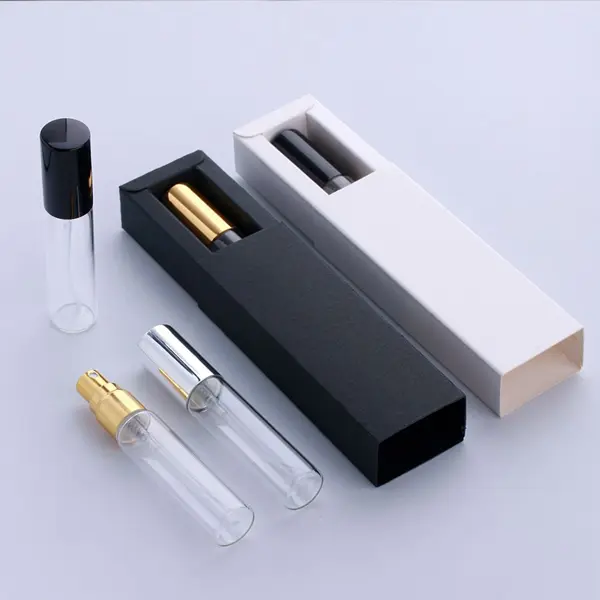
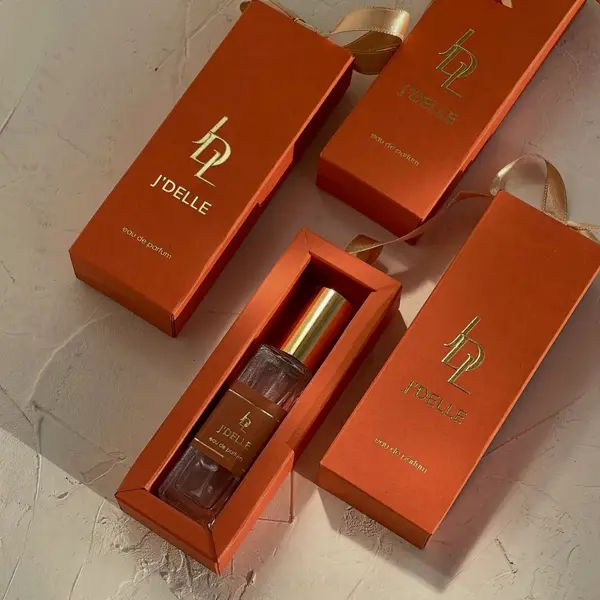
BoxBaba can develop custom cosmetic labels for skincare, makeup, fragrance, haircare, body-care and other beauty products supplied in bottles, jars, tubes, pumps, droppers, tins, compacts and suitable outer packaging. Depending on the project, front labels, front-and-back sets, wraparound labels, lid labels, bottom labels, roll labels, sheet labels and custom die-cut formats can be considered.
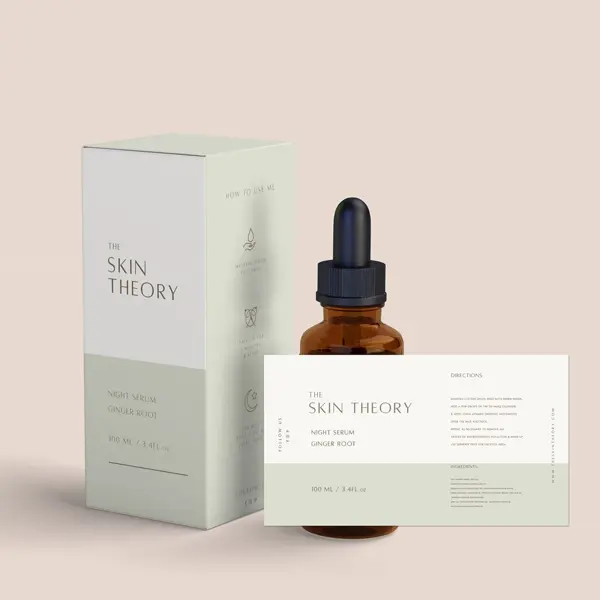
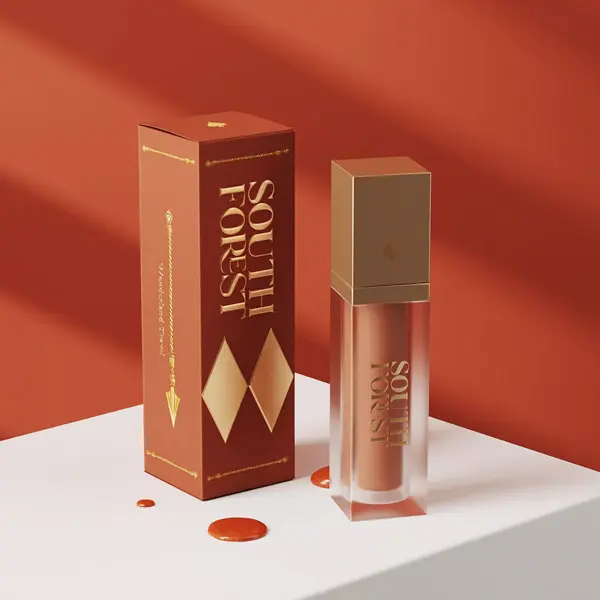
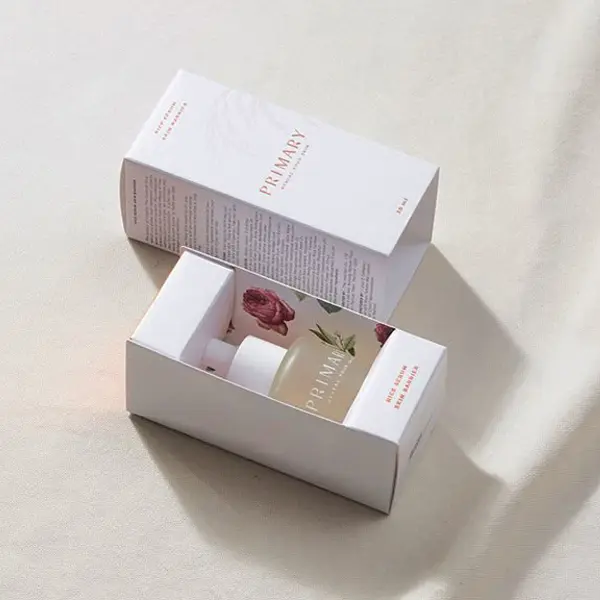
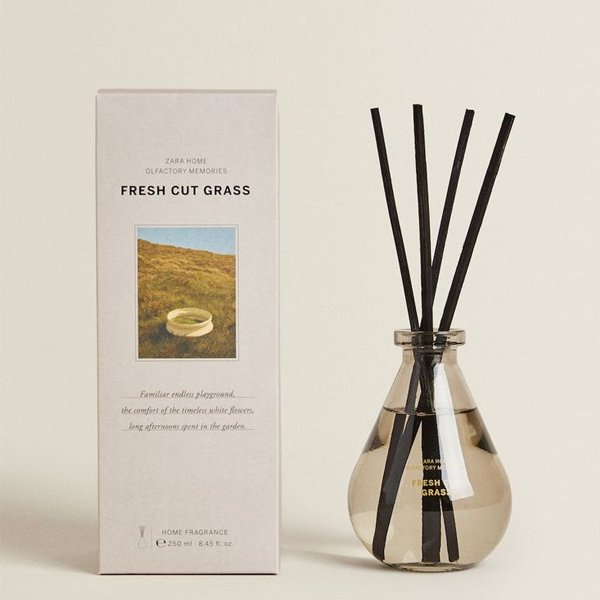
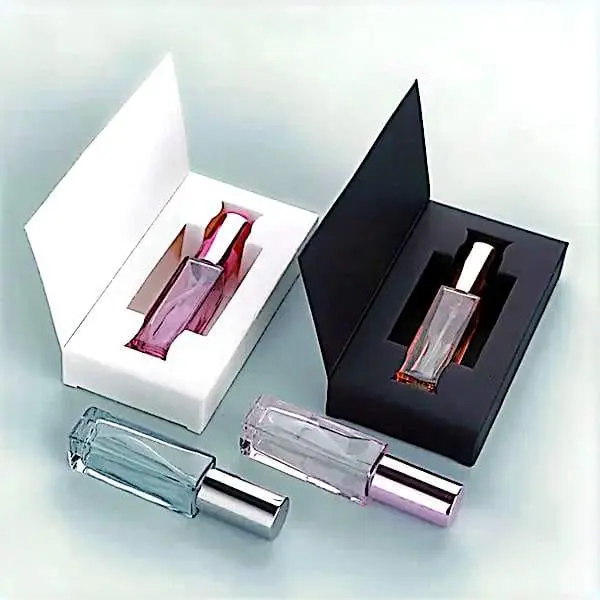
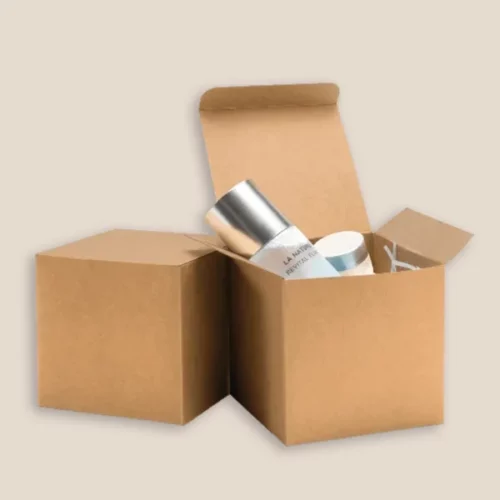
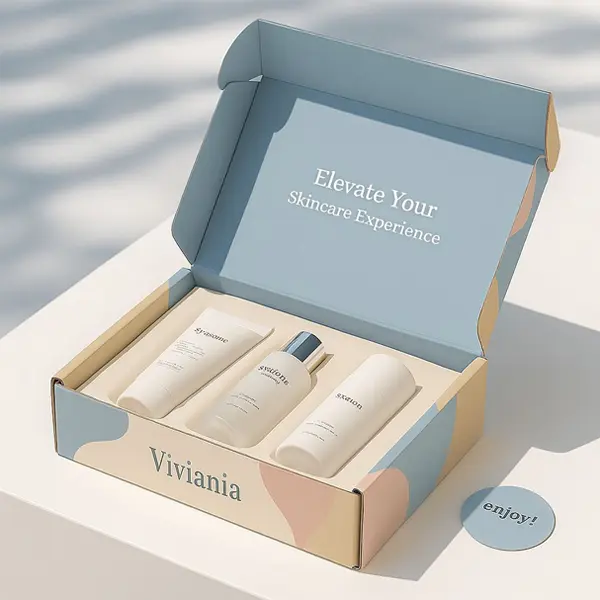
Brands that also require a secondary carton around the labeled product can coordinate the finished container with their custom cosmetic boxes instead of treating the label and carton as unrelated packaging components.
How Do You Measure a Cosmetic Container for a Label?
Measure the actual surface where the label will be applied. The overall bottle or jar dimensions alone do not establish the usable label area.
Before selecting a label size, confirm:
- Container height
- Width or diameter
- Usable label-panel width
- Usable label-panel height
- Circumference for wraparound labels
- Container taper
- Shoulder or base curvature
- Cap, pump or closure clearance
- Mold seams or tube seals
- Decorative features
- Intended front-facing position
For a cylindrical bottle, the available circumference and desired gap or overlap should be considered in addition to its height.
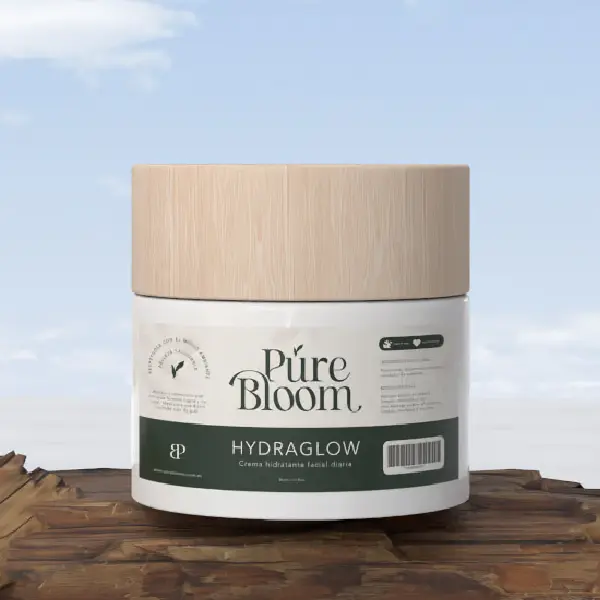
For a jar, confirm whether the label will be positioned on the body, lid, bottom or more than one surface.
For cosmetic tubes, measure the usable area between the shoulder and bottom seal rather than assuming the complete tube height can be covered.
Why Fill Volume Is Not a Cosmetic Label Size
A 30 mL serum bottle from one container supplier can have different dimensions from another 30 mL bottle. The same principle applies to lotion bottles, fragrance containers, jars and cosmetic tubes.
Use this sequence:
Finished Container → Labelable Surface → Label Width & Height → Position → Clearance → Artwork
Where a container is strongly tapered, curved or irregular, a physical sample, technical drawing or detailed dimensional reference may be useful before the label dimensions are approved.
How Do You Estimate the Circumference of a Cosmetic Bottle?
For a straight cylindrical container, circumference can be estimated using:
Circumference = Diameter × π
For example, a bottle with a diameter of 1.5 inches has an approximate circumference of:
1.5 × 3.1416 = 4.71 inches
This does not automatically mean the finished label should be 4.71 inches wide. The usable straight-wall area, desired gap or overlap, container taper, mold seam, artwork orientation and application method should still be considered.
This calculation is best used as an initial planning reference rather than a substitute for measuring the finished container.
Which Cosmetic Label Format Should You Choose?
The appropriate format depends on the usable surface, amount of artwork, container geometry and application method.
| Label Format |
Possible Application |
| Front Label |
Focused branding and product identification |
| Front-and-Back Labels |
Separate branding and information areas |
| Wraparound Label |
Larger continuous area around cylindrical containers |
| Lid Label |
Jar lids, tins and suitable flat closures |
| Bottom Label |
Additional product or identification information |
| Round Label |
Circular lids and suitable flat surfaces |
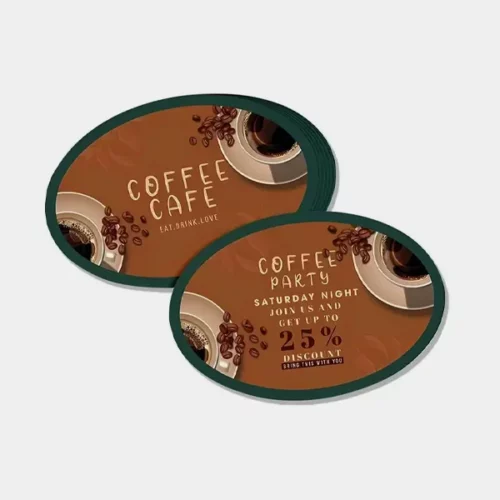
| Oval Label |
Decorative or shaped labeling areas |
| Rectangle Label |
Bottles, jars, cartons and flat panels |
| Custom Die-Cut Label |
Irregular branding or container-panel requirements |
| Roll Label |
Manual or machine application depending on specification |
| Sheet Label |
Manual application and project-specific workflows |
These are planning directions. Final suitability depends on the actual container, label dimensions, material, adhesive, artwork and application requirements.
Front Cosmetic Labels
A front label can provide a focused space for the brand logo, product identity, shade, formula or other front-facing information.
Confirm the width and height of the actual front-facing panel rather than centering artwork according to the full container width.
Front-and-Back Cosmetic Labels
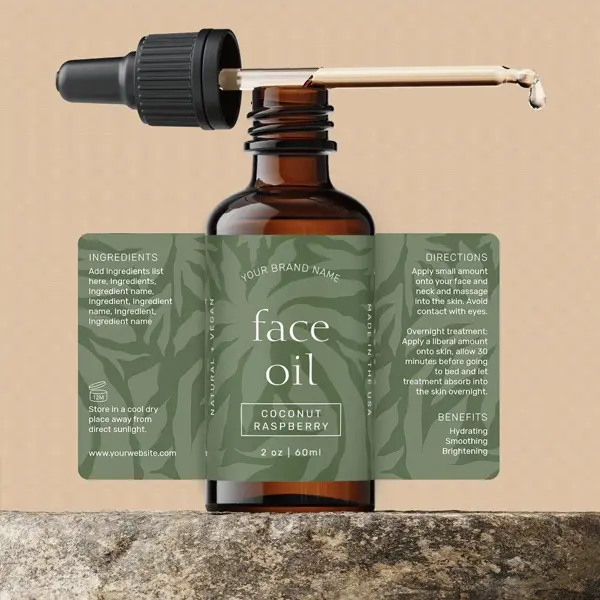
Separate labels can divide front-facing branding from ingredients, directions, warnings, barcodes or other buyer-approved information.
Confirm the spacing between both labels and their relationship to container seams, pumps, shoulders and other features.
Wraparound Cosmetic Labels
Wraparound labels can provide a larger continuous artwork area around cylindrical or near-cylindrical containers.
Before finalizing this format, confirm:
- Usable circumference
- Label height
- Desired gap or overlap
- Starting position
- Container taper
- Seam position
- Artwork orientation
Lid and Bottom Labels
Round, oval, square or custom-shaped labels may be considered for jar lids, tins, bases and other suitable areas.
Measure the actual flat application surface separately where the lid contains raised edges, embossing or curvature.
Custom Die-Cut Cosmetic Labels
Custom shapes can follow a branding direction or an unusual available panel.
The final shape should still provide sufficient usable area for the required text and graphics.
What Makes Up a Cosmetic Label?
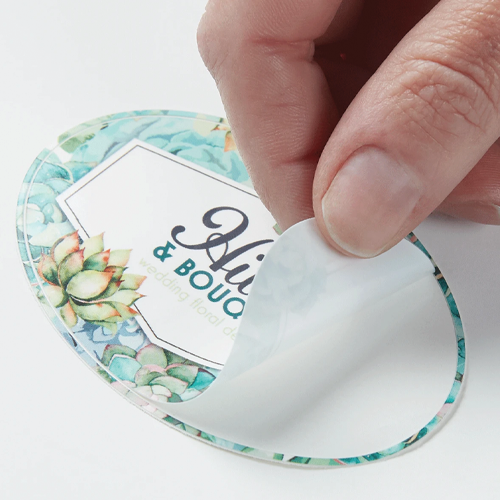
A pressure-sensitive label is more than its visible printed surface. Depending on the project, the label construction can involve several components that work together.
Facestock
The facestock is the visible printable material. Depending on availability and project requirements, directions may include paper, white film, clear film, metallic-effect or other label stocks.
Adhesive
The adhesive bonds the label to the container. Its suitability can depend on the container material, surface geometry, handling and application environment.
Release Liner
The release liner is the backing material from which a pressure-sensitive label is removed before application. Liner requirements can become particularly important for machine-applied labels.
Printed Layer
The facestock carries the printed logo, product information, graphics, barcode and other artwork.
Coating or Laminate
A compatible coating or laminate may be considered where the project requires a particular appearance or surface characteristic.
A decorative finish should not automatically be treated as providing a specific moisture, oil or chemical-performance level.
Die Cut
The die cut defines the finished perimeter of the label, whether rectangular, circular, oval or custom shaped.
Looking at these components together is more useful than selecting a facestock without considering the adhesive, container and intended application.
How Do You Choose a Cosmetic Label Material?
Material selection should follow the container and expected use conditions rather than appearance alone.
Consider:
- Container material
- Surface geometry
- Label dimensions
- Application method
- Expected handling
- Product environment
- Desired appearance
- Printing requirements
- Finishing requirements
If a labeled cosmetic may encounter oils, moisture, refrigeration, repeated handling or other demanding conditions, disclose those conditions before the material and adhesive are selected.
Do not assume that every cosmetic label is automatically waterproof, oil-proof, chemical-resistant or appropriate for every glass, plastic or flexible container. Performance depends on the actual stock, adhesive, printing system, finish, container surface and use environment.
Cosmetic Label Selection Matrix
| Container / Condition |
What Should Be Reviewed |
| Straight serum bottle |
Diameter, label-panel height, closure clearance and label format |
| Cream jar |
Jar diameter, body panel and optional lid-label area |
| Pump bottle |
Diameter, shoulder position, pump orientation and front-facing area |
| Cosmetic tube |
Usable height, flexibility, taper and bottom seal |
| Clear bottle |
Transparency, artwork contrast and available print method |
| Oily-use environment |
Facestock, adhesive, print surface and exposure conditions |
| Bathroom-use product |
Moisture exposure, material, adhesive and finishing |
| Tapered container |
Usable straight-wall area, label shape and application behavior |
| Machine-applied label |
Material, liner, gap, core and unwind requirements |
| Multi-SKU range |
Shared dimensions, artwork versions and quantity by SKU |
This matrix is a starting point. The finished label specification should follow the actual container and confirmed project requirements.
White, Clear and Metallic Cosmetic Label Directions
White Labels
White label stocks provide an opaque background and can support logos, colors and product information where an opaque appearance is preferred.
Clear Labels
Clear film can allow more of the bottle or product color to remain visible.
Artwork for a transparent label should account for the color and transparency of the container behind the printed area. Where specific opacity or white-underprint effects are required, confirm the available printing method before artwork approval.
Metallic-Effect Labels
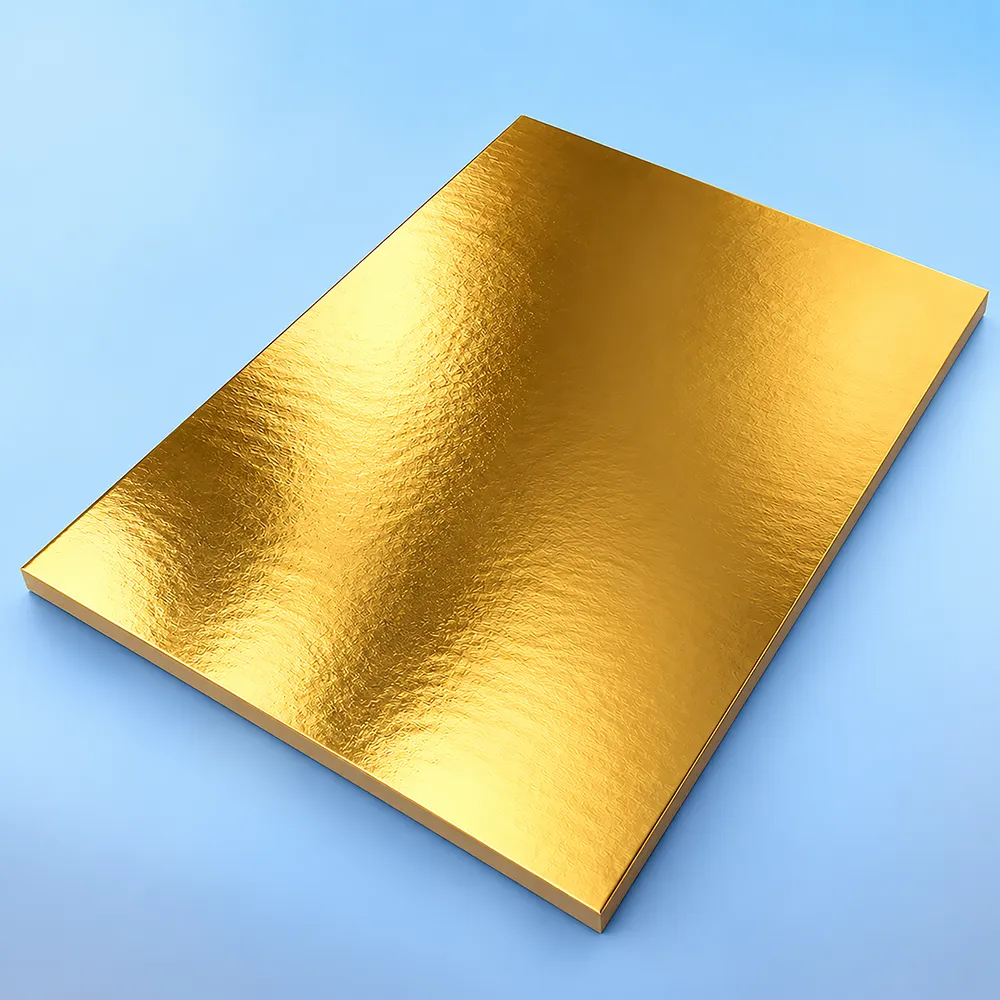
Metallic-effect materials can introduce reflective areas into selected branding concepts where the material and printing method are compatible.
Material and finish availability should be confirmed during quotation rather than assumed across every cosmetic label project.
Should You Choose Roll Labels or Sheet Labels?
Both formats can be useful, but the better direction depends on how the labels will be stored and applied.
| Requirement |
Direction to Consider |
| Manual application |
Sheets or rolls may both be practical |
| Automated label applicator |
Roll format normally requires equipment specifications |
| Several small SKUs |
Review quantities and artwork versions before choosing the format |
| Higher-volume application |
Roll format may suit the production workflow |
| Short test or launch quantity |
Confirm the available economical format |
| Existing applicator |
Follow the equipment’s roll, core, gap and unwind specifications |
The supply format should be confirmed during quotation according to the label size, material, quantity and application method.
Hand-Applied vs Machine-Applied Cosmetic Labels
The application method should be established before the final label specification is approved.
Hand-Applied Labels
Manual application may suit smaller cosmetic runs, new product launches, promotional collections and businesses applying labels without automated equipment.
For consistent positioning, establish a reference point such as:
- Container seam
- Pump direction
- Front panel
- Jar orientation
- Decorative feature
The label should be positioned according to the approved container orientation rather than by visual approximation alone.
Machine-Applied Roll Labels
Labels intended for automated or semi-automated equipment require additional production information.
Where applicable, provide:
- Labeling equipment requirements
- Roll direction
- Unwind orientation
- Core size
- Maximum roll diameter
- Label gap
- Web width
- Label orientation
- Liner requirements
Do not assume that one roll setup will work with every label applicator.
Machine compatibility should be confirmed against the buyer’s actual equipment and approved label specification.
What Is Cosmetic Label Unwind Direction?
Unwind direction describes how the printed label faces and feeds from a roll.
Depending on the labeling equipment, the label may need to dispense:
- Top edge first
- Bottom edge first
- Left edge first
- Right edge first
For machine application, use the applicator manufacturer’s requirements when confirming the unwind orientation.
Changing unwind direction after the artwork or production setup is approved may require the roll specification to be reviewed again.
How Should You Plan Multi-SKU Cosmetic Labels?
Beauty brands often sell the same product family across several shades, scents, formulas or sizes.
Examples include lipstick shades, foundation shades, serum formulas, lotion fragrances, nail colors, haircare variants and skincare collections.
For each SKU, confirm:
- Container dimensions
- Usable label area
- Label position
- Artwork version
- Barcode or QR information
- Required quantity
When Can Several SKUs Share One Label Dieline?
One dieline may be practical when the following remain consistent:
Container dimensions + labelable surface + label shape + position + application method
Artwork can then vary by SKU for shade names, product names, formulas, fragrances, color coding, barcodes and other approved information.
For serum ranges that also require individual secondary packaging, label planning can be coordinated with custom serum boxes after the finished bottle dimensions are confirmed.
When Should Separate Label Sizes Be Reviewed?
Separate dielines may be more appropriate where SKUs differ in:
- Bottle diameter
- Jar width
- Tube height
- Container taper
- Label-panel height
- Wraparound circumference
- Closure position
- Front-facing area
Do not force one label size across materially different containers simply because they belong to the same product family.
Can Cosmetic Labels Include Barcodes and QR Codes?
Yes, artwork can include buyer-supplied barcodes, QR codes and other machine-readable elements where the approved label provides suitable space.
Plan barcode areas before artwork approval rather than fitting them into unused space at the end of the design process.
Consider:
- Barcode dimensions
- Quiet zones
- Print contrast
- Surface curvature
- Label seam
- Label overlap
- Die-cut edges
- Product orientation
GS1 recommends maintaining clear quiet zones around barcodes and identifies symbol positioning—particularly on cylindrical packaging—as an important scan-quality consideration.
The buyer remains responsible for supplying and approving the correct barcode, GTIN, QR destination and associated data.
What Information May Need Space on a U.S. Cosmetic Label?
Artwork space should be planned only after the brand understands which information is required for the product and market.
For cosmetics marketed in the United States, FDA labeling requirements cover areas including product identity, net quantity, ingredient declarations and applicable business or warning information. FDA identifies the principal display panel as an important location for product identity and net-quantity information.
Potential artwork areas may therefore need to accommodate:
- Brand logo
- Product identity
- Product variant or shade
- Net quantity
- Ingredient information
- Directions
- Warnings
- Responsible business information
- Barcode
- QR code
- Lot or batch information
- Other applicable buyer-approved content
BoxBaba can help organize available print space and artwork placement, but the brand, manufacturer or qualified adviser remains responsible for determining the exact wording, ingredients, claims, warnings and market-specific legal requirements before artwork approval.
For current U.S. requirements, brands should consult the FDA Cosmetics Labeling Guide and applicable regulations rather than relying solely on packaging-space guidance.
Why Should Artwork Follow the Approved Label Dieline?
The label size and shape should be finalized before important graphics, text and machine-readable elements are positioned.
Changing the dieline after artwork completion can affect:
- Text margins
- Logo placement
- Barcodes
- QR codes
- Wrap seams
- Variant identification
- Overall visual balance
Important artwork should remain within the approved print and safe areas and clear of relevant trim, die-cut, overlap or structural zones.
How Do Cosmetic Labels Coordinate With Secondary Packaging?
The label is one part of the finished cosmetic packaging system.
Where a labeled bottle, jar, tube or compact will also sit inside a secondary carton, plan the carton around the complete finished product rather than the stated fill volume.
Brands can explore custom cosmetic boxes for individual secondary cartons.
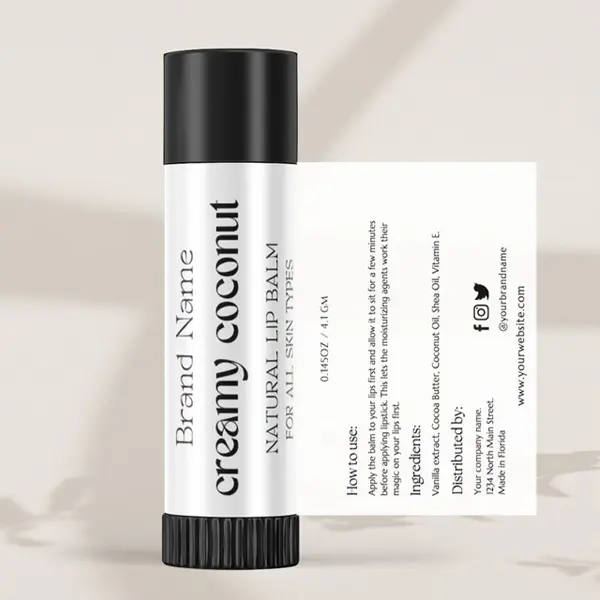
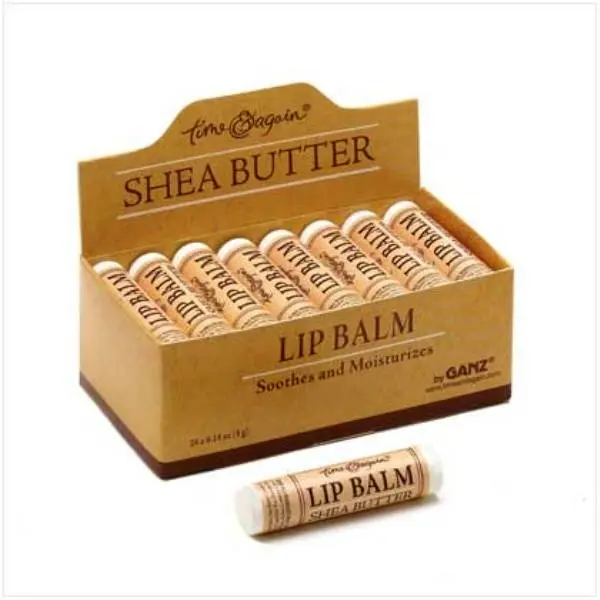
For narrow lip-care tubes and more product-specific labeling requirements, buyers can review custom lip balm labels.
Where several labeled products will later be grouped for retail merchandising, their completed dimensions can also be considered when developing cosmetic display boxes.
What Affects the Cost of Custom Cosmetic Labels?
Cosmetic label pricing should be based on the completed project specification rather than a generic price per sticker.
Quote factors can include:
Label Dimensions → Material → Adhesive Requirements → Shape → Quantity → Number of SKUs → Print Method → Finishes → Roll or Sheet Format → Machine Requirements
For example, one artwork version using a standard shape may create a different production setup from a multi-SKU project requiring several artwork files, custom die cuts or specific roll configurations.
For more comparable quotations, submit the same confirmed specifications to each supplier rather than comparing prices based only on label quantity.
Common Cosmetic Label Planning Mistakes
Choosing Label Size From Product Volume
Container capacity does not establish label width, height or circumference.
Measuring the Entire Container Instead of the Labelable Surface
Shoulders, raised bases, pumps, caps, tube seals and decorative elements can reduce the usable application area.
Ignoring Container Taper
A label placed on a tapered surface may require different geometry or application considerations from one used on a straight cylindrical container.
Ordering Roll Labels Before Checking the Applicator
Core size, unwind direction, roll diameter and label gap can vary between labeling systems.
Using One Label Across Different Containers Without Measurement
Similar-looking bottles or jars can still have different diameters and label-panel dimensions.
Finalizing Artwork Before the Dieline
Structural changes after artwork completion can affect text margins, barcode placement and alignment.
Treating a Decorative Finish as a Functional Performance Specification
Matte, gloss or other decorative treatments should not automatically be assumed to provide a particular oil, moisture or chemical resistance level.
Ignoring the Application Environment
A label intended for a dry display environment may have different requirements from one repeatedly exposed to moisture, oils or handling.
What Should You Provide for a Cosmetic Label Quote?
For a more complete quotation, provide:
- Cosmetic product type
- Finished container type
- Container material
- Container dimensions
- Usable label width and height
- Circumference where relevant
- Preferred label dimensions
- Label shape
- Front, back or wraparound placement
- Material preference
- Application environment
- Hand or machine application
- Roll requirements where applicable
- Number of SKUs
- Quantity for each SKU
- Artwork files
- Barcode or QR requirements
- Finish preferences
- Delivery destination
For multi-SKU projects, identify which products use the same container and which variations have different dimensions.
Proofing, Production and Shipping
Available proofing routes are confirmed during quotation according to the project.
Production timing is confirmed after the label dimensions, materials, adhesive requirements, artwork, quantity, SKU variations, application method and other relevant specifications are approved.
Shipping methods, charges and estimated transit times are confirmed according to the completed order, packing format, destination and selected service.
Request Custom Cosmetic Label Pricing
Share your finished container dimensions, usable label area, preferred size and shape, material direction, application environment, number of SKUs, application method, artwork and required quantity.
BoxBaba can use these details to review the label format, dimensions, artwork layout and production requirements around the actual cosmetic container.
Request a Cosmetic Label Quote through the quote form, call +1 305 574 4357, or email sales@boxbaba.com.