Custom Five Panel Hanger Boxes for Retail Peg Displays
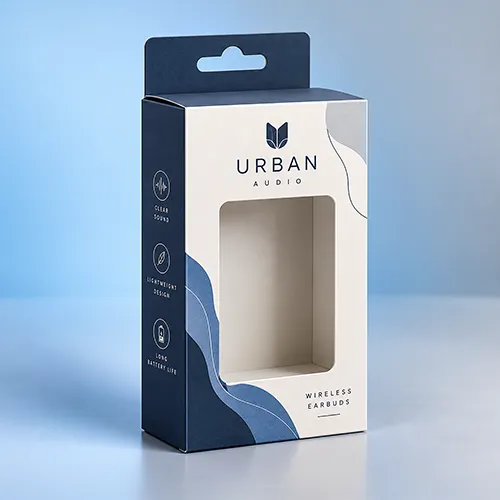
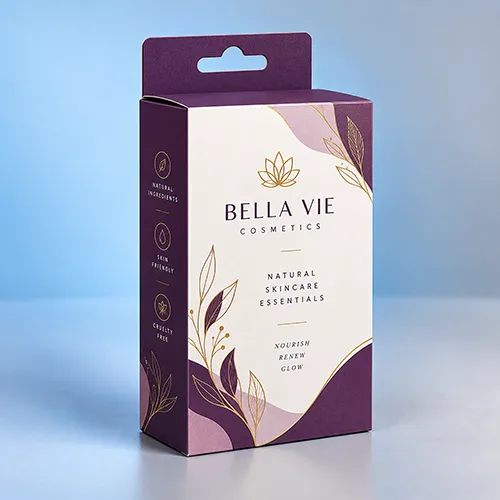
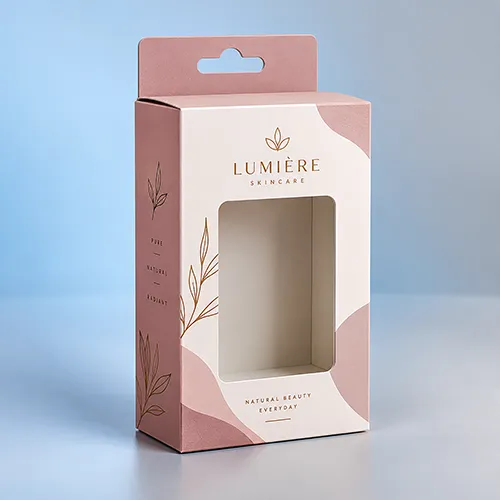
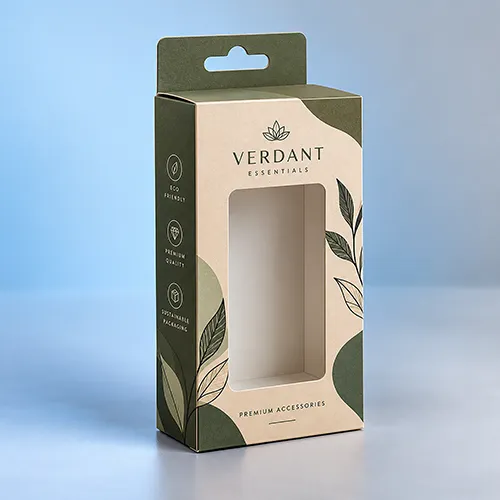
Custom Five Panel Hanger Boxes combine a folding-carton body with a dedicated fifth panel that extends beyond the main carton and carries an integrated hang opening.
The defining relationships are:
Five Panel Hanger Box → Adds → Dedicated Fifth Hanger Panel
and:
Fifth Hanger Panel → Engages → Retail Peg / Hook Fixture
This is the structural feature that gives the product its own commercial identity.
It should not be treated simply as any box with a hole or hang tab.
The buyer decision should follow:
Retail Product → Peg-Display Requirement → Five-Panel Hanger Structure → Loaded Weight + Retail Fixture → Hole / Slot Geometry → Board + Panel Geometry → Dieline → Physical Hanging Validation → Quote
For the broader folding-carton family, explore Custom Tuck Boxes.
What Is a Five Panel Hanger Box?
A Five Panel Hanger Box is a folding carton whose structure includes a dedicated extra panel extending above or beyond the primary carton body.
That panel contains the hanger opening used to place the loaded package on an appropriate retail peg or hook.
Use:
Carton Body → Contains → Product
while:
Dedicated Fifth Panel → Provides → Hanging Interface
The fifth panel therefore performs a structural merchandising function.
It is not simply additional artwork space.
Five Panel Hanger vs Hanging Tab Box
This distinction is important for BoxBaba product architecture.
A Five Panel Hanger Box should specifically mean a folding carton designed around a dedicated fifth-panel geometry that creates the integral hanger section.
A broader Hanging Tab Box can describe packaging where a hang-tab feature is added or incorporated into another compatible carton style without requiring this exact five-panel structural relationship.
Use:
Dedicated Fifth-Panel Carton Geometry → Five Panel Hanger
versus:
Broader Hang-Tab Packaging Requirement → Hanging Tab Box
If the buyer needs hanging retail packaging but does not specifically require the five-panel structure, compare Hanging Tab Boxes.
This distinction protects both product pages from targeting the same structural intent.
Five Panel Hanger vs Straight Tuck End Box
A Straight Tuck End Box uses a conventional folding-carton body with primary tuck closures oriented in the same general direction.
Five Panel Hanger adds a separate structural requirement:
Tuck Carton Body + Dedicated Extended Hanger Panel
Use:
Conventional Shelf Carton Requirement → Standard Tuck Structure
versus:
Integrated Peg-Hook Requirement → Five Panel Hanger
If the package does not need to hang, the fifth panel may add unnecessary material and structural complexity.
Five Panel Hanger Is Not the Same as Every “Fifth Panel” Carton
Packaging terminology can overlap.
Some fifth-panel or bookend-style cartons use an additional panel for presentation, opening or visual structure rather than retail hanging.
A genuine Five Panel Hanger should be confirmed by the relationship:
Dedicated Fifth Panel + Functional Hang Opening → Peg-Display Structure
Do not rely on the style name alone.
The approved dieline should show the actual fifth-panel and hanger geometry.
Design the Hanger Around the Retail Fixture
The hanger opening should not be chosen independently from the retail display system.
Possible fixtures include different:
Use:
Retail Fixture → Required Hang Interface → Hanger Opening → Dieline
If the retailer or distributor provides a peg-hook specification, include it before structural approval.
Which Hanger Hole or Slot Should You Use?
Possible hanging openings can include:
There is no one universal hanger opening for every project.
Use:
Fixture Geometry → Hole / Slot Geometry → Die-Cut Specification
The approved production dieline should control both the shape and position of the opening.
Loaded Product Weight Affects Hanger Suitability
The fifth panel supports the packaged product while it hangs.
Therefore:
Loaded Product Weight → Influences → Hanger Panel / Board Review
The structural decision should consider the interaction between:
Do not publish a universal claim such as:
Five Panel Hanger Boxes hold X pounds
unless that capacity refers to a specifically engineered and validated construction.
Weight Alone Does Not Determine Hanging Performance
Two products of equal weight can behave differently when displayed.
A long narrow package can load the hanger differently from a short compact package.
Product position inside the carton can also change the hanging relationship.
Use:
Loaded Weight + Product Position + Carton Geometry + Fixture → Hanging Review
rather than:
Product Weight Alone → Hanger Suitability
Product Position and Center of Mass Matter
The product should remain in the intended position while the carton is suspended.
Excessive internal movement can change how the package hangs on the peg.
Internal support may become relevant where the product needs:
Use:
Product Position → Hanging Orientation → Support Decision
Does Every Five Panel Hanger Use a Reinforced Header?
No.
The page should not automatically claim that every Five Panel Hanger includes a doubled or reinforced top section.
Some approved structures may use reinforcement.
Others may use a different fifth-panel construction.
Use:
Loaded Product + Fixture + Board + Panel Geometry → Reinforcement Decision
rather than:
Five Panel Hanger → Automatically Reinforced Header
The production dieline is the final authority.
How to Size a Five Panel Hanger Box
Start with the finished product in the position in which it will be displayed.
Provide:
length × width/depth × height
plus:
-
complete loaded weight;
-
product orientation;
-
hanging direction;
-
retail fixture type;
-
required slot or hole geometry where known;
-
top and bottom closure requirements;
-
internal support requirement;
-
and window requirement.
Do not assume:
Product Dimensions = Finished Five Panel Hanger Dimensions
The complete carton must also accommodate:
Use:
Finished Product → Internal Fit → Carton Body → Fifth Hanger Panel → Complete Dieline
Board Caliper Affects the Hanging Structure
Board thickness affects both carton folding and the physical hanger area.
Use:
Board Caliper → Score Geometry + Panel Geometry + Hanger Behavior
Changing board stock can affect:
Do not assume:
Higher GSM = Automatically Better Hanging Performance
Also:
GSM ≠ Caliper
The selected production board should be included in structural validation.
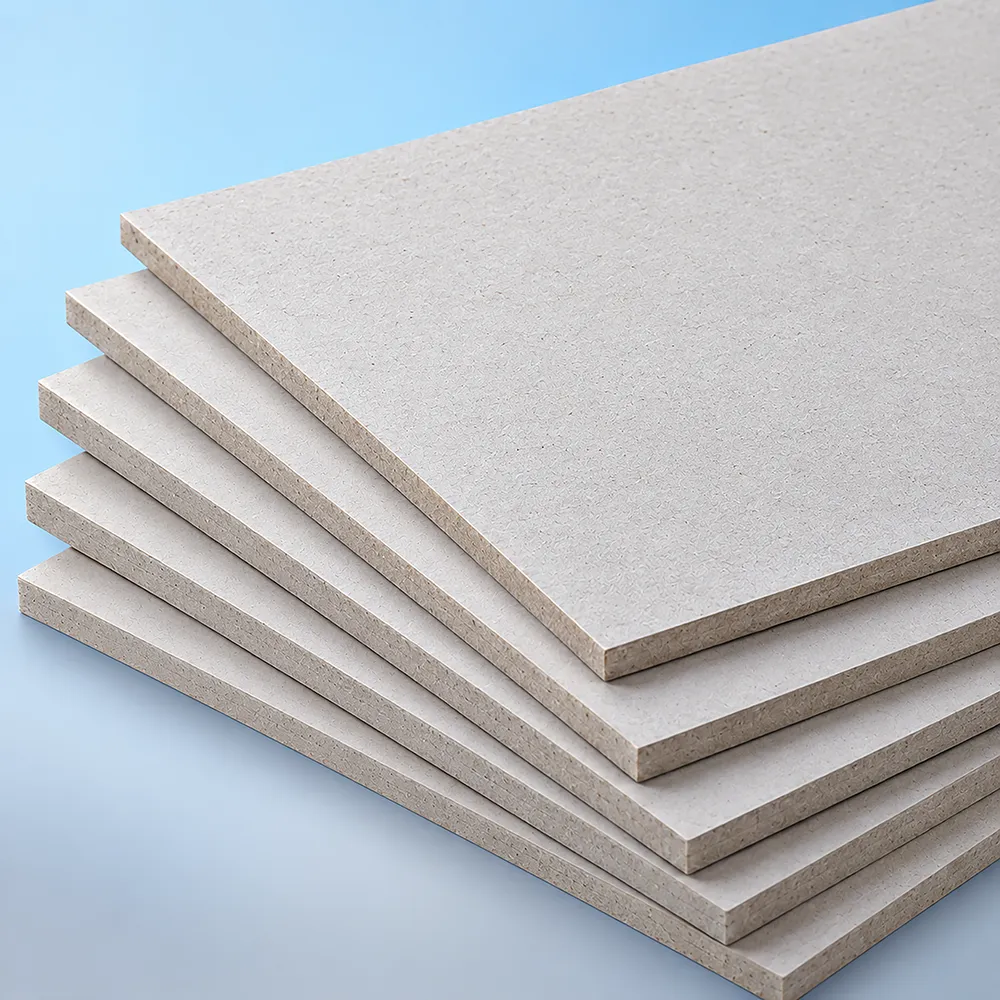
Materials for Five Panel Hanger Boxes
Material selection should follow:
Product + Loaded Weight + Carton Dimensions + Fifth-Panel Geometry + Printing Requirement
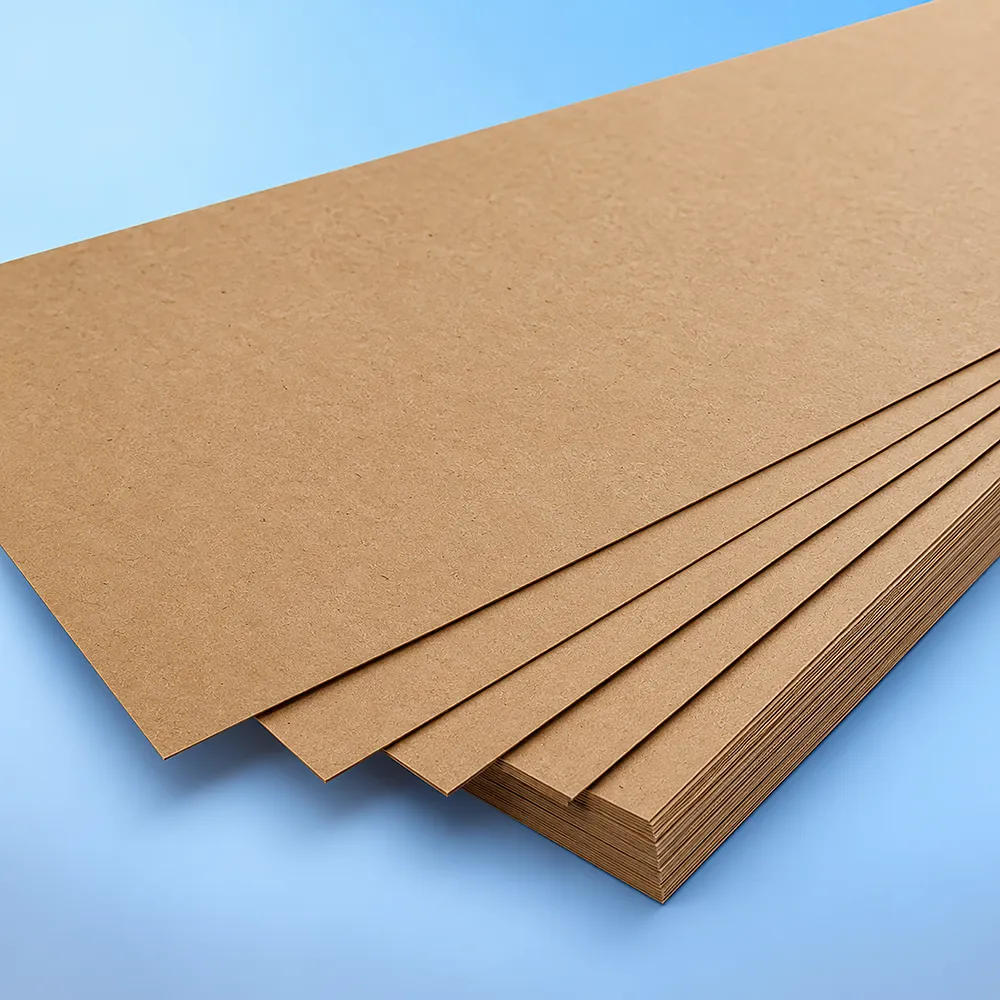
Possible project-specific options can include suitable white folding paperboard and natural Kraft paperboard.
Do not assign one universal:
-
GSM;
-
caliper;
-
board grade;
-
or hanging capacity
to every Five Panel Hanger project.
Internal Support for Hanging Products
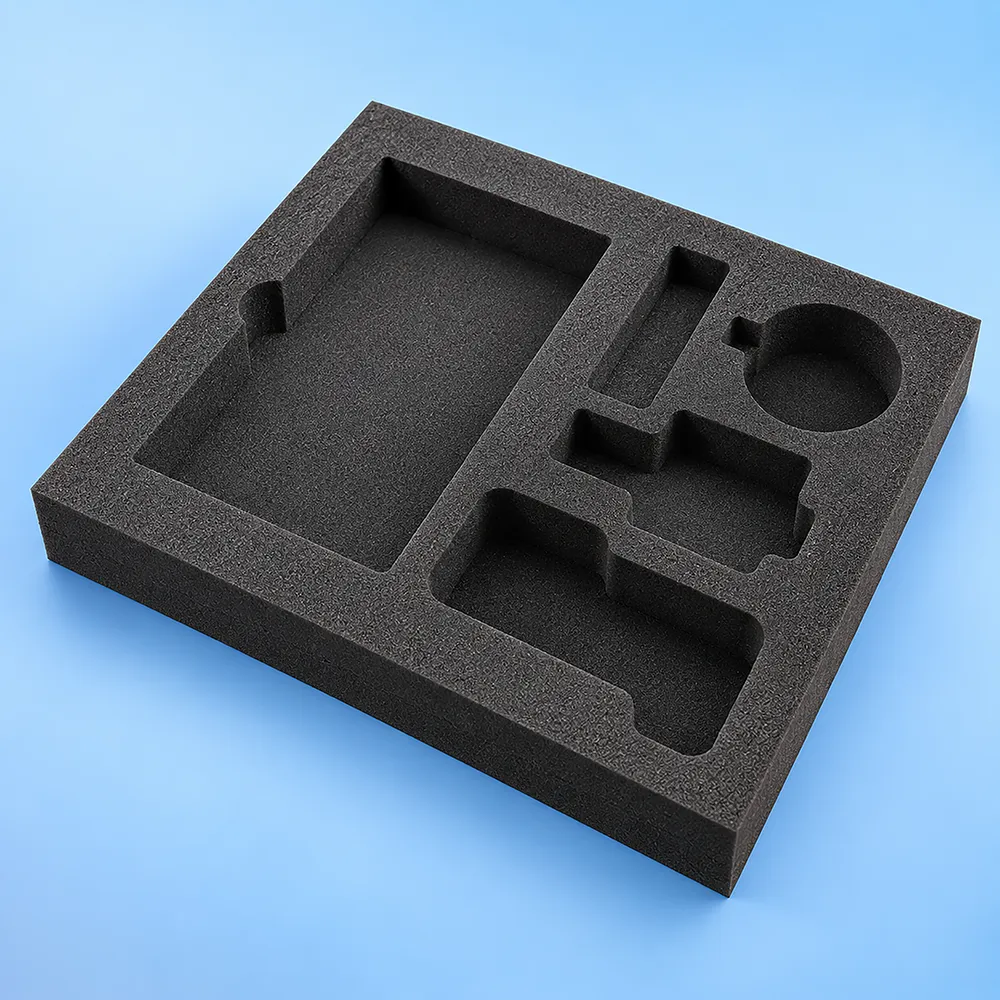
Internal support can help control the product while the carton hangs.
It may be considered where the product needs:
Because support occupies internal volume:
Product → Support Geometry → Required Internal Space → Five Panel Hanger Carton
The support requirement should therefore be established before the final outside dimensions are approved.
Five Panel Hanger Boxes With Windows
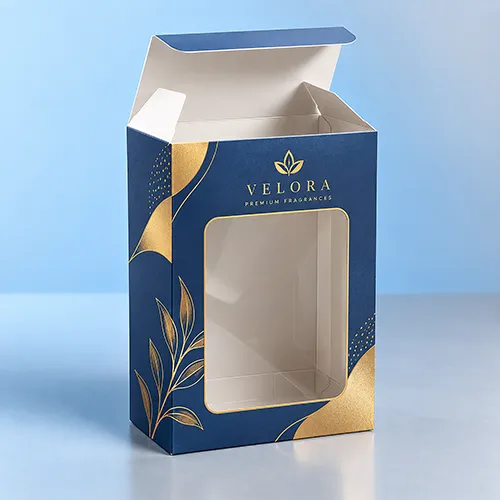
A die-cut viewing opening can be added where the selected panel retains enough structural area.
Plan it as:
Product Position → Visible Feature → Window Geometry → Remaining Structural Area
Coordinate the window with:
-
hanging orientation;
-
product position;
-
fifth panel;
-
tuck closure;
-
folds and scores;
-
support;
-
and artwork.
For broader product-visibility packaging, explore Boxes With Window.
Window Position Must Be Reviewed While the Carton Is Hanging
A window that appears well positioned while the carton sits upright on a desk may look different when the package hangs from a peg.
Use:
Actual Hanging Orientation → Product Position → Window Position
Where presentation is important, review the physical sample in the same orientation customers will see in store.
Printing Options for Five Panel Hanger Boxes
Custom printing can extend across the primary carton panels and usable areas of the fifth panel.
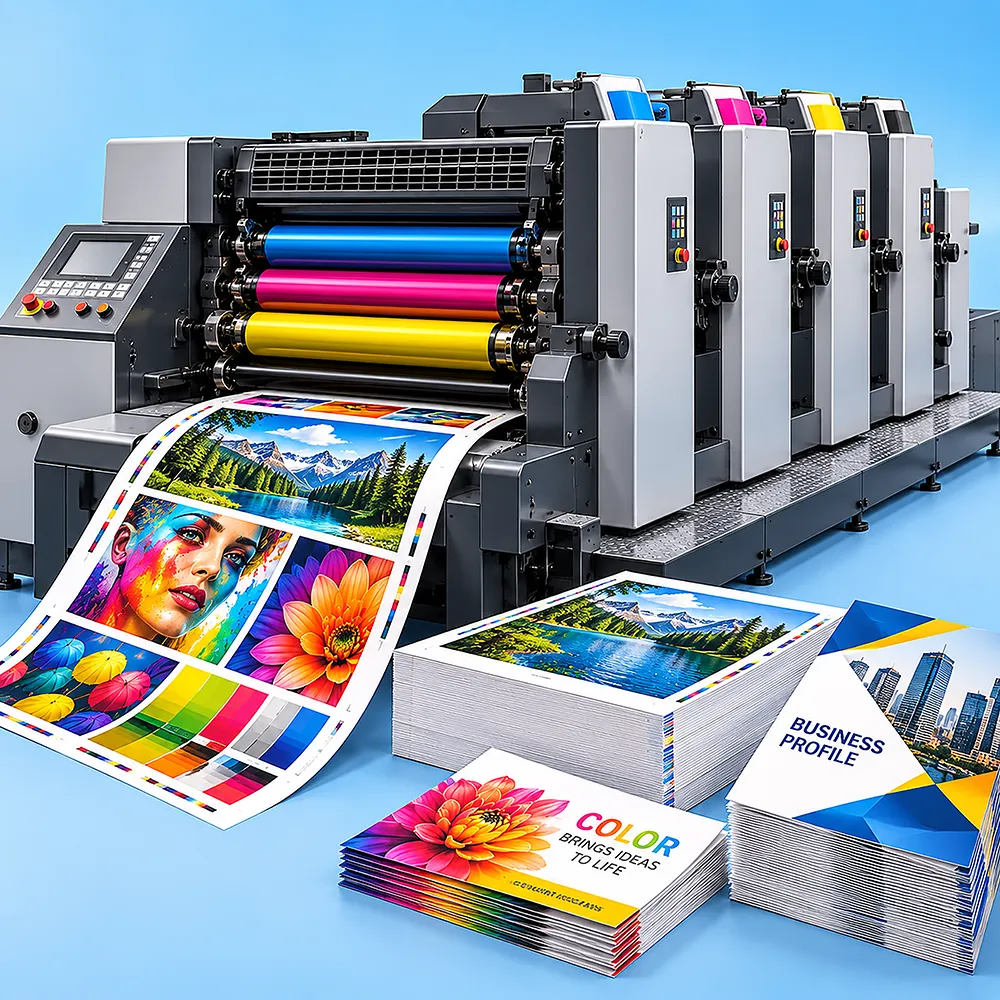
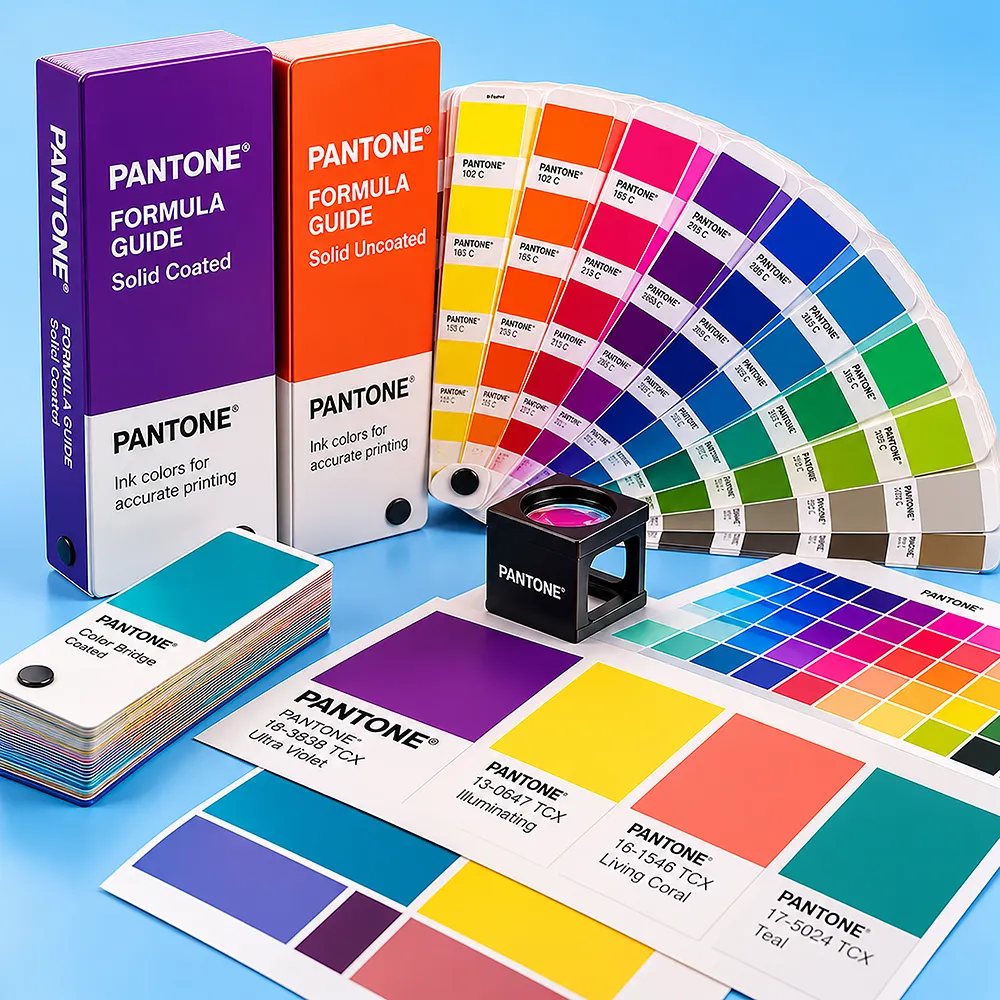
Depending on the approved production setup, printing may include digital or offset methods with CMYK process color and Pantone/PMS references where applicable.
Keep these terms separate:
Digital / Offset = Printing Methods
CMYK / Pantone = Color Systems / References
Artwork may include:
Inside printing can also be considered where supported by the selected material and production process.
Use the Fifth Panel as Functional Artwork Space
The fifth panel can provide additional visible branding area.
However, the hanger opening and its surrounding structural area take priority.
Use:
Fifth Panel → Functional Hang Area + Remaining Printable Area
Do not position essential:
-
logos;
-
small text;
-
barcodes;
-
QR codes;
-
or required information
too close to the hang opening or structural fold zones.
Barcode and Retail Information Placement
Peg-display products may require SKU, barcode, variant or retailer-specific information.
Plan those areas around:
Use:
Retail Information Requirement → Panel Allocation → Artwork
The fifth panel should not be treated as unlimited free space.
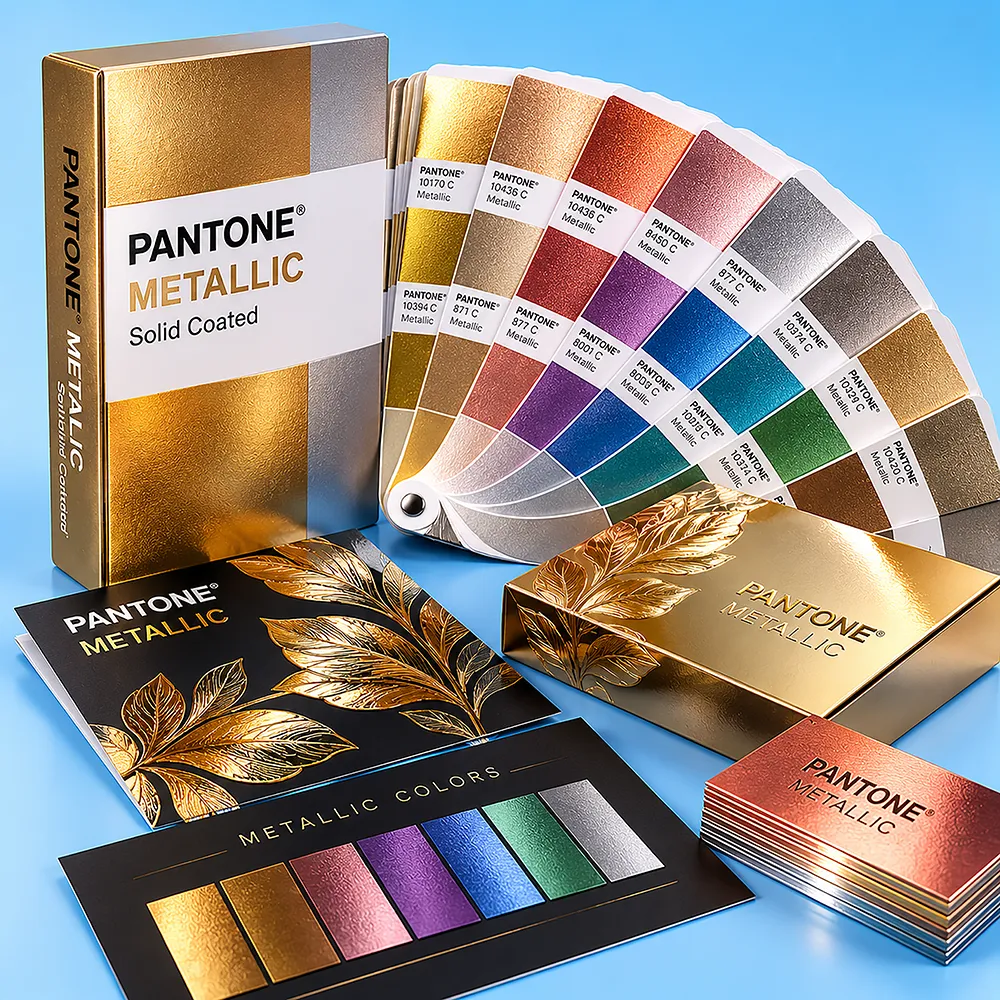
Finishing Options for Five Panel Hanger Boxes
Printing and finishing should remain separate decisions.
Compatible project-specific options can include:
-
matte lamination;
-
gloss lamination;
-
soft-touch treatment;
-
foil stamping;
-
embossing;
-
debossing;
-
and Spot UV.
Finish placement should account for:
Hanger Opening + Fifth-Panel Folds + Scores + Closure Areas + Artwork
Avoid heavy raised effects or finish buildup directly around critical hanging, folding or locking areas without production review.
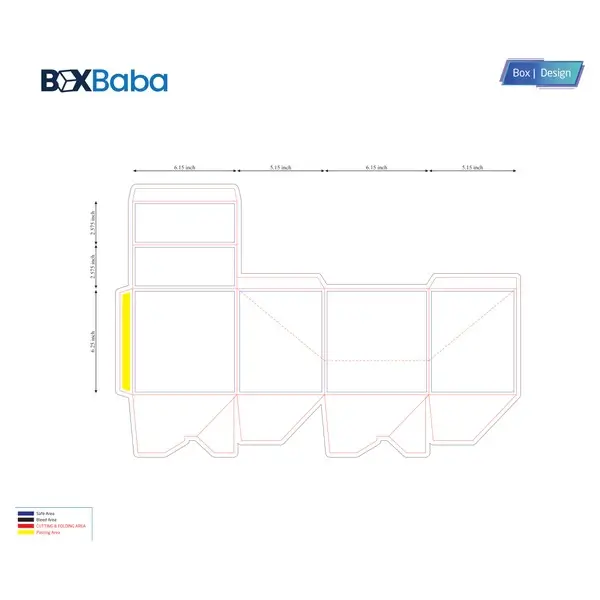
Five Panel Hanger Box Dielines
The dieline defines both the carton body and the hanger structure.
Depending on the approved design, it can include:
Use:
Product → Peg-Display Requirement → Fifth Panel + Hanger Opening → Carton Body → Board → Complete Dieline → Artwork
The hanger feature should be engineered as part of the structural blank rather than added to a generic finished Tuck dieline without review.
For deeper production-file guidance, review BoxBaba Packaging Dieline Guide.
What Should Be Physically Validated?
Digital and physical approvals answer different questions.
A digital proof or 3D mockup can help review:
artwork + panel orientation + hanger-opening position + window position + finish placement
A representative physical sample is more useful for:
product fit + loaded hanging behavior + peg engagement + fifth-panel deformation + package orientation + support + window alignment
Use:
Artwork Question → Digital Proof
and:
Hanging / Structural Question → Representative Physical Sample
A digital mockup cannot establish whether the loaded carton will hang correctly on the intended retail fixture.
Test the Loaded Carton on the Intended Fixture
Where possible, evaluate the production-representative sample using the same or equivalent:
that will be used in store.
Review:
Hang → Remove → Rehang → Observe Hanger Panel / Opening
The test should use the actual or representative loaded product rather than an empty carton.
Five Panel Hanger vs Retail Display Box
Five Panel Hanger packaging supports individual peg or hook merchandising.
A Retail Display Box generally organizes or presents products on a counter, shelf or point-of-sale display rather than suspending each product from its own integrated fifth panel.
Use:
Individual Peg / Hook Display → Five Panel Hanger
versus:
Counter / Shelf Presentation → Retail Display Box
These are different merchandising structures and should remain separate commercial nodes.
Five Panel Hanger Boxes and Parcel Shipping
The hanger panel is a retail-merchandising feature.
It does not establish transport performance.
Use:
Five Panel Hanger Feature ≠ Parcel-Shipping Qualification
A standard paperboard Five Panel Hanger carton is generally secondary retail packaging.
Where the completed retail package requires stronger ecommerce, wholesale or courier protection, consider an appropriate outer Custom Corrugated Box.
What to Send for a Five Panel Hanger Box Quote
| Quote Input |
Why It Matters |
| Finished product dimensions |
Defines required carton body |
| Loaded product weight |
Supports fifth-panel and board review |
| Product orientation |
Controls product position while hanging |
| Hanging direction |
Defines header and artwork relationship |
| Retail fixture / peg type |
Defines hanger-opening requirements |
| Required slot / hole shape |
Supports die-cut design where specified |
| Top / bottom closure requirement |
Defines the complete carton |
| Board preference |
Affects folds and hanger-panel behavior |
| Internal support requirement |
Controls product position |
| Window requirement |
Changes available panel area |
| Inside printing |
Expands artwork scope |
| Exterior printing |
Defines print coverage |
| Barcode / SKU requirements |
Affects panel allocation |
| Finishing requirements |
Affects production specification |
| Order quantity |
Supports production planning |
| Artwork status |
Determines dieline / artwork support |
| Delivery destination |
Supports shipping planning |
If a retailer has supplied a peg-hook, fixture or planogram specification, include it with the quote request.
Custom Five Panel Hanger Boxes Wholesale From BoxBaba
BoxBaba develops Five Panel Hanger Boxes around the actual finished product, loaded weight, dedicated fifth-panel structure, retail fixture and complete carton configuration.
Custom packaging projects can start from 100 units.
Artwork and dieline support are available, along with digital proof or 3D mockup review. Ask about representative physical samples where hanger-opening engagement, loaded hanging behavior, product position, window alignment or fifth-panel performance should be checked before bulk production.
Standard processing is typically 5–9 business days after final artwork approval, depending on the selected structure, board, hanger geometry, printing and finishing requirements.
Free shipping is available across the USA.
Request Custom Five Panel Hanger Boxes
A Five Panel Hanger carton should be developed around the actual loaded product, dedicated fifth-panel geometry and retail fixture, not merely the appearance of a hang tab.
Use:
Retail Product → Peg-Display Requirement → Five-Panel Hanger Structure → Loaded Weight + Retail Fixture → Hole / Slot Geometry → Board + Panel Geometry → Dieline → Physical Hanging Validation → Production
Share your product dimensions, loaded weight, orientation, hanging direction, intended retail peg or fixture, required quantity, preferred closure, artwork status and any window, internal-support, inside-printing or finishing requirements.
If the retailer provides a peg-hook or hanger specification, send it before the structural dieline is approved.
Place your order by calling +1 305 574 4357 or emailing sales@boxbaba.com.