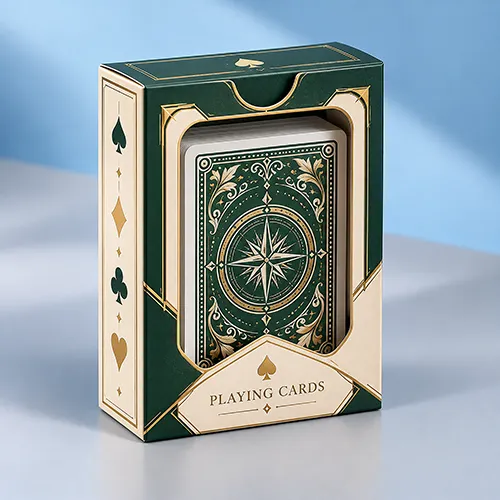
Custom Playing Card Tuck Boxes for Card Decks & Games
Custom Playing Card Tuck Boxes are folding cartons designed specifically around a finished deck of cards.
The defining packaging relationship is:
Playing Card Tuck Box → Card Width + Card Height + Finished Deck Thickness + Tuck Closure
Card width and height establish the primary footprint.
The completed card stack establishes the depth requirement.
That means a playing-card carton should not be sized from card count alone.
Use:
Finished Card Deck → Card Format + Card Count → Finished Stack Thickness → Tuck Structure → Internal Fit → Board + Closure Geometry → Dieline → Artwork → Physical Validation → Quote
For the broader family of folding-carton structures, explore Custom Tuck Boxes.
What Is a Playing Card Tuck Box?
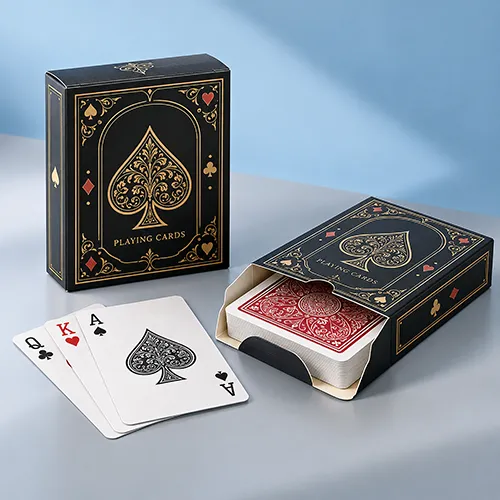
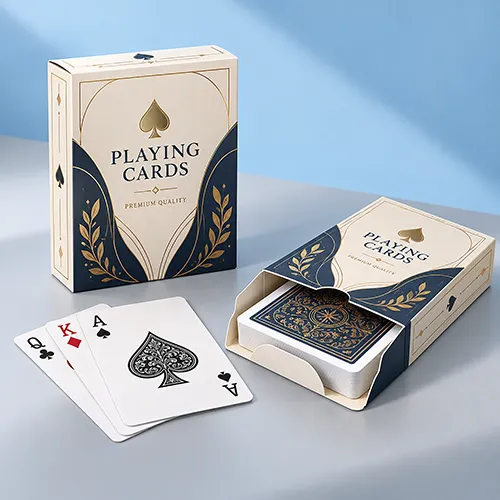
A Playing Card Tuck Box is a folding paperboard carton developed to hold a deck of cards in a compact reusable package.
The central product relationship is:
Finished Deck → Fits Inside → Tuck Carton
The Tuck structure provides the opening and closing relationship.
The finished deck establishes the internal space the carton needs.
Unlike many retail products, where length, width and height come from one solid object, a deck third dimension is created by the complete card stack.
That makes finished deck thickness one of the most important sizing and quoting inputs.
Card Dimensions vs Finished Deck Dimensions
Playing-card packaging should distinguish between:
Individual Card Size
and:
Complete Deck Size
The individual card establishes the face dimensions.
The complete stacked deck establishes the packed depth.
Use:
Card Width + Card Height → Main Carton Footprint
and:
Finished Stack Thickness → Required Carton Depth
For detailed poker, bridge and other card-format dimensions, review BoxBaba Playing Card Dimensions & Tuck Box Size Guide.
Common Playing Card Formats
Some common finished card formats include:
| Card Format |
Common Reference Size |
| Poker |
2.5 × 3.5 in / 63.5 × 88.9 mm |
| Bridge |
2.25 × 3.5 in / 57.15 × 88.9 mm |
| Tarot / Oracle |
Often larger; confirm actual production dimensions |
| Mini / Custom Cards |
Project-specific |
These are card dimensions, not finished Tuck Box dimensions.
A custom deck can also use non-standard dimensions, so the actual finished cards should be confirmed before the structural dieline is approved.
Why Card Count Alone Does Not Determine Box Depth
Two decks with the same number of cards can require different carton depths.
Finished deck thickness can change because of:
-
card stock;
-
individual card caliper;
-
coatings;
-
surface treatments;
-
card count;
-
jokers;
-
rule cards;
-
reference cards;
-
dividers;
-
or protective sleeves.
Use:
Card Count + Individual Card Thickness + Packed Components → Finished Deck Thickness
Do not assume:
52 Cards = One Universal Tuck Box Depth
The most reliable input is the actual finished stack.
Measure the Complete Finished Deck
Before approving the carton dieline, stack the complete contents exactly as they will be packed.
Include:
-
all playing or game cards;
-
jokers;
-
rule cards;
-
reference cards;
-
promotional cards;
-
dividers where applicable;
-
and sleeves where they are part of the packed product.
Then measure the final stack thickness.
Use:
Actual Packed Deck → Finished Stack Thickness → Required Internal Depth
This helps prevent a carton that is difficult to load, difficult to reopen or unnecessarily loose around the cards.
Bare Cards vs Sleeved Cards
If the product will include card sleeves, the box should be sized around the sleeved deck.
Use:
Bare Deck ≠ Sleeved Deck
Instead:
Finished Sleeved Deck → Measure → Develop Carton
Sleeves add material around every card and can significantly change the complete stack.
A carton approved around unsleeved prototype cards may therefore be too tight for the final product.
Playing Card Tuck Box vs Generic Tuck Box
A generic Tuck carton can hold many product types.
A Playing Card Tuck Box uses the Tuck structure for a very specific packaging problem:
storing and repeatedly accessing a compact card deck.
The distinction is:
Generic Tuck Box → Structure-Led
versus:
Playing Card Tuck Box → Deck Fit + Repeated-Use Application
This page therefore needs to own decisions around:
Playing Card Tuck Box vs Board Game Box
A Playing Card Tuck Box is most appropriate when the finished product is primarily one compact deck or a small card-based game that fits a folding carton.
A Custom Board Game Box becomes more relevant when the game contains several larger or different component types, such as:
-
multiple decks;
-
boards;
-
dice;
-
tokens;
-
rulebooks;
-
score pads;
-
miniatures;
-
or accessories.
Use:
Compact Card Deck → Playing Card Tuck Box
versus:
Multi-Component Tabletop Game → Board Game Packaging
The presence of cards alone does not mean a Tuck carton is the correct structure for the entire game.
Which Tuck Structure Should a Playing Card Deck Use?
Playing Card Tuck Box describes the application, not one universal folding-carton dieline.
The exact closure relationship should be defined from the finished deck and approved structural design.
A card carton may use:
Do not assume:
Playing Card Tuck Box = One Universal Flap Orientation
If same-direction Straight Tuck orientation is specifically required, compare Straight Tuck End Boxes.
The correct card-box structure should follow the finished deck and intended opening experience.
How Repeated Opening Affects the Tuck Closure
A card tuck box may be opened and closed repeatedly throughout the life of the deck.
The closure therefore needs to be developed around:
Repeated Access + Board + Tuck Geometry
Relevant considerations include:
-
tuck-flap depth;
-
flap engagement;
-
dust-flap position;
-
opening clearance;
-
thumb access;
-
and card-removal path.
A closure should not be made unnecessarily tight solely to produce a firm first opening if doing so makes repeated card access difficult.
Thumb Notches and Opening Features
A thumb notch can make access easier where the approved structure benefits from one.
Its position should follow:
Opening Direction → Hand Access → Panel Geometry → Dieline
Because a notch removes part of a panel, it should be coordinated with:
-
artwork;
-
the tuck flap;
-
card position;
-
structural edges;
-
and any label or seal.
A thumb notch should be added because it improves actual access—not simply because it is common on card packaging.
How to Size a Playing Card Tuck Box
Provide the finished:
Do not assume:
Card Size = Internal Box Size
The carton also needs controlled allowance for:
Use:
Finished Deck → Required Internal Fit → Tuck Geometry → Complete Dieline
How Much Clearance Should a Playing Card Tuck Box Have?
There is too little clearance can make loading and card removal difficult.
Too much clearance can allow unnecessary movement inside the carton.
The appropriate fit depends on:
Finished Deck Dimensions + Board + Closure Geometry + Production Tolerance + Intended Access
For a close-fitting deck box, a representative physical sample is more useful than applying one generic clearance value to every project.
Board Selection for Playing Card Tuck Boxes
Select the board around:
Deck Weight + Carton Dimensions + Repeated Opening + Printing Requirement + Fold Geometry
Possible options can include suitable folding paperboard or Kraft paperboard depending on the project.
Do not publish one universal GSM or caliper for all playing-card boxes.
Board caliper can affect:
Use:
Board Caliper → Score Geometry → Tuck Fit
rather than:
Higher GSM = Automatically Better
Also:
GSM ≠ Caliper
Two materials with the same GSM do not necessarily behave identically in a close-fitting card carton.
How Deck Weight Affects the Carton
Card decks are compact, but their total packed weight still changes with:
Review:
Finished Deck Weight + Footprint + Board + Closure Geometry → Structural Suitability
Avoid assigning one maximum card count or universal weight capacity to the product page.
The actual packed deck should drive the structural review.
Rule Cards, Jokers and Instruction Leaflets
All packed components should be included before the box is sized.
Possible additions include:
Use:
Deck + Additional Components → Complete Packed Thickness → Carton Requirement
Do not finalize the carton depth before these components are included.
Do Playing Card Tuck Boxes Need Inserts?
A close-fitting single card deck often does not require a separate insert.
The carton itself can provide the required compact fit.
An insert becomes more relevant where the package contains:
Use:
Single Close-Fit Deck → Insert May Be Unnecessary
versus:
Multiple Components → Internal Retention May Be Useful
For projects where several components need controlled positioning, review Printed Boxes With Inserts.
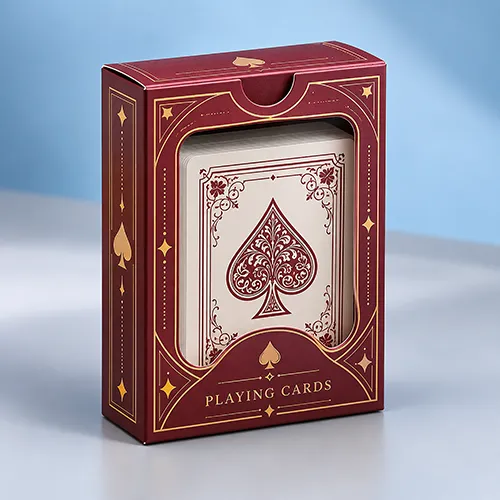
Playing Card Tuck Boxes With Windows
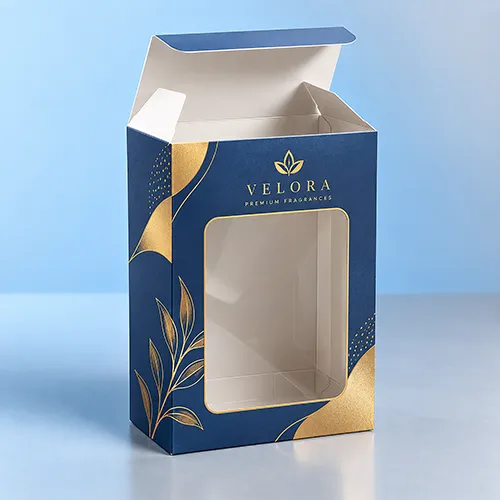
A die-cut opening can be considered when the first card, card back or another deck feature should remain visible.
Window planning should follow:
Visible Card Area → Deck Position → Window Geometry → Remaining Structural Panel Area
Coordinate the opening with:
For broader viewing-window structures, explore Boxes With Window.
Printing Options for Playing Card Tuck Boxes
The carton provides printable exterior panels for the game, publisher or brand artwork.
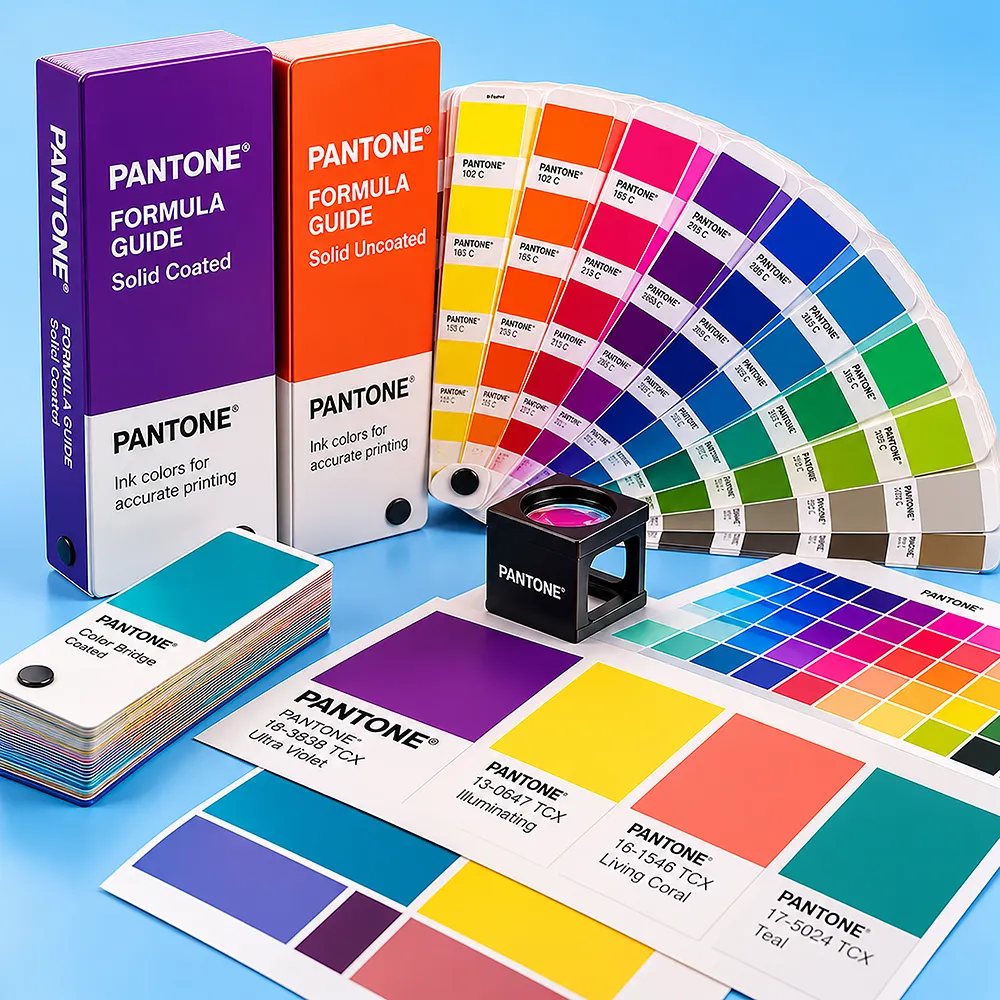
Depending on the approved production setup, printing can include digital or offset methods with CMYK process color and Pantone/PMS references where applicable.
Keep these terms separate:
Digital / Offset = Printing Methods
CMYK / Pantone = Color Systems / References
Artwork may include:
Inside printing can also be considered where the selected board and production setup support it.
Artwork Orientation on Playing Card Tuck Boxes
Artwork should be created on the actual approved dieline.
A flat carton contains panels that face different directions after erection.
Use:
Erected Box Orientation → Dieline Panel → Artwork Direction
Review orientation carefully for:
Do not rotate artwork based only on how the flat dieline appears on screen.
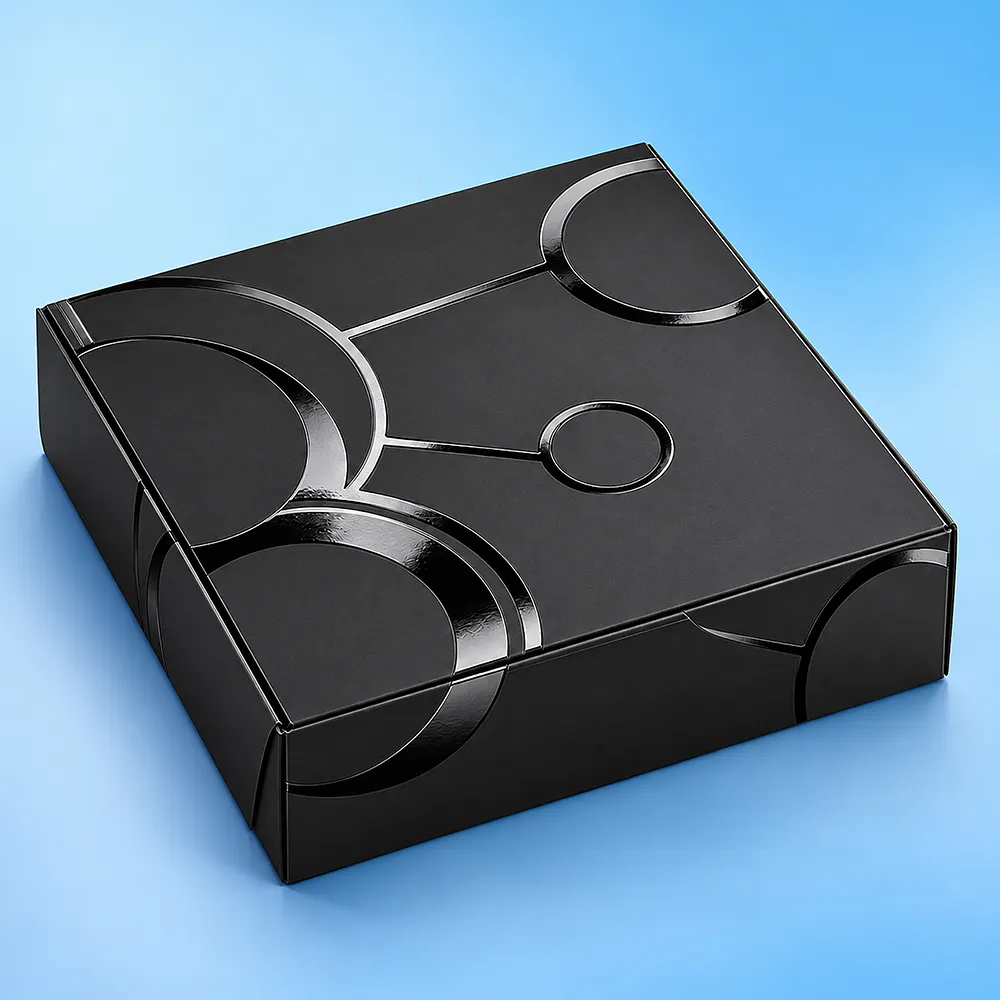
Finishing Options for Playing Card Tuck Boxes
Printing and finishing should be specified separately.
Compatible project-specific finishes may include:
-
matte lamination;
-
gloss lamination;
-
soft-touch treatment;
-
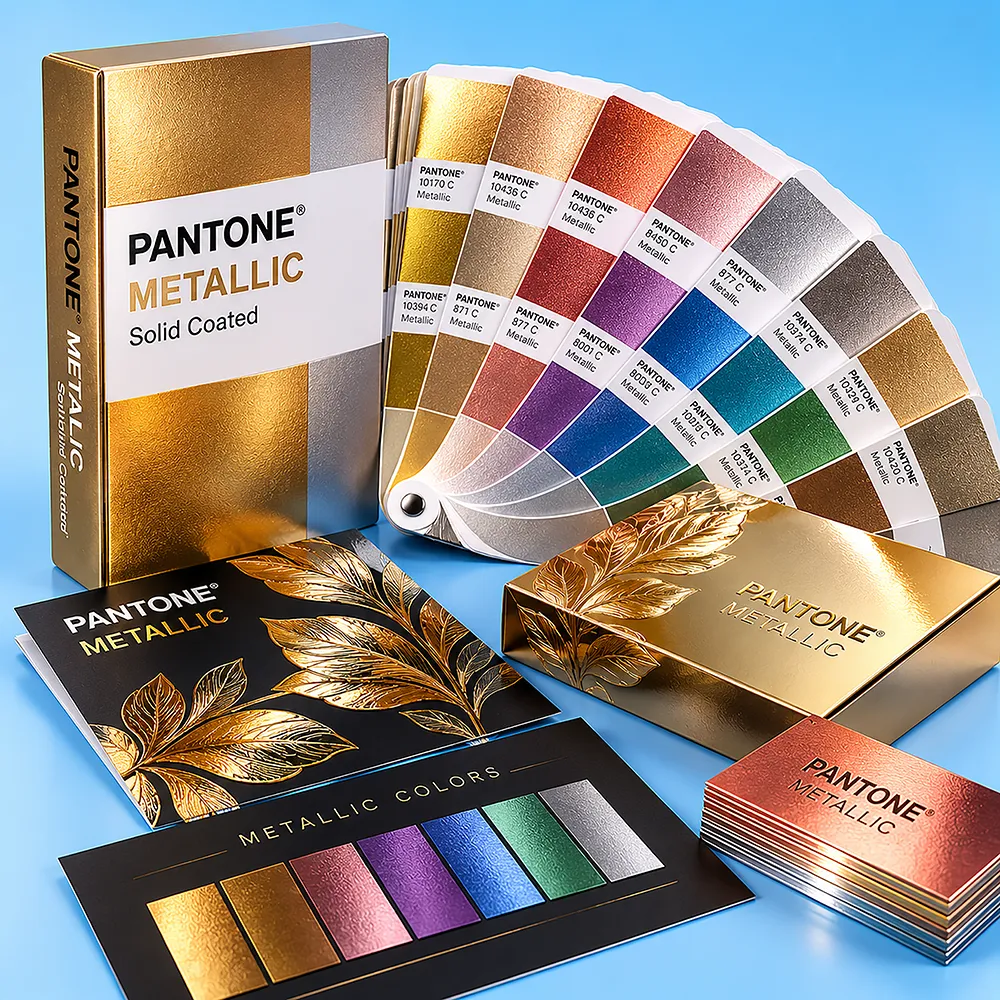
foil stamping;
-
embossing;
-
debossing;
-
and Spot UV.
Finish placement should account for:
Scores + Tuck Folds + Flap Engagement + Artwork
Avoid placing deep embossing or heavy finish buildup directly across functional folds or tuck-engagement areas without production review.
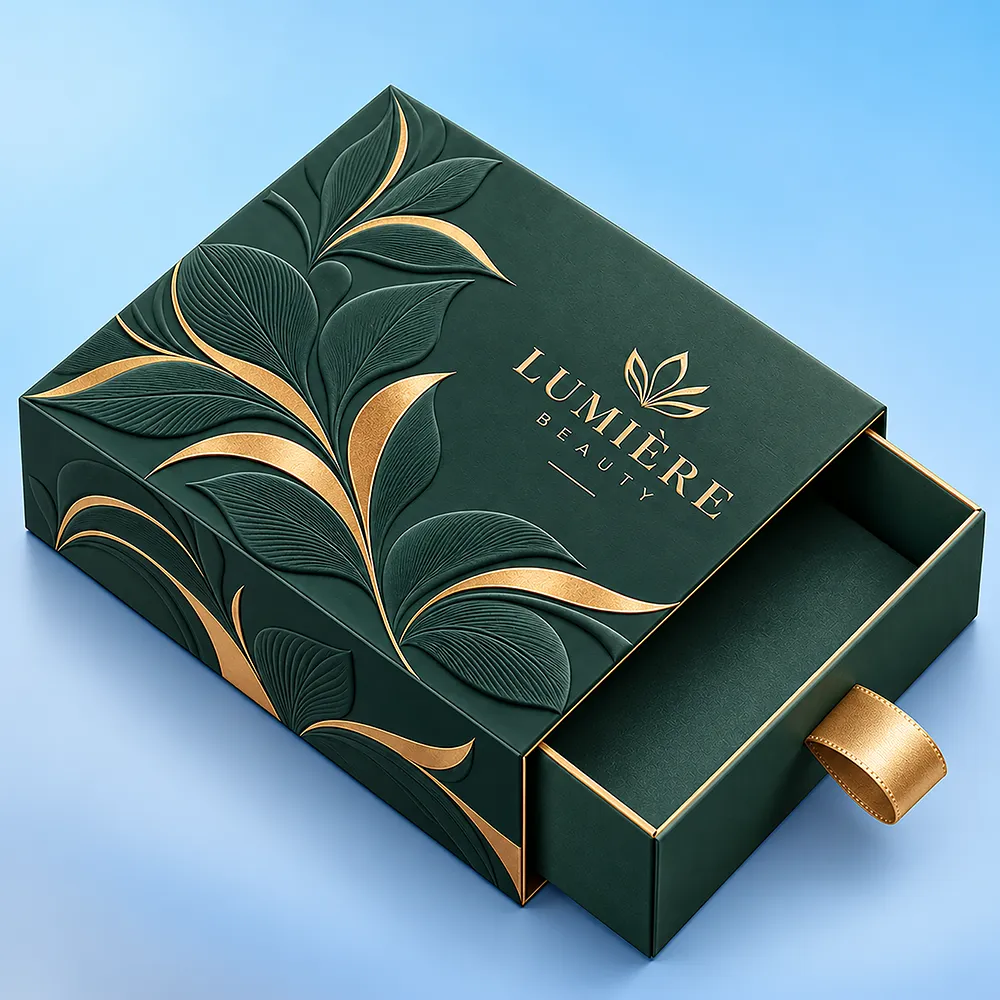
Foil Stamping on Playing Card Tuck Boxes
Foil can be used selectively for:
The correct relationship is:
Dieline → Artwork Hierarchy → Foil Placement
rather than applying foil simply because several panels are available.
For a product where foil-enhanced Tuck structure is itself the primary commercial requirement, compare Tuck End Foil Boxes.
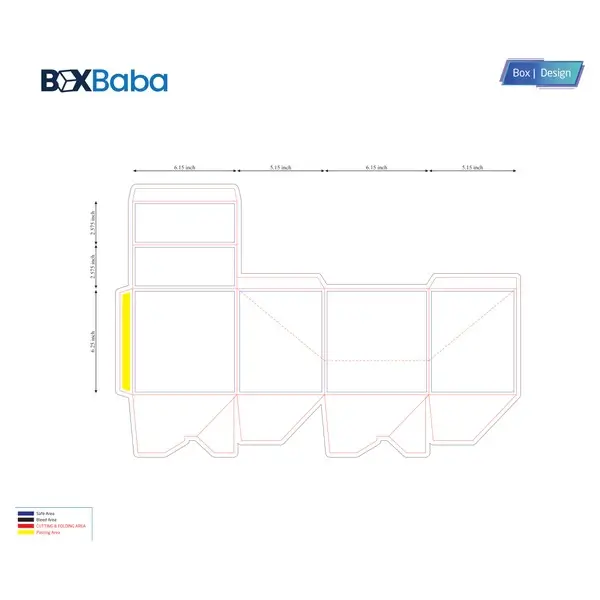
Playing Card Tuck Box Dielines
The dieline maps how the flat carton will wrap around the finished deck.
Depending on the approved structure, it can define:
-
front panel;
-
back panel;
-
side panels;
-
tuck flap;
-
dust flaps;
-
glue tab;
-
bottom closure;
-
folds and scores;
-
thumb notch;
-
artwork boundaries;
-
and any window opening.
Use:
Finished Deck → Tuck Structure → Board → Dieline → Artwork
The dieline should only be finalized after the actual deck dimensions and finished stack thickness are confirmed.
For broader production-file guidance, review BoxBaba Packaging Dieline Guide.
What Should Be Validated Before Production?
Digital and physical approvals answer different questions.
A digital proof or 3D mockup can help review:
artwork + panel orientation + text + finish placement
A physical structural sample is more useful for:
deck fit + loading + deck removal + tuck engagement + repeated opening
Use:
Artwork Question → Digital Proof
and:
Physical Fit / Closure Question → Representative Sample
A screen mockup cannot confirm how easily the finished cards enter or leave the carton.
Check Repeated Opening Before Bulk Production
If the carton will remain the long-term storage package for the deck, review more than the first closure.
Check:
Use:
Repeated Storage Requirement → Repeated Closure Review
This is particularly useful for collector decks, game decks and products expected to remain in the original carton after purchase.
Is a Playing Card Tuck Box a Shipping Box?
Not automatically.
A standard paperboard Playing Card Tuck Box is retail and storage packaging for the card deck.
It should not automatically be treated as an outer ecommerce parcel package.
Use:
Playing Card Tuck Box ≠ Parcel-Shipping Box
For direct-to-consumer shipping, an appropriate outer Mailer Box may be required.
What to Send for a Playing Card Tuck Box Quote
| Quote Input |
Why It Matters |
| Finished card width |
Defines primary internal width |
| Finished card height |
Defines primary internal height |
| Complete deck thickness |
Defines required carton depth |
| Card count |
Provides deck context but does not replace stack measurement |
| Card stock / finish |
Can affect complete deck thickness |
| Sleeved or unsleeved |
Can materially change packed depth |
| Jokers / rule cards / extras |
Changes complete packed stack |
| Instruction leaflet |
Uses additional internal space |
| Finished deck weight |
Supports structural review |
| Preferred Tuck structure |
Defines opening and closure |
| Thumb-notch requirement |
Changes panel geometry |
| Window requirement |
Changes available panel area |
| Printing sides |
Defines artwork scope |
| Finishing requirements |
Affects production specification |
| Order quantity |
Supports production planning |
| Artwork status |
Determines dieline / artwork support |
| Delivery destination |
Supports shipping planning |
If the cards have already been produced, provide measurements from the actual finished deck rather than relying only on nominal card dimensions or card count.
Custom Playing Card Tuck Boxes Wholesale From BoxBaba
BoxBaba develops Playing Card Tuck Boxes around the actual finished deck rather than using one assumed universal card-box size.
Custom packaging projects can start from 100 units.
Artwork and dieline support are available, along with digital proof or 3D mockup review. Ask about physical sample options where deck fit, loading, card removal, repeated closure or tuck engagement should be checked before bulk production.
Standard processing is typically 5–9 business days after final artwork approval, depending on the selected structure, board, printing and finishing requirements.
Free shipping is available across the USA.
Request Custom Playing Card Tuck Boxes
A Playing Card Tuck Box should be developed from the actual finished deck, not from a generic card-box size.
Use:
Finished Card Deck → Card Format + Card Count → Finished Stack Thickness → Tuck Structure → Internal Fit → Board + Closure Geometry → Dieline → Artwork → Physical Validation → Production
Share your finished card width, card height, complete stack thickness, card count, sleeve status, required quantity, artwork status and any thumb-notch, window, inside-printing or finishing requirements.
If your deck has already been produced, measure the physical finished stack before the carton dieline is approved.
Place your order by calling +1 305 574 4357 or emailing sales@boxbaba.com.