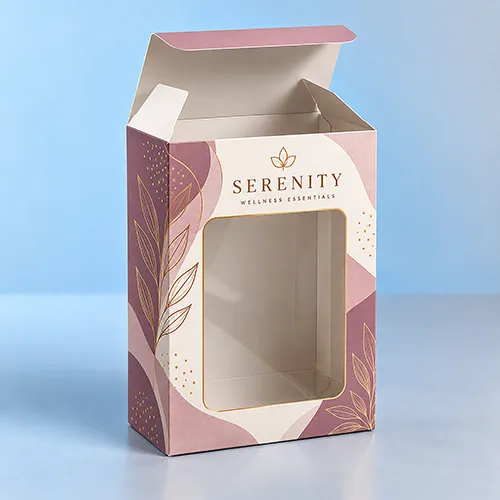
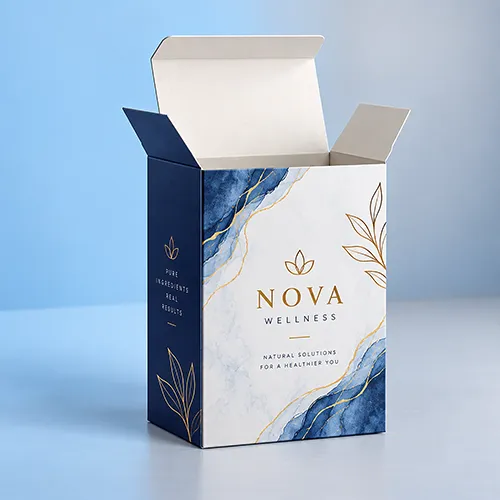
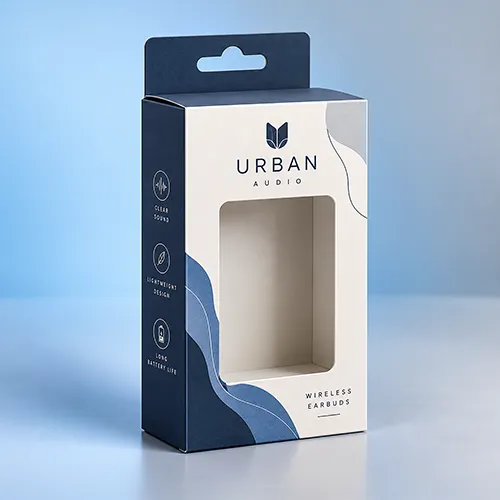
Custom Tuck End Window Boxes for Retail Product Visibility
Custom Tuck End Window Boxes combine two packaging decisions:
Tuck-End Folding Carton + Product-Viewing Opening
The Tuck structure determines how the carton loads, opens and closes.
The window determines which part of the packed product remains visible.
The defining relationship is:
Tuck End Window Box → Adds → Viewing Opening to Tuck Carton
A window should therefore be developed around the actual product position rather than added as a decorative cutout after the carton has already been designed.
Use:
Finished Product → Visibility Requirement → Product Position → Tuck-End Structure → Visible Area → Open / Patched Window → Remaining Panel Geometry → Dieline → Artwork + Physical Validation → Quote
For the broader folding-carton family, explore Custom Tuck Boxes.
What Is a Tuck End Window Box?
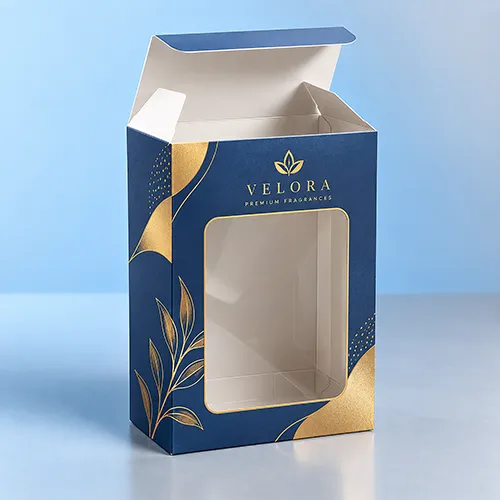
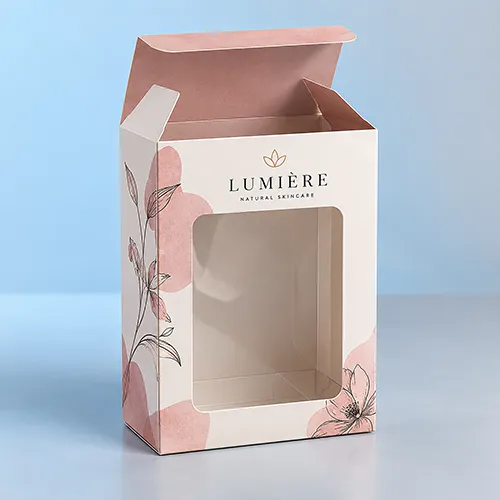
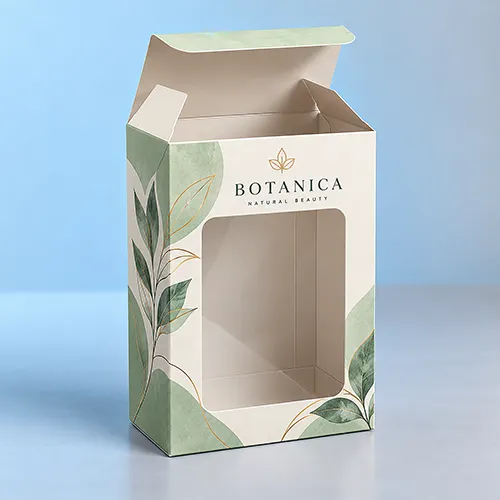
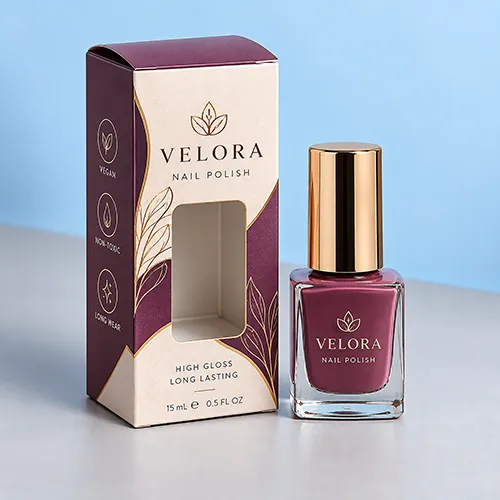
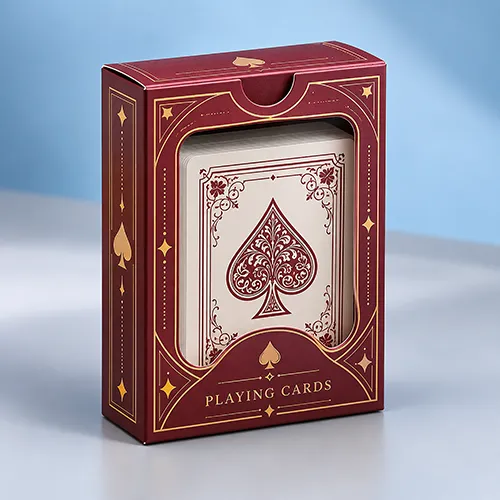
A Tuck End Window Box is a folding carton that combines a Tuck-style closure with a die-cut opening through one of its selected panels.
The central relationships are:
Tuck End Structure → Controls → Opening / Closing
and:
Window Opening → Reveals → Selected Product Area
A window may reveal a:
The purpose is to reveal a specific product feature, not simply remove the largest possible section of paperboard.
Tuck End Window Boxes vs Standard Tuck Boxes
A conventional Tuck carton uses complete paperboard panels around the product.
A Tuck End Window Box modifies one selected panel with a viewing aperture.
Use:
Standard Tuck Box → Full Paperboard Panel
versus:
Tuck End Window Box → Tuck Structure + Product-Viewing Opening
Adding the window introduces several new decisions:
-
what the customer should see;
-
how the product will sit;
-
which panel should contain the opening;
-
how large the opening should be;
-
whether a clear patch is required;
-
and how much functional paperboard must remain.
If the product does not need to remain visible before opening, a standard Tuck carton may be the simpler structural choice.
Tuck End Window Boxes vs Window Die Cut Boxes
BoxBaba already offers broader Window Die Cut Boxes.
These pages should serve different commercial intent.
Window Die Cut Boxes → Broad Window-Packaging Requirement
Tuck End Window Boxes → Tuck End Structure + Window Requirement
Use this page when the buyer has already selected or strongly prefers a Tuck-style folding carton.
Use the broader Window Die Cut page where the viewing feature is known but the final carton structure has not yet been selected.
For more structure and application options, explore Custom Boxes With Window.
Tuck End Window Does Not Mean One Flap Orientation
The term Tuck End Window Box identifies the closure family and viewing feature.
It does not automatically mean Straight Tuck or Reverse Tuck.
For same-direction primary flap orientation, review Straight Tuck End Boxes.
Where opposing flap orientation better suits the product, loading path and panel layout, compare Reverse Tuck Boxes.
Use:
Product + Loading Requirement + Window Panel + Artwork → Tuck Orientation
Neither configuration should be described as universally stronger or inherently better for a window carton.
Start With the Product Feature Customers Should See
Window planning should begin with the product.
Ask:
What exact feature should remain visible through the carton?
Possible examples include:
-
color or shade;
-
product shape;
-
bottle or jar label;
-
texture;
-
decorative cap;
-
product arrangement;
-
or a selected accessory.
Then use:
Desired Visible Feature → Product Orientation → Window Position
This produces a more functional retail window than choosing a decorative shape first and trying to align the product later.
Product Position Must Be Defined Before Window Placement
The window only works if the product remains where the opening expects it to be.
Use:
Product Position → Window Alignment
If the product can:
-
rotate;
-
lean;
-
drop;
-
slide;
-
or move significantly
inside the carton, the intended feature may shift away from the opening.
Window packaging can therefore make controlled product positioning more important than it is in a fully enclosed carton.
Open Window vs Clear-Patched Window
A Tuck End Window Box can use an open die-cut aperture or a clear-patched opening.
Open Die-Cut Window
The die-cut opening remains uncovered.
This can be considered where direct product exposure is acceptable for the specific product and retail environment.
Clear-Patched Window
A transparent patch covers the opening from behind the paperboard panel.
This maintains visual access while creating a clear physical covering across the aperture.
Use:
Product + Handling Environment + Visibility Requirement → Open / Patched Window Decision
Do not assume every Window Tuck Box automatically needs a clear patch.
A Clear Window Patch Does Not Guarantee Barrier Performance
A transparent window covering should not automatically be described as:
-
airtight;
-
leakproof;
-
moisture-proof;
-
tamper-evident;
-
child-resistant;
-
or a certified barrier.
The accurate relationship is:
Clear Window Patch → Covers → Die-Cut Aperture
Where the packed product requires specific containment, barrier, tamper or safety performance, that functionality must be addressed by the appropriate primary or complete packaging system.
Do Not Assume Every Window Patch Is PVC
The transparent patch material can vary according to the project and production specification.
Therefore:
Clear Window ≠ Automatically PVC
Only identify the patch material as PVC, PET or another specific material where that material is actually confirmed for the order.
For projects where a specific clear-window material itself is the main requirement, use the relevant product page within BoxBaba wider Window Boxes family rather than making this Tuck page own every window-material query.
How Window Size Affects the Carton Panel
A window removes paperboard from a functional carton panel.
Use:
Larger Window → Less Remaining Paperboard Area
This does not mean that every large window is unsuitable.
It means the remaining geometry needs to be reviewed.
Important factors can include:
-
distance from the opening to fold lines;
-
distance from the window to carton edges;
-
remaining paperboard bridges;
-
opening shape;
-
board;
-
carton dimensions;
-
product weight;
-
and selected Tuck structure.
Do not simply maximize the opening because greater visibility sounds commercially attractive.
Window Geometry and Remaining Panel Area
The structural file needs enough paperboard around the opening for the selected carton configuration.
Use:
Window Shape + Window Position → Remaining Functional Panel Geometry
A narrow strip of paperboard between the window and a:
-
score;
-
carton edge;
-
tuck slot;
-
glue area;
-
or corner
can behave differently from a wider remaining panel section.
The production dieline should therefore control the window geometry.
Choose Window Shape Around the Product
Possible project-specific window geometries can include:
The correct buyer question is not:
Which window shape is the most unusual?
It is:
Which shape reveals the intended product area while preserving enough functional panel space?
A custom shape still needs to work with the carton.
How to Size a Tuck End Window Box
Start with the finished product in its intended packed position.
Provide:
length × width/depth × height
plus:
-
filled product weight;
-
product orientation;
-
intended visible area;
-
preferred Tuck configuration;
-
preferred window panel;
-
open or clear-patched window requirement;
-
internal-support requirement;
-
and required artwork or product-information areas.
Do not assume:
Product Dimensions = Finished Carton Dimensions
The completed structure also needs to account for:
Use:
Finished Product → Internal Fit → Product Position → Tuck Structure + Window → Complete Dieline
How Much Product Clearance Is Needed?
There is no universal clearance value for every Tuck End Window Box.
The fit should allow practical:
without excessive internal movement.
Use:
Product Geometry + Board + Tuck Structure + Window Alignment + Support → Fit Requirement
A loose fit can cause the product to move away from the opening.
An excessively tight fit can make packing or product removal difficult.
When Does a Window Box Need Internal Support?
Not every Tuck End Window carton needs an insert or positioning feature.
Support becomes more relevant where:
-
the product can rotate away from the opening;
-
a label must stay centered;
-
the product has a narrow or unstable base;
-
several components need alignment;
-
the product shape is irregular;
-
or a specific detail must remain visible.
Use:
Window Alignment Requirement → Product Movement Review → Support Decision
Where support is needed:
Product → Support Geometry → Product Position → Window Alignment → Outer Carton
The support should be developed before the final carton dimensions are approved.
Filled Product Weight Still Matters
The window changes one carton panel.
Product weight affects the package as a whole.
Review:
Filled Weight + Carton Dimensions + Board + Window Geometry + Tuck Structure
Do not claim:
Window = Weak Box
But also do not assume that any opening can be cut from any carton panel without affecting the structure.
The complete configuration should be evaluated together.
Board Caliper Affects Window and Fold Geometry
Board thickness can influence:
-
scoring;
-
folding;
-
window-edge behavior;
-
panel geometry;
-
Tuck engagement;
-
and final dimensions.
Use:
Board Caliper → Fold Geometry + Window-Panel Behavior
Do not assume:
Higher GSM = Automatically Better
and do not treat:
GSM = Caliper
The actual production board should be considered when finalizing the structural dieline.
Materials for Tuck End Window Boxes
Material selection should follow:
Product + Dimensions + Filled Weight + Tuck Structure + Window Geometry + Printing Requirement
Project-specific options may include suitable white folding paperboard or natural Kraft paperboard.
Where a clear patch is used, the finished package also contains another material component.
Do not make universal environmental or recyclability claims without considering the complete package, including:
-
board;
-
coatings;
-
window material;
-
adhesive;
-
lamination;
-
and other components.
Window Placement Reduces Available Artwork Space
The product-viewing opening occupies panel area that could otherwise carry printed information.
Use:
Window Area → Reduces → Available Printed Panel Area
Before finalizing the opening, reserve space for any buyer-required:
-
product name;
-
ingredients;
-
instructions;
-
warnings;
-
barcode;
-
QR code;
-
SKU;
-
legal copy;
-
or retailer information.
Do not maximize the window first and attempt to fit required information into whatever panel fragments remain.
Printing Options for Tuck End Window Boxes
Custom printing can be developed around the window across the approved carton panels.
Depending on the production setup, printing may include digital or offset methods with CMYK process color and Pantone/PMS references where applicable.
Keep these terms separate:
Digital / Offset = Printing Methods
CMYK / Pantone = Color Systems / References
Artwork can include:
Inside printing can also be considered where the selected board and production process support it.
Design Artwork Around the Window
The opening becomes part of the visual composition.
Use:
Visible Product + Window Edge + Printed Artwork → Complete Panel Design
Important text and logos should be positioned with the actual cut geometry in mind.
Review:
Artwork should always be developed on the final approved window dieline.
Finishing Options for Tuck End Window Boxes
Printing and finishing should remain separate production specifications.
Compatible project-specific options can include:
-
matte lamination;
-
gloss lamination;
-
soft-touch treatment;
-
foil stamping;
-
embossing;
-
debossing;
-
and Spot UV.
Finish placement should account for:
Window Edge + Tuck Flaps + Scores + Folds + Artwork
Avoid placing deep embossing or heavy finishing buildup directly across critical cut, score or functional closure areas without production review.
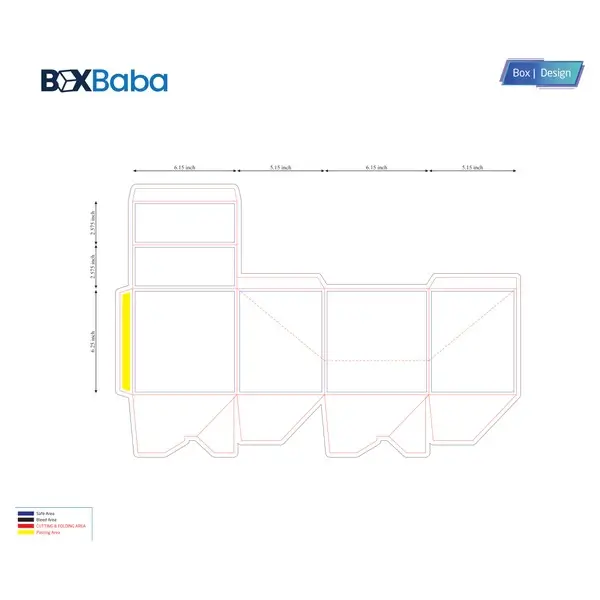
Tuck End Window Box Dielines
The dieline controls both the folding carton structure and the viewing opening.
Depending on the approved configuration, it can define:
Use:
Finished Product → Product Position → Tuck Configuration → Window Geometry → Board → Complete Dieline → Artwork
The window should be designed as part of the structural file rather than added to a generic completed Tuck dieline without review.
For broader structural-file fundamentals, review BoxBaba Packaging Dieline Guide.
A Clear-Patch Window Needs More Than a Cut Line
Where a transparent patch is used, the production specification must account for more than the visible opening.
Use:
Die-Cut Aperture ≠ Complete Clear-Patch Specification
The converter may also need to account for:
The exact patch construction should follow the approved production specification.
What Should Be Validated Before Production?
Use the approval method that matches the unresolved issue.
A digital proof or 3D mockup can help review:
artwork + panel orientation + window position + intended visible area + finish placement
A physical structural sample is more useful for:
product fit + actual product position + window alignment + loading + removal + support + Tuck engagement
Where the clear patch contributes significantly to the presentation, a representative sample can also help review its physical appearance.
Use:
Artwork Question → Digital Proof
and:
Fit / Visibility / Structural Question → Representative Physical Sample
A digital mockup cannot prove exactly where the real product will sit behind the opening.
Validate the Window With the Actual Product
Do not approve the viewing opening only from an empty carton.
Place the actual or representative product inside the sample.
Then review:
Pack → Close → View → Handle → Recheck Alignment
Check:
-
Is the intended feature actually visible?
-
Does the product stay aligned?
-
Does support obstruct the view?
-
Does the opening reveal an unintended area?
-
Does the product move during normal handling?
-
Is enough panel space left for branding and required information?
The correct validation entity is the loaded carton, not the empty paperboard blank.
Tuck End Window Boxes and Shipping
The viewing window is primarily a retail-presentation feature.
It does not establish parcel performance.
Use:
Tuck End Structure + Window ≠ Parcel-Shipping Qualification
A standard paperboard Tuck End Window carton is generally retail or secondary packaging.
Where the completed retail package requires a stronger outer structure for ecommerce or courier distribution, consider an appropriate Custom Corrugated Box.
What to Send for a Tuck End Window Box Quote
| Quote Input |
Why It Matters |
| Finished product dimensions |
Defines the required internal fit |
| Filled product weight |
Supports structural and board review |
| Product orientation |
Determines where the visible feature sits |
| Intended visible feature |
Defines the purpose of the window |
| Preferred Tuck configuration |
Defines the closure relationship |
| Preferred window panel |
Supports structural planning |
| Open or clear-patched window |
Defines window construction |
| Window shape / concept |
Supports die-cut development |
| Internal support requirement |
Controls product position behind the window |
| Required information areas |
Protects artwork and labeling space |
| Board preference |
Affects folds and window-panel behavior |
| Inside printing |
Expands artwork scope |
| Exterior printing |
Defines print coverage |
| Finishing requirements |
Affects production specification |
| Order quantity |
Supports production planning |
| Artwork status |
Determines dieline / artwork support |
| Delivery destination |
Supports shipping planning |
If you already know exactly which part of the product should remain visible, include a photograph or marked product reference when requesting the quote.
Custom Tuck End Window Boxes Wholesale From BoxBaba
BoxBaba develops Tuck End Window Boxes around the actual product, selected Tuck configuration, intended visible area, product position and approved window geometry.
Custom packaging projects can start from 100 units.
Artwork and dieline support are available, along with digital proof or 3D mockup review. Ask about physical samples where product position, window alignment, clear-patch appearance, loading/removal or Tuck engagement should be checked before bulk production.
Standard processing is typically 5–9 business days after final artwork approval, depending on the selected structure, board, window configuration, printing and finishing requirements.
Free shipping is available across the USA.
Request Custom Tuck End Window Boxes
A Tuck End Window carton should be developed around what the customer needs to see and where the real product sits inside the finished carton.
Share your product dimensions, filled weight, packed orientation, intended visible feature, preferred Tuck configuration, window concept, required quantity, artwork status and any internal-support, inside-printing or finishing requirements.
If you already know which part of the product should remain visible, provide that information before the window dieline is finalized.
Place your order by calling +1 305 574 4357 or emailing sales@boxbaba.com.