

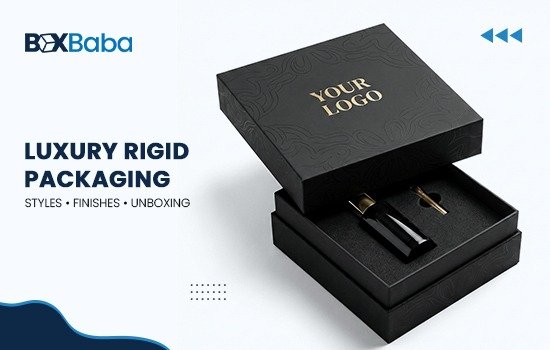
Luxury packaging isn’t extra. It’s a quiet signal that tells customers what to expect before they even touch the product. When a box feels substantial, opens cleanly, and reveals the product like it belongs there, people assume the brand sweated the details, and that the product is worth more.
That’s why luxury brands lean heavily on rigid packaging: it delivers structure, weight, and tactile cues that folding cartons usually can’t match. If you’re building a premium presentation or a gift-ready experience, start with the right foundation: rigid box packaging.
What is Luxury Rigid Packaging?
Luxury rigid packaging refers to premium rigid (setup/hard) boxes designed to increase perceived value through structure, weight, and tactile finishes. Unlike folding cartons, rigid boxes keep their shape and feel substantial in hand, while supporting premium details like magnetic closures, soft-touch wraps, foil accents, embossed logos, and precise inserts that turn packaging into part of the product experience.
What makes Packaging feel Luxury?
- Structure: the box holds shape with crisp edges and clean corners
- Weight: it feels substantial the moment you pick it up
- Texture: matte/soft-touch or specialty wraps feel intentional
- Restraint: one hero detail beats five competing effects
- Fit: lids align cleanly; inserts don’t rattle
- Consistency: a repeatable brand system across SKUs
- Reveal: a deliberate sequence (lid → insert → message)
- Camera-ready: minimal clutter, strong contrast, UGC-friendly
What makes Packaging feel Luxury without Overspending?
Luxury isn’t the most expensive build. It’s the most controlled build.
What signals premium in the first two seconds?
- Crisp geometry: straight edges, tight wrap, no bubbly corners
- Calm surfaces: minimal text, clean spacing, intentional negative space
- Tactile contrast: matte outside + smooth interior is a classic
- A single signature cue: a small logo treatment or subtle texture
What breaks the luxury illusion instantly?
- scuffs on arrival
- loose lids or warped flaps
- misaligned foil/emboss
- visible wrap seams on the hero face
- inserts that let the product shift or rattle
Mistake to avoid: trying to “buy luxury” with finishes. If the structure and fit are sloppy, even expensive foil looks cheap.
Why do Rigid Boxes Signal Premium so Reliably?
Rigid packaging works because it communicates value before the customer reads anything.
How Rigid Boxes Increase Perceived Value
- Weight feels expensive. Subconsciously, people associate heft with quality.
- Protection feels intentional. It suggests “this product is worth protecting.”
- Keepsake behavior extends brand time. Many rigid boxes get reused or displayed.
- Gifting becomes frictionless. The packaging itself becomes the gift wrap.
When Rigid Packaging is the wrong move
- Your margins can’t absorb the cost (or your price point doesn’t need it)
- You ship high volume and storage/shipping cube becomes a profit leak
- Your audience prioritizes minimal materials and easy recyclability (rigid can still work—just simplify the build)
If unboxing and gifting materially affect conversion or retention, rigid packaging often pays back. If logistics efficiency is the main lever, use rigid selectively (drops/sets) and keep core SKUs scalable.
Luxury Rigid Box Styles Brands Choose
Luxury brands pick styles based on the moment they want the customer to feel.
Why Do Premium Brands Choose Magnetic Closure Boxes?
Magnetic closure boxes create a controlled open/close motion that feels designed, not accidental. They’re also ideal for book-style reveals without messy tabs or loud closures.
If you’re building a premium reveal, start here: magnetic closure boxes .
Best for
- PR kits and influencer mailers
- premium skincare sets and fragrance collections
- corporate gifting and high-AOV launches
Common mistakes
- weak magnets that pop open in transit
- misalignment that makes the flap fight the user
- using magnets when recyclability is a top priority (consider alternative closures)
When does a two-piece lid + base rigid box make sense?
This is the classic gift format: clean, stable, and versatile.
Best for
- candles, fragrance, curated sets
- seasonal gifting where presentation matters
Mistake to avoid: lids that are too tight (feel annoying) or too loose (feel cheap). Fit is the whole game.
Why do Luxury Brands use Drawer-style Rigid Boxes?
Drawer boxes create a two-hand ritual and a satisfying reveal. It’s a small detail that makes the experience feel deliberate.
Best for
- jewelry, accessories, limited-edition bundles
- smaller items where the reveal is part of the value
Mistake to avoid: drawer friction that’s inconsistent (too tight = frustrating, too loose = sloppy).
Finishes that create Luxury
Luxury finishes don’t need to shout. They need to feel intentional—and survive real shipping.
How Does matte/soft-touch create a luxury feel?
Matte reduces glare, photographs beautifully, and reads premium because it feels calm and controlled. Soft-touch adds that tactile cue that makes customers want to hold the box longer.
A proven premium look is a deep matte exterior, especially in black: matte black boxes.
How to make Matte Look Expensive
- plan for scuff resistance (matte can show handling marks)
- protect surfaces during shipping (tissue, sleeves, or better outer protection)
- keep layouts minimal so marks are less noticeable
Choosing matte + dark solid coverage + no shipping protection. The first scuff turns luxury into returned.
When do Foil Accents and Embossing Look Truly Premium?
Foil and embossing feel luxurious when they’re small, crisp, and consistent. Think signature, not decoration.
For a classic luxury cue, use a restrained logo treatment like gold embossed boxes.
Rules that keep it premium
- keep foil area small (logo, monogram, mark)
- pair foil with matte for contrast
- choose one hero detail (foil or emboss) and let it breathe
Combining foil + emboss + spot UV everywhere. Too many signals compete and start reading as busy, not premium.
Is spot UV luxury?
It can be, when it’s subtle. A quiet pattern visible at an angle can feel elevated. Loud glossy shapes often feel more promotional than luxury.
The Unboxing Blueprint
Luxury unboxing is a sequence. You’re designing a short story, one that should work in person and on camera.
What should the lid moment feel like?
- smooth, controlled opening (no sticking, no sudden pop)
- alignment that feels precise
- a little resistance is okay—if it’s consistent
Designing a lid that looks beautiful but is annoying to open. Friction is part of luxury—but only when it’s intentional.
How Do Inserts create the Premium Reveal?
Inserts do more than protect. They present.
A luxury insert should
- immobilize the product (no rattle, no shifting)
- frame it so it looks meant to be there
- make removal feel easy and deliberate
photo-pretty inserts that fail vibration. If the product moves, the experience feels cheap immediately.
Where does a brand message card fit?
A message card is one of the cheapest ways to add premium storytelling:
- care instructions
- authenticity note
- one-line brand message
- a simple thank you that feels human
Place it where it’s discovered naturally—on top of the insert or tucked into a purposeful slot.
How do you make rigid packaging camera-ready for UGC?
UGC loves clarity:
- minimal text and clean surfaces
- high contrast (matte + foil; dark outside + light inside)
- one focal point (logo mark)
- a reveal sequence that looks good in 5–10 seconds
If you want customers to film it, design for a top-down reveal and a clean center frame.
How Do Luxury Brands Quality-Check Rigid Packaging Before Production?
Luxury fails in the details. This is where many premium boxes quietly lose their magic.
12-Point Luxury QC Checklist (Approve Before Mass Production)
- Lid fit: not too tight, not too loose
- Corner quality: no bubbling, wrinkling, or crushed edges
- Wrap seams: keep off hero faces; consistent placement
- Logo alignment: centered and level across samples
- Foil/emboss registration: crisp edges, consistent depth
- Scuff resistance: rub test the most handled areas
- Color consistency: check under consistent lighting
- Insert fit: no rattle; product centered and stable
- Pull tabs/ribbons: secure and functional
- Interior cleanliness: no glue marks, dust, or visible defects
- Pack-out time: test how fast your team can assemble and pack
- Shipping readiness: verify the box survives realistic handling (outer shipper matters)
Approving a sample that looks fine but hasn’t been rubbed, opened 30 times, or shipped. Luxury must survive real life.
How Luxury Brands Protect Rigid Packaging
Most brands don’t ship a rigid box naked. They ship a system:
Product → Insert → Rigid box → Outer shipper → (Optional) void fill
The goal isn’t just no damage
Luxury also needs to arrive looking perfect. A scuffed box can hurt perceived value even when the product is fine.
A simple test plan before scaling
If you’re launching a premium SKU or mailing PR kits:
- ship a small batch to multiple locations
- include a rough handling trial (not gentle hand-carry)
- inspect the box for scuffs, lid shift, crushed corners, and insert movement
- iterate once before placing a large order
Optimizing only for appearance and forgetting transit. The supply chain is part of the experience.
How Do Luxury Brands Use Rigid Packaging by Industry?
Luxury rigid packaging works across categories, the priorities just shift slightly.
Luxury Rigid Packaging for Jewelry
- small products benefit from dense packaging cues
- inserts matter more than size
- clean geometry and tight fit are everything
Luxury Rigid Packaging for Fragrance
- controlled reveal aligns with the product ritual
- matte + restrained logo treatment is a reliable combo
- precision fit is crucial (customers notice details)
Luxury Rigid Packaging for Candles
- rigid boxes protect glass and elevate gifting
- focus on immobilization and corner protection
- choose finishes that resist scuffs in transit
Luxury Rigid Packaging for Corporate Gifts
- rigid packaging makes gifting feel curated and official
- a message card adds meaning without visual clutter
- keep branding restrained to avoid promotional vibes
Get Custom Luxury Rigid Packaging From BoxBaba
If you share your product dimensions, weight, sales channel, and quantity tiers, BoxBaba can recommend the best rigid style, insert approach, and finish strategy—so your packaging feels premium and performs in the real world.
FAQs
What is luxury rigid packaging?
Luxury rigid packaging uses rigid (setup/hard) box construction plus premium finishes and inserts to raise perceived value through structure, weight, tactile feel, and a deliberate unboxing experience.
Are rigid boxes always best for luxury products?
Not always. Rigid works best when gifting, unboxing, and perceived value materially affect conversion—or when protection needs are high. For logistics-heavy, high-volume SKUs, many brands reserve rigid for premium drops and use more scalable formats for the core line.
Are magnetic rigid boxes worth it?
They’re worth it when the controlled reveal and keepsake behavior fit your brand positioning—especially for premium sets, PR kits, and high-AOV launches.
What finish looks most luxury in real life?
Matte or soft-touch with one restrained accent (foil or emboss) is one of the most reliable luxury looks because it feels premium in-hand and photographs well.
What’s the biggest luxury packaging mistake?
Overdesigning. Luxury usually reads as calm precision: strong structure, clean fit, one signature detail, and a reveal sequence that feels intentional.