

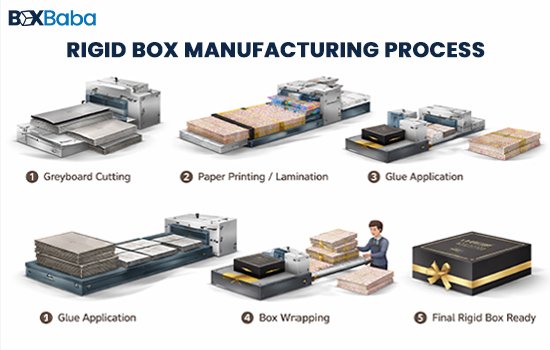
Rigid boxes are widely used in premium product packaging because they combine strong structural protection with a refined visual presentation. These boxes are commonly used for packaging cosmetics, electronics, jewelry, luxury accessories, and high-end retail products.
Unlike folding cartons that ship flat and require assembly, rigid boxes are constructed from thick board materials that maintain their shape. This manufacturing approach creates packaging that feels durable, premium, and visually impressive.
Understanding the rigid box manufacturing process helps businesses evaluate packaging suppliers and make informed decisions when ordering custom packaging.
What Is the Rigid Box Manufacturing Process?
The rigid box manufacturing process is the series of production steps used to convert thick paperboard into structured luxury packaging.
Rigid boxes are typically produced using dense greyboard or chipboard panels that are cut, shaped, and assembled into a rigid structure. The exterior is then wrapped with printed or decorative materials that define the final appearance of the packaging.
This process creates packaging that is both structurally durable and visually refined.
To understand the materials used during production, see our guide on rigid box materials.
Step 1: Greyboard Cutting and Preparation
The first stage of rigid box production is preparing the structural board.
Rigid boxes are usually made from greyboard, a dense paperboard produced from compressed recycled fibers. This material provides the strength required for luxury packaging.
Large greyboard sheets are cut into smaller panels that correspond to the different components of the box, including the base, lid, and side walls.
The board thickness typically ranges from 800gsm to 2000gsm, depending on the weight and fragility of the product being packaged.
Precise cutting is essential because accurate panel dimensions ensure the final box maintains sharp edges and consistent alignment.
Step 2: V-Grooving for Precise Folding
After cutting the greyboard panels, the next step is V-grooving.
V-grooving is a manufacturing technique that cuts a V-shaped channel into the greyboard so the material can fold cleanly at precise angles.
This technique allows thick board materials to bend smoothly without damaging the structure. When the board folds along the groove, it creates sharp ninety-degree corners that are essential for premium packaging.
Without V-grooving, thick board materials would produce rounded or uneven edges, which reduces the perceived quality of the packaging.
Step 3: Box Structure Assembly
Once the board panels have been grooved, they are assembled into the rigid box structure.
During this stage, the panels are folded along the groove lines and secured using industrial adhesives. This process forms the structural components of the box, including the base and lid.
Although the packaging already has its final shape at this stage, the raw greyboard surface is still visible. Because greyboard has a rough appearance, the box must be wrapped with decorative materials to create the finished packaging design.
Maintaining structural accuracy during assembly is essential because even minor misalignments can affect the final appearance of the packaging.
Step 4: Wrapping Process and Exterior Design
The wrapping stage transforms the raw greyboard structure into visually appealing packaging.
During this process, printed paper or specialty wrap materials are applied to the exterior surface of the rigid box. The wrap paper is carefully aligned and folded around the edges of the structure.
This wrapping layer defines the visual identity of the packaging. It can include brand colors, printed graphics, or textured materials that enhance the design.
Luxury rigid packaging often uses high-quality wrap materials such as art paper, textured paper, linen paper, or specialty coated papers.
The wrapping process also conceals the raw greyboard structure, giving the box a seamless and polished appearance.
Step 5: Interior Inserts and Product Protection
Many rigid boxes include interior inserts that secure the product inside the packaging.
These inserts prevent movement during shipping and improve the presentation of the product.
Common insert materials include EVA foam, molded pulp trays, and custom cardboard inserts.
Foam inserts are often used for fragile items such as electronics or perfume bottles because they provide strong shock absorption.
Interior inserts also enhance the unboxing experience by presenting the product neatly inside the packaging.
Step 6: Finishing Techniques and Decorative Effects
Once the box is wrapped, finishing techniques are applied to enhance branding and visual appeal.
These finishing treatments are applied directly to the wrap material.
Common finishing techniques include foil stamping, embossing, debossing, spot UV coating, and soft-touch lamination.
Foil stamping uses heat and pressure to apply metallic foil to packaging surfaces, often highlighting brand logos.
Embossing raises design elements above the packaging surface to create texture and dimension.
Soft-touch lamination adds a smooth, velvet-like texture that enhances the tactile experience of the packaging.
These finishing techniques help transform rigid boxes into premium branding tools. Our guide on rigid box finishing options explains these decorative methods in greater detail.
Machines Used in Rigid Box Manufacturing
Rigid box production involves several specialized machines designed to ensure precision and consistency.
Die-cutting machines are used to cut greyboard sheets into accurate panel shapes. V-grooving machines create precise grooves that allow thick board materials to fold properly.
Wrapping machines apply decorative paper to the exterior of the box while maintaining alignment and smooth surfaces.
Although some stages are automated, many rigid box manufacturing steps still involve manual craftsmanship. Skilled workers often perform wrapping, assembly, and finishing to maintain high quality.
How the Manufacturing Process Influences Packaging Cost
The rigid box manufacturing process involves several mechanical and manual production steps. Because of this, rigid packaging typically costs more than lightweight packaging formats such as folding cartons.
Several factors influence the final cost of rigid packaging. Board thickness, box size, finishing techniques, and interior inserts all affect production complexity.
Luxury finishes such as foil stamping or embossing require additional machinery and labor, which increases manufacturing time.
Businesses planning custom packaging should understand these cost factors before placing an order. Our guide on rigid box pricing explains how materials and production complexity influence packaging costs.
Why Manufacturing Quality Matters in Luxury Packaging
Manufacturing precision plays a major role in the perceived quality of rigid packaging.
Sharp edges, smooth wrapping, and precise finishing techniques contribute to the premium appearance of the box.
Luxury brands depend on high manufacturing standards because packaging often represents the first physical interaction customers have with the product.
Well-manufactured rigid packaging strengthens brand credibility and enhances the overall customer experience.
Final Thoughts
The rigid box manufacturing process combines precision engineering with skilled craftsmanship. From greyboard cutting and V-grooving to wrapping and finishing, every stage contributes to the strength and visual quality of the final packaging.
For businesses seeking premium packaging that enhances product presentation, rigid boxes provide a durable and visually impressive solution.
Understanding how rigid boxes are manufactured allows brands to make informed packaging decisions and invest in packaging that reflects the quality of their products.
FAQs
What material is used to manufacture rigid boxes?
Rigid boxes are typically manufactured from thick greyboard or chipboard that is wrapped with printed paper or specialty materials.
Why is V-grooving used in rigid box production?
V-grooving allows thick board materials to fold cleanly at precise angles, creating sharp corners and improving structural quality.
Are rigid boxes handmade?
Many rigid box manufacturing steps involve manual assembly and wrapping to maintain high production quality.
Why are rigid boxes more expensive than folding cartons?
Rigid boxes require thicker materials, specialized machinery, and additional manufacturing steps, which increase production costs.